How Simulation Theory Could Strengthen Christianity: Insights from Leading Computer Scientist Rizwan Virk
Simulation Theory
Are We Living in God’s Simulation? One Computer Scientist Thinks Christianity Should Take the Question Seriously
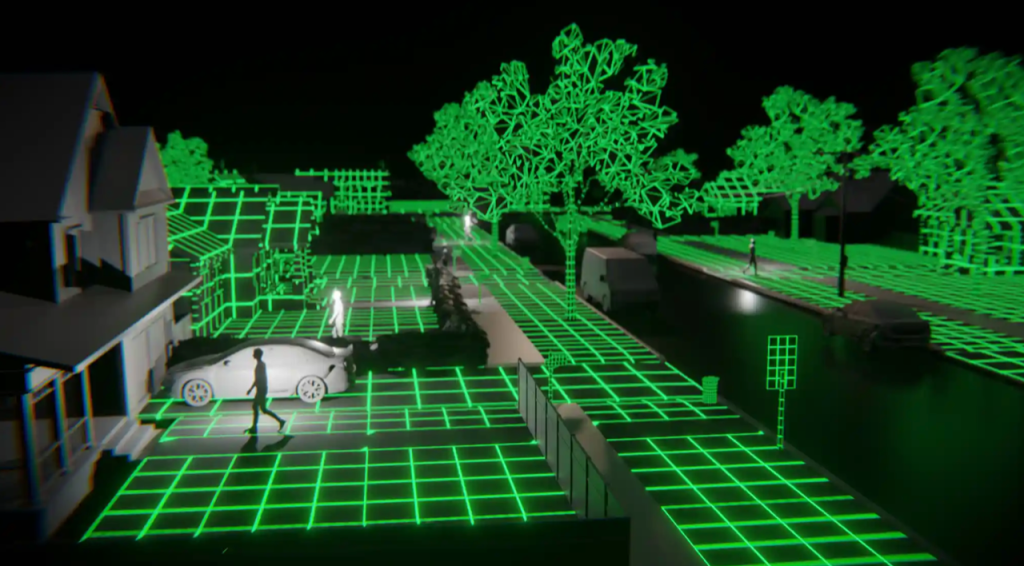
Here’s a question that sounds like science fiction until you sit with it for a minute: what if the universe isn’t physical at all — what if it’s running on something, the way a video game runs on a console? And what if that idea, instead of threatening faith, actually gave it new language to work with?
That’s the territory Rizwan Virk has staked out, and it’s putting an unlikely pairing — Silicon Valley computer science and centuries-old Christian theology — into direct conversation.
The Idea That Won’t Stay in the Physics Department
Simulation theory isn’t new, even if it sounds like it belongs in a Black Mirror episode. Plato was gesturing at something similar over two thousand years ago with his Allegory of the Cave — prisoners mistaking shadows on a wall for the whole of reality. The modern version got its sharpest formulation in 2003, when philosopher Nick Bostrom laid out a now-famous trilemma: either advanced civilizations never reach the point of being able to simulate reality, or they reach that point but choose not to, or — and this is the unsettling option — we’re almost certainly inside a simulation ourselves.
What’s kept the idea alive since then isn’t philosophy alone. It’s the fact that our own technology keeps closing the gap Bostrom was talking about. Every leap forward in VR and AI makes “indistinguishable simulated reality” feel a little less hypothetical and a little more like an engineering roadmap.
Meet the Man Bridging MIT and Metaphysics
Rizwan Virk isn’t a theologian, and that’s precisely why his take has drawn attention. He’s an MIT-trained engineer, a gaming industry veteran, and the founder of Play Labs at MIT, an accelerator built for immersive tech startups. Two decades in software, gaming, and venture capital gave him a front-row seat to just how convincing simulated worlds have become — and how fast that trajectory is accelerating.
His book The Simulation Hypothesis took that firsthand experience and paired it with physics, philosophy, and — increasingly in his more recent work — spirituality. Rather than treating simulation theory as a purely secular idea, Virk has become one of its more visible voices arguing that it might actually have something to offer religious belief, Christianity included.
Science and Faith Have Been Here Before
None of this tension is new, even if the vocabulary is. Christianity and science have circled each other for centuries — sometimes as allies, sometimes as adversaries.
In the medieval period, thinkers like Thomas Aquinas worked hard to show that faith and reason weren’t enemies but two paths to the same truth. That peace didn’t last. When Copernicus and Galileo dismantled the geocentric universe, the Church pushed back hard — Galileo’s trial remains one of history’s starkest reminders of what happens when new evidence collides with entrenched doctrine.
By the Enlightenment, the relationship had shifted again. Scripture started getting read less literally, theistic evolution found footing among Christian thinkers, and the door opened for faith to absorb — rather than reject — new scientific paradigms. Simulation theory is arguably just the newest guest at that very old table.
Where Genesis Meets the Source Code
Here’s where it gets genuinely interesting for believers: simulation theory and Christian theology are, structurally, asking the same question. Both frameworks assume something — or someone — designed the system we’re living in.
Some have drawn a direct line between the opening of Genesis, where God speaks the universe into being, and the idea of a reality generated by code. “Let there be light” starts to sound less like poetry and more like an initialization command, depending on how far you’re willing to run with the metaphor. If a simulation requires a conscious designer to generate a coherent, lifelike world, the theory hands theology a strikingly literal analogy for divine creation.
Free will gets reexamined too. If reality runs on underlying rules, are human choices genuinely free, or are they following a script none of us can see? And the Christian idea of faith — belief in a reality beyond what’s visible — maps unusually well onto simulation theory’s own core claim: that beneath the world we perceive lies a deeper, hidden layer of structure we can’t directly observe.
The Case For Taking It Seriously
The arguments for simulation theory tend to come from three directions at once.
Technological. If humanity’s own VR and AI capabilities are advancing this quickly, it’s not unreasonable to think a sufficiently advanced civilization could already have built something we’d never be able to distinguish from “real” life.
Physical. Quantum mechanics has long produced results that feel oddly computational — famously, particles behaving differently simply because they’re being observed. Some researchers read that as a hint that reality might run on something closer to code than to solid matter.
Philosophical. If simulated consciousness is possible at all, that opens a genuinely hard question: does a simulated mind carry the same moral weight, the same claim to “realness,” as one running on biology? That question alone has kept philosophers occupied for years.
Put together, it’s less a single knockout argument and more a convergence of separate fields pointing in a similar direction.
What Christianity Might Gain
For believers willing to engage with it, simulation theory offers a few genuine openings.
It reframes the doctrine of creation in strikingly contemporary terms — God not just as craftsman, but as the source of the code, the architecture, the consciousness underlying everything. It gives the free-will conversation new urgency, pushing believers to think harder about what moral responsibility means inside a designed system. And it can deepen the sense of purpose many Christians already hold — the idea that existence isn’t random, that there’s an author behind the story, even if that story is running on hardware we can’t perceive.
And What It Threatens to Undercut
Not everyone in the Christian community is convinced this is a gift.
The sharpest pushback centers on authenticity. If the physical world is “just” a simulation, does that cheapen the idea of God as a creator who fashioned something real, in the fullest sense the Bible describes? For some believers, that distinction isn’t philosophical hair-splitting — it’s the difference between a universe that matters and one that doesn’t.
Morality raises similar alarm bells. If choices are, in some sense, governed by an underlying program, where does that leave free will and personal responsibility — two pillars Christian ethics leans on heavily? And what about the afterlife? Does identity and continuity survive death the same way if existence is understood as a sequence of processed experience rather than embodied life?
These aren’t small objections, and many believers who engage with simulation theory don’t resolve them so much as sit with them — treating the tension as something to think through rather than something to solve outright.
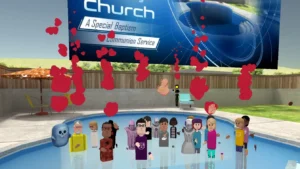
Faith in the Age of the Headset
Zoom out, and this debate is really part of a much bigger reckoning religious communities are having with technology itself. As VR and AI get more convincing, older questions are getting new edges: Can a virtual encounter carry real spiritual weight? Can something generated by AI ever point toward the divine, or only imitate it?
Different traditions will likely answer differently. Some will see simulation theory as a fresh vocabulary for talking about a creator God — a modern retelling of an old truth. Others will see it as a threat to the very idea of a physical, God-made world, something to be resisted rather than absorbed.
The Bigger Bridge
Whatever side of that debate someone lands on, Virk’s work points at something worth noticing: the conversation between faith and cutting-edge science hasn’t stopped — it’s just found a new frontier. Simulation theory doesn’t have to replace Christian belief to be useful to it. For some, it’s simply a new lens for an old and enduring question: who — or what — is behind all of this, and why does it feel like it means something?