When Your Chocolate Countdown Became a Holy War: The Great Advent Calendar Debate
Advent Calendar
The $200 Beauty Calendar That Started It All
Somewhere along the way, Advent calendars stopped being about Jesus and started being about… everything else.
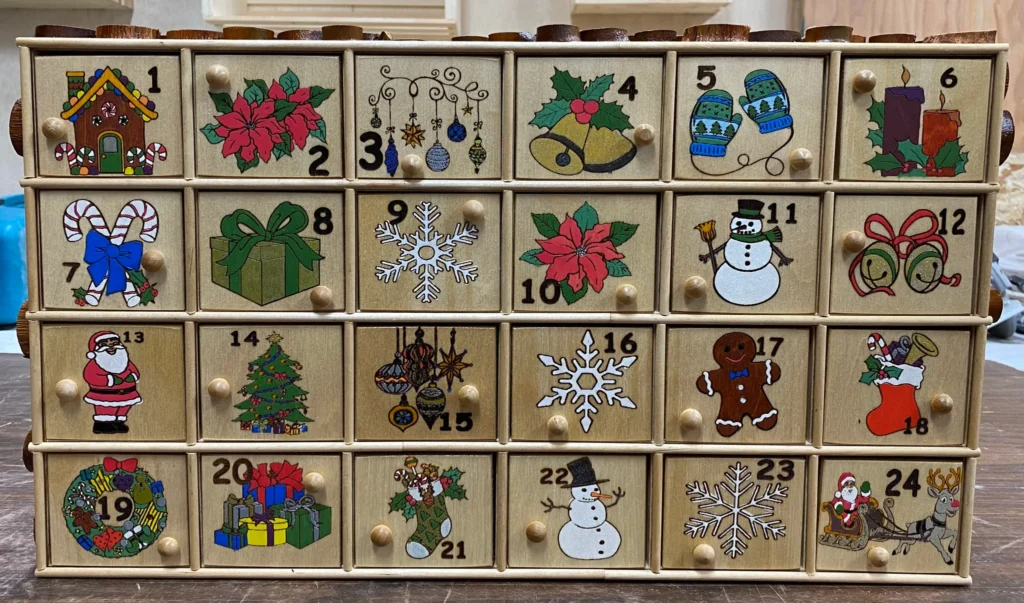
You can now buy Advent calendars for your dog. For your wine habit. For your skincare routine. There are cheese calendars, tea calendars, LEGO calendars, and—I kid you not—calendars filled with tiny bottles of hot sauce. The market has exploded into a multi-million-dollar industry where the only requirement is having 24 or 25 things that fit behind little doors.
And Christians are having feelings about it.
Some argue this commercialization has completely gutted the spiritual meaning of Advent, turning a sacred countdown into just another consumer product. Others insist the tradition can adapt without losing its soul, that cultural evolution doesn’t equal spiritual death.
Meanwhile, most people are just trying to figure out if buying their kid a LEGO Advent calendar makes them bad Christians or just practical parents navigating December’s chaos.
Welcome to the great Advent calendar debate—where chocolate, theology, and capitalism collide in the most festive way possible.
When December Had Actual Meaning
Let’s start with what Advent actually is, because most people buying calendars have no idea.
Advent isn’t Christmas. It’s the season before Christmas—specifically, the four weeks leading up to December 25th. It starts on the fourth Sunday before Christmas and traditionally focuses on themes of hope, peace, joy, and love. It’s a time of spiritual preparation, of anticipation, of getting your heart ready for the celebration of Christ’s birth.
The word “Advent” comes from the Latin adventus, meaning “coming”—and it has a dual focus. Christians are simultaneously preparing to celebrate Jesus’ first coming (his birth) while also anticipating his second coming (his eventual return). It’s retrospective and forward-looking at once, which gives the season theological depth beyond “count down to presents.”
For centuries, this preparation was serious business. Many Christians observed Advent as a mini-Lent—a period of fasting, prayer, and reflection. The liturgical color is purple (same as Lent), signaling penitence and preparation. Church services focused on Old Testament prophecies about the Messiah. The whole season was weighted with significance.
Advent calendars emerged in the 19th century as a way to mark this sacred countdown, particularly for children. Early versions were simple—chalk marks on walls, or pictures hung up day by day. The first printed Advent calendar appeared in Germany in the early 1900s, featuring religious imagery behind each window.
The concept was straightforward: each day brings you closer to Christmas, and each window reminds you why that matters. It was catechism through chocolate (or in early versions, just pictures of Bible scenes). Educational. Spiritual. Completely focused on the religious significance of what was being counted down to.
Then capitalism discovered Advent calendars. And everything changed.
The Great Commercial Takeover
The transformation happened gradually, then suddenly.
For decades, Advent calendars stayed relatively traditional. German chocolate companies started filling the windows with treats in the 1950s, but they still maintained religious imagery and themes. You got chocolate, but you also got nativity scenes and biblical verses. The spiritual purpose remained central even as the product became more appealing to children.
But sometime in the late 20th and early 21st centuries, the floodgates opened. Marketers realized that the Advent calendar format—24 or 25 days of small surprises—could sell anything. The countdown structure created anticipation. The daily ritual built engagement. And because it was tied to Christmas, people were already primed to spend money.
So suddenly there were Advent calendars for everything.
Beauty brands created calendars with luxury skincare samples costing hundreds of dollars. Toy companies made calendars with collectible figures. Alcohol companies offered whiskey, wine, and craft beer countdowns. The format became completely untethered from religious meaning.
Some of these calendars don’t even pretend to acknowledge Christmas. They’re just “holiday countdowns” or “December celebrations”—secular packaging for what was originally a deeply Christian tradition.
For many Christians, this feels like theft. Like their sacred tradition has been hijacked, stripped of meaning, and sold back to them as product. The Advent calendar has been secularized so thoroughly that most people buying them have no idea they’re participating in what used to be a religious practice.
But others argue this is just cultural evolution. That traditions adapt, that widening appeal doesn’t necessarily mean losing essence, that you can have both sacred and secular versions coexisting.
The debate gets heated because both sides have valid points.
The Theology Hiding Behind Tiny Doors
For Christians who take Advent seriously, the original calendar symbolism runs deep.
Consider what traditional Advent calendars depicted: nativity scenes showing the humble circumstances of Jesus’ birth. Angels announcing good news to shepherds. Wise men journeying toward truth. Mary and Joseph embodying faithfulness. Each image told part of the Christmas story, building anticipation while teaching theological concepts.
The countdown itself mirrors biblical waiting. Just as Israel waited centuries for the Messiah, we wait through Advent. Just as Mary carried Jesus for nine months, we carry anticipation through these weeks. The calendar makes abstract theological concepts—hope, preparation, anticipation—tangibly daily.
Many traditional calendars included scripture verses behind each door. Prophecies from Isaiah. Psalms of longing. Gospel accounts of the nativity. Opening each window meant engaging with the Word, letting biblical narrative shape your December.
This wasn’t incidental—it was the entire point. The calendar was catechism, discipleship tool, family devotional all rolled into one accessible package. It taught children the Christmas story while creating ritualized space for adults to reflect on its meaning.
When these elements disappear—when scripture is replaced with chocolate, nativity scenes with cartoon characters, theological reflection with consumerist excitement—something significant is lost. Not just religious imagery, but the whole framework that made Advent a season of spiritual preparation rather than just Christmas countdown.
The question is: does adapting the format necessarily mean abandoning the purpose?
The Case for Cultural Evolution
Here’s the defense of modern Advent calendars: traditions change. That’s what traditions do. They adapt to new contexts, evolve with culture, find new expressions while maintaining core purposes.
Christmas itself is a perfect example. Most Christmas traditions—trees, wreaths, gift-giving, feasting—were adapted from pagan winter solstice celebrations. Early Christians deliberately co-opted these practices, giving them new meaning. December 25th probably isn’t Jesus’ actual birthday; it was chosen to coincide with existing festivals.
If Christianity could adapt pagan traditions into powerful expressions of faith, why can’t Advent calendars evolve too?
Supporters of secular calendars argue that the format’s appeal—daily anticipation, ritualized opening, building excitement—can create meaningful experiences regardless of content. A child opening a LEGO calendar still experiences anticipation and joy. A family sharing cheese from their Advent calendar still creates ritual and connection.
These experiences might not be explicitly Christian, but they tap into something deeply human: the desire to mark time meaningfully, to create ritual around transitions, to build anticipation through practice. These impulses are spiritual even when not explicitly religious.
Moreover, secular Advent calendars might actually help Christianity by keeping the tradition visible. In an increasingly secular culture, overtly religious practices often get marginalized or forgotten. But if Advent calendars remain popular (even in commercialized forms), the concept stays in cultural consciousness. People still recognize the format, still engage with the countdown, still mark December as special.
From there, Christian families can reclaim and reframe the practice, using popular calendar formats while restoring spiritual content. You can buy a chocolate calendar and also read scripture each day. You can enjoy the cultural practice while layering religious meaning on top.
The tradition adapts but doesn’t die. And maybe that’s enough.
The Case Against Selling Sacred
But here’s the counterargument, and it’s not weak: commercialization doesn’t just change traditions—it hollows them out.
When Advent calendars become primarily about selling products, the entire spiritual purpose gets steamrolled by market logic. The countdown that was supposed to build anticipation for Christ’s birth now builds anticipation for… opening tomorrow’s door to get more stuff. The daily ritual that was supposed to foster reflection becomes just another consumer behavior.
This isn’t neutral adaptation—it’s replacement. The form remains while the function fundamentally changes. You still open doors, but you’re not preparing your heart for Christmas; you’re just participating in commercialized holiday hype.
Critics point out that luxury Advent calendars costing hundreds of dollars directly contradict the values Advent is supposed to teach. The season emphasizes humility, waiting, spiritual poverty. Jesus was born in a stable to poor parents. The calendar is supposed to remind us of that—of God entering human vulnerability, of finding meaning beyond material comfort.
A $300 beauty calendar filled with luxury products sends exactly the opposite message. It says Christmas is about acquisition, about treating yourself, about material indulgence. It transforms a season of preparation into a season of consumption.
Even less expensive calendars participate in this problem. When the excitement is about what’s behind the door rather than what the door represents, we’ve lost the plot. When kids are asking “What do I get today?” instead of “What does this teach me about Jesus?”, the tradition has been gutted.
And the sheer volume of secular calendars drowns out religious ones. Walk through any store in November and you’ll find dozens of commercial options for every one that includes religious content. The market has spoken, and what it’s saying is: Advent is profitable when we strip out the Jesus parts.
For many Christians, this isn’t evolution—it’s erasure.
The Family Trying to Have Both
So where does this leave the average Christian family trying to navigate December?
Because here’s the reality: most Christian parents aren’t sitting around debating cultural theology. They’re just trying to make it through the holiday season without losing their minds or their faith.
Little Timmy wants the Star Wars Advent calendar that all his friends have. You want to teach him about Jesus. Can you do both? Should you try? Or is buying the secular calendar a small compromise that opens bigger cracks?
Some families thread this needle by having multiple calendars—one fun/commercial, one explicitly spiritual. The kids get their daily chocolate or toy surprise, but they also do a family devotional with scripture readings and prayer. The commercial calendar provides excitement; the spiritual one provides meaning.
Others create DIY Christian calendars, filling envelopes or boxes with scripture verses, acts of service, or Christmas story activities. Each day brings a new way to prepare hearts for Jesus’ birth—reading prophecy, helping neighbors, making gifts for others, learning carols.
These homemade versions often prove more meaningful than any store-bought option because they’re personalized. Families can tailor content to their kids’ ages and understanding. They can emphasize whatever themes feel most important. They can make Advent about something other than consumption.
But let’s be honest: this requires time, energy, and intention that many families don’t have. It’s easier to buy a pre-made calendar—even a secular one—than to create something from scratch while juggling work, school, activities, and the general chaos of December.
So families make compromises. They do their best. They try to infuse spiritual meaning into whatever calendar they’ve got, hoping that’s enough.
When Different Traditions Share December
Here’s another complication: not everyone celebrating with Advent calendars is Christian.
In pluralistic societies, Christmas has become a cultural event that transcends religious boundaries. Many non-Christians celebrate Christmas secularly—Santa, presents, time with family—without any theological content. For them, an Advent calendar is just a fun countdown to a holiday they enjoy culturally rather than religiously.
Should Christians be bothered by this?
Some argue yes—that Christianity’s sacred traditions shouldn’t be borrowed and stripped of meaning by people who reject the faith. That secularizing Christian practices is disrespectful cultural appropriation.
Others argue the opposite—that Christianity should be thrilled its practices are culturally influential enough that even non-believers want to participate. That having secular people engage with Christian-originated traditions keeps those traditions alive and visible.
There’s also the question of inclusivity. In diverse communities, teachers and organizations want celebrations that welcome everyone. A religious Advent calendar excludes non-Christian children. A secular one includes everyone while offending no one.
Is that loss of religious specificity worth the gain in inclusivity? Christians disagree—passionately.
Progressive Christians often emphasize that the values underlying Advent—hope, peace, love—are universal. Anyone can participate in preparing their heart for joy and renewal. The specific theological content matters less than the broader spiritual posture.
Conservative Christians counter that this universalizing strips Christianity of its distinctiveness. That reducing Jesus’ birth to “a message of hope for everyone” misses the specific, particular claims Christianity makes. That inclusivity achieved by removing religious content isn’t inclusivity—it’s erasure.
These tensions play out in schools, workplaces, and neighborhoods every December, with Advent calendars becoming unexpected flashpoints.
Making Advent Actually Matter
So can Advent calendars and Christianity coexist? The answer is yes—but only if Christians are intentional about it.
If you want an Advent calendar that actually serves Advent’s purpose, here’s what you need:
Scripture. Include daily verses that tell the Christmas story or explore Advent themes. Let the biblical narrative shape the countdown.
Prayer. Create space for talking to God about what this season means. Make anticipation spiritual, not just emotional.
Service. Incorporate acts of kindness or generosity. Let each day challenge you to embody Christmas values, not just celebrate them.
Reflection. Include prompts for thinking about what Jesus’ coming means—for the world, for your community, for you personally.
Family connection. Use the calendar to create meaningful traditions that bring people together around shared values.
These elements can transform even a chocolate-filled calendar into something spiritually significant. The chocolate isn’t the problem—it’s the absence of anything deeper.
Some families get creative: they buy a standard calendar but add their own content. A scripture verse read aloud before opening each door. A family discussion question. A prayer of gratitude. The commercial product becomes a framework for spiritual practice rather than the practice itself.
Others reject commercial calendars entirely, creating homemade versions that prioritize meaning over convenience. These take more effort but offer more control over content and values.
The key is recognizing that the calendar itself is just a tool. What matters is how you use it—whether it shapes your December around consumption or around preparation, around getting or around becoming.
The Uncomfortable Truth
Here’s what both sides of the Advent calendar debate need to acknowledge: the commercialization happened because Christians let it happen.
The market didn’t steal this tradition—Christians sold it. They bought the secular versions, making them profitable. They stopped teaching their kids about Advent’s actual meaning, creating demand for alternatives. They treated the calendar as just another Christmas decoration rather than a spiritual discipline.
You can’t blame culture for secularizing what Christians themselves treated as secular.
At the same time, Christians can’t completely control how traditions evolve once they’re in the broader culture. When something becomes popular, it gets adapted, commercialized, and transformed. That’s just how culture works.
The question isn’t whether commercial Advent calendars should exist—they will, regardless of Christian opinion. The question is: what will Christians do with their own Advent observance?
Will they reclaim the tradition’s spiritual roots? Will they create alternatives that restore meaning? Will they opt out entirely in protest? Will they find ways to infuse commercial calendars with sacred purpose?
Each response has merit. But doing nothing—just passively consuming whatever the market offers while complaining about secularization—accomplishes exactly nothing.
The Future of Festive Countdowns
So where do we go from here?
The Advent calendar craze isn’t slowing down. If anything, it’s expanding. More products, more themes, more expensive luxury versions. The market has proven this format sells, and capitalism doesn’t stop exploiting what works.
This means Christians face a choice: engage or retreat.
Engaging means creating robust Christian alternatives—calendars that teach Advent’s actual meaning, that prepare hearts for Christmas, that resist commercialization while remaining accessible and appealing. Some churches and ministries are already doing this, producing high-quality devotional calendars that families actually want to use.
Engaging also means reclaiming the conversation—teaching kids (and adults) what Advent actually is, why it matters, how it differs from just counting down to Christmas. It means being willing to seem countercultural, to prioritize spiritual preparation over holiday hype.
Retreating means abandoning the calendar tradition entirely, recognizing it’s too commercialized to redeem. Some Christians are taking this approach, finding other ways to mark Advent that feel less compromised.
Both responses are valid. What’s not valid is passive acceptance—buying whatever calendar Target is selling while vaguely wishing it felt more spiritual.
The tradition can coexist with Christianity, but only if Christians actively maintain that connection. If they don’t, the calendar will drift further into pure commercialism until its religious origins are completely forgotten.
The Calendar We Actually Need
Maybe the real question isn’t whether Advent calendars can coexist with Christianity, but whether Christians can coexist with their own culture.
Because this isn’t really about calendars. It’s about how to maintain distinctive faith in a pluralistic, commercialized, secular society. How to pass on traditions that matter while navigating a culture that commodifies everything. How to prepare hearts for Jesus when the entire surrounding world is preparing wallets for shopping.
Advent calendars are just one small battleground in this larger war—if “war” is even the right metaphor. Maybe it’s more like navigation. How do you steer through December’s chaos while keeping your destination clear?
The calendar can help with that, if you let it. Those 24 or 25 days of intentional practice—reading, praying, reflecting, serving—can create pockets of sacred time in an otherwise frantic season. They can teach children that anticipation has spiritual dimensions. They can remind adults that Christmas is about something bigger than presents and parties.
But only if you choose that. Only if you resist the easy path of commercialized countdown and create something more meaningful.
The Advent calendar and Christianity can absolutely coexist. But it requires Christians to care enough to make it happen—to be intentional, creative, and willing to swim against cultural currents.
The question isn’t whether it’s possible. It’s whether we’ll do the work.
And whether that work—the small, daily, unglamorous practice of keeping Advent actually about Advent—is worth it.
I think it is. But then again, I’m writing 4,000 words about chocolate calendars and Jesus, so my judgment might be suspect.
Either way, December is coming. The doors are waiting. What will you put behind them?