When the Pulpit Became a Confessional: A Pastor’s Stunning Revelation
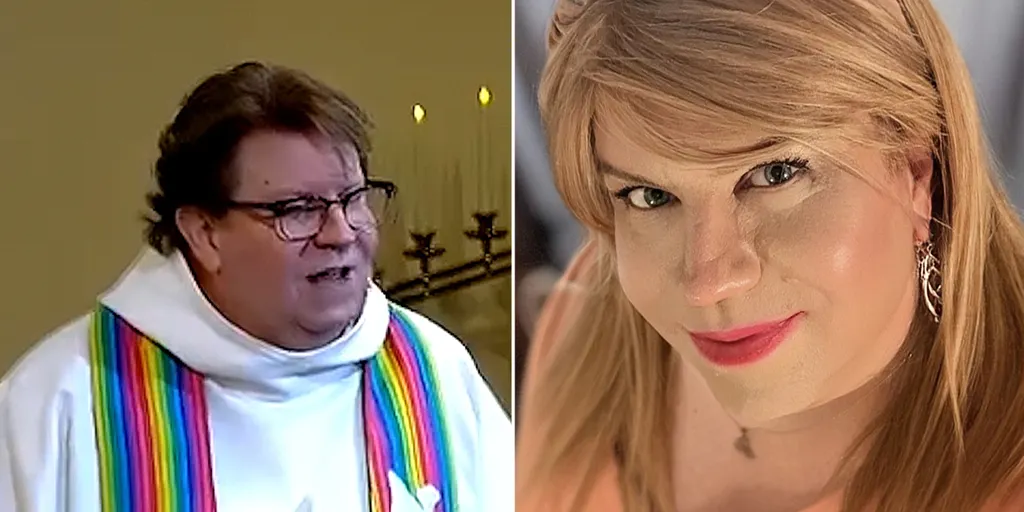
Pastor Phillippa Phaneuf
The Sunday That Changed Everything
The sanctuary was packed that morning, just like any other Sunday. Coffee cups lined the fellowship hall. Kids squirmed in the pews. The choir had nailed their opening hymn. Nobody knew they were about to witness something that would shatter every expectation they walked in with.
Pastor John Thompson stepped up to the pulpit with the same warm smile he’d worn for years. But beneath that familiar exterior, his heart was hammering. For months—maybe years—he’d been carrying a secret that felt like it would crush him. Today, that weight was about to lift.
The congregation settled in, expecting perhaps a sermon on grace, or community, or any of the comfortable themes they’d come to appreciate. Instead, they were about to get the most raw, vulnerable, earth-shaking message their pastor had ever delivered.
This wasn’t just another Sunday service. This was a reckoning.
The Long Road to This Moment
You don’t just wake up one day and decide to upend your entire life in front of hundreds of people. The journey to that pulpit had been brutal.
Growing up in a conservative religious environment, Thompson had learned early to bury anything that didn’t fit the mold. Questions about identity? Push them down. Feelings that contradicted expectations? Ignore them. The message was clear: there was a right way to be, and deviation wasn’t an option.
As the years accumulated, so did the weight of pretending. Ordination brought respect and responsibility—but also an even heavier burden to maintain the facade. How do you guide people toward authenticity when you’re living a lie? How do you preach about freedom when you’re trapped in a prison of your own making?
The disconnect became unbearable. Every sermon felt like hypocrisy. Every counseling session, a performance. The person standing in the pulpit bore less and less resemblance to the person looking back from the mirror.
Thompson began reading voraciously—theology, psychology, memoirs of others who’d walked similar paths. Conversations with trusted mentors opened new perspectives. Slowly, painfully, a realization crystallized: living authentically wasn’t just preferable—it was essential. Not just for personal survival, but for spiritual integrity.
The decision to come out to the congregation wasn’t made lightly. It meant risking everything: career, community, identity. But staying silent meant guaranteeing something worse—a slow death of the soul.
The Moment Truth Spoke
The sermon started normally enough. Scripture reading. A few opening remarks. Then Thompson paused, took a breath that seemed to draw from the depths of the earth, and said the words that would change everything:
“I’m giving up pretending to be a man.”
The sanctuary went still. Not the comfortable quiet of contemplation—the stunned silence of a bomb detonating in slow motion.
Thompson continued, voice shaking but steady: “For too long, I’ve worn a mask, trying to be who I thought you needed me to be. But I can’t do it anymore. I won’t do it anymore. Because authenticity isn’t just some buzzword—it’s the bedrock of faith. And I’ve been asking all of you to bring your whole selves to God while hiding mine.”
What followed was perhaps the most honest sermon that congregation had ever heard. No religious platitudes. No carefully crafted theology. Just raw, bleeding truth about the agony of living a lie, the weight of expectations, and the desperate need for grace—not just from God, but from the people in those pews.
Thompson spoke about the sleepless nights. The prayers that felt like they bounced off the ceiling. The crushing fear that being honest would mean losing everything. But also about the moments of clarity when divine presence felt most real—not in the performance, but in the struggle toward truth.
“God didn’t call me to be perfect,” Thompson said, tears streaming freely now. “God called me to be real. And this—standing here, terrified and hopeful and more myself than I’ve ever been—this is the most faithful thing I’ve ever done.”


The Congregation Responds
For a moment, nothing. The silence stretched so long it felt like the earth had stopped spinning.
Then someone stood. An elderly woman in the third row, tears on her cheeks. Then another person. And another. Within seconds, half the congregation was on their feet.
“We love you!” someone shouted, and suddenly the dam broke. Applause erupted—not the polite golf-clap of religious decorum, but thunderous, cathartic, messy applause. People were crying, hugging, some sitting in stunned disbelief, others radiating joy.
One longtime member later described feeling like scales had fallen from her eyes. “I’ve been so afraid to bring my own questions to church,” she confessed. “Seeing Pastor Thompson’s courage made me realize—maybe this is finally a place where I can stop pretending too.”
Not everyone was celebrating. Some faces reflected confusion, even anger. Years of certain beliefs don’t evaporate with one sermon, no matter how powerful. But even in the midst of discomfort, something remarkable happened: people stayed. They didn’t storm out. They sat with the discomfort, wrestling with it in real-time.
In the fellowship hall afterward, the conversations were unlike anything that church had seen. People who’d attended together for decades discovered they barely knew each other. Vulnerabilities emerged. Stories poured out. The revelation had cracked something open, and light was flooding in.
When Faith and Identity Collide
The tension between religious faith and personal identity isn’t new—it’s ancient. Every major faith tradition has grappled with questions of authenticity, conformity, and divine intention.
For many believers, faith provides the very framework through which they understand themselves. It offers identity, purpose, belonging. But what happens when that framework feels like it’s crushing you? When the identity you’ve been taught to embrace doesn’t match the person you actually are?
Theologians have long argued that authentic self-knowledge is essential to spiritual growth. You can’t surrender to God what you refuse to acknowledge in yourself. Denial isn’t devotion—it’s self-destruction dressed up in religious language.
During the sermon, Thompson articulated a profound theological insight: “I don’t believe God makes mistakes. If you believe that—really believe it—then you have to believe that how I’m made isn’t a mistake either. The mistake was spending decades trying to be something I’m not.”
This challenges congregants to expand their understanding of divine purpose. If faith is about aligning with God’s intentions, what does it mean when someone’s authentic identity challenges traditional religious interpretations? Can sacred texts written millennia ago speak to experiences they never explicitly addressed?
These aren’t easy questions. But Thompson’s revelation forced the congregation to confront them honestly, without the luxury of abstraction. This wasn’t a theoretical debate—it was their pastor, their friend, standing vulnerable before them, asking to be seen and loved as they truly are.
The Ripple Effects
A moment like this doesn’t stay contained within four church walls. It sends shockwaves through the entire community, forcing everyone to reconsider assumptions they didn’t even know they held.
For some congregants, the initial response was discomfort—not necessarily from malice, but from having their worldview challenged. If Pastor Thompson had been living inauthentically all these years, what did that mean about the sermons preached, the counseling given, the faith modeled? Could it all still be valid?
But discomfort can be fertile ground for growth. As the community processed together, something unexpected emerged: deeper connection. When one person risks radical honesty, it gives others permission to do the same. Suddenly people were sharing struggles they’d never voiced—doubts, questions, hidden aspects of identity they’d kept locked away.
The church began organizing discussion groups, not to debate theology, but to listen. Really listen. Members who’d felt marginalized found themselves finally welcomed into full participation. The atmosphere shifted from judgment to curiosity, from certainty to humility.
Not everyone stayed. Some members left, unable to reconcile their beliefs with their pastor’s revelation. Their departure was painful, but also honest—and perhaps necessary for both them and the congregation to find communities where they could authentically belong.
For those who remained, the church became something new: a laboratory for radical acceptance. They started asking harder questions: Who else have we excluded? What other voices have we silenced? How can we create space for everyone to bring their full selves into relationship with the divine?



A Cultural Earthquake
Zoom out, and Thompson’s sermon represents something larger than one pastor’s journey. It’s a seismic shift happening across religious landscapes.
For decades—centuries, really—religious institutions have enforced rigid boundaries around gender, sexuality, and identity. Those who didn’t fit were pushed out, forced to choose between faith and authenticity. The message was clear: you can have God or you can have yourself, but not both.
That’s changing. Slowly, unevenly, but undeniably.
Mainline Protestant denominations are reexamining long-held positions. Progressive synagogues and mosques are creating space for LGBTQ+ members. Even in more conservative traditions, conversations are beginning—quiet, often contentious, but happening.
This isn’t about religion abandoning its principles. It’s about communities wrestling with the gap between ancient texts and modern understanding, between tradition and compassion, between theological certainty and lived experience.
Thompson’s coming out joins a growing chorus of voices refusing to accept the false choice between faith and authenticity. These voices are reshaping religious communities from the inside, arguing that love, compassion, and acceptance aren’t compromises—they’re the point.
The resistance is real. Many religious communities remain firmly opposed to any expansion of traditional categories. But even opposition reveals that the conversation has shifted. What was once unthinkable is now being debated. What was once invisible is now impossible to ignore.
What Happens Now?
The sermon was a beginning, not an ending.
In the weeks following Thompson’s revelation, the church has been intentionally creating space for ongoing dialogue. Weekly discussion groups allow members to process their feelings, ask questions, and explore how faith and identity intersect in their own lives.
Guest speakers from LGBTQ+ advocacy organizations are sharing resources and perspectives. The church library has been stocked with books exploring theology, identity, and inclusion. Counseling services have been made available for anyone struggling to reconcile their beliefs with this new reality.
Perhaps most importantly, the church is listening to voices that have long been marginalized. Members of the LGBTQ+ community—many of whom had felt unwelcome in religious spaces—are being invited to share their stories, their pain, their hopes.
This isn’t a smooth process. There are awkward moments, difficult conversations, and ongoing tensions. Some members are all in; others are cautiously supportive; still others remain conflicted. That’s okay. Transformation isn’t clean or linear.
The commitment is to keep showing up, keep engaging honestly, keep choosing relationship over rightness. To create a community where questioning is welcomed, where doubt is honored, where people can wrestle with God and each other without fear of exile.
Thompson continues to lead, more authentically than ever before. The sermons have changed—less about certainty, more about the holy work of becoming fully human. Less about having all the answers, more about sitting with the questions together.
The Revolution of Being Real
Here’s what Thompson’s revelation ultimately offers: permission.
Permission to stop performing and start existing. Permission to bring your questions, your doubts, your messy, complicated self to the altar. Permission to believe that maybe—just maybe—God is big enough to handle your truth.
For decades, many religious communities have preached grace while practicing judgment. They’ve celebrated authenticity in theory while punishing it in practice. Thompson’s sermon exposed that hypocrisy and offered an alternative: what if faith communities actually meant it when they talked about unconditional love?
This moment challenges everyone—not just the congregation, but anyone watching from outside. It asks: Can your faith handle reality? Can it stretch to embrace people as they actually are, not as you wish they were? Can it make space for experiences that don’t fit neatly into traditional categories?
These aren’t comfortable questions. They force us to examine our own biases, our own boundaries, our own capacity for grace. They reveal how often we’ve used religion as a weapon rather than a healing balm.
But they’re also questions full of hope. Because if faith can’t handle truth—if it requires denial and pretense to survive—then what good is it? Real faith, the kind worth having, is big enough for real people living real lives.
Thompson’s journey isn’t over. The congregation’s transformation is ongoing. There will be setbacks and struggles, moments of doubt and fear. But something fundamental has shifted. A door has opened. And walking through it, despite all the uncertainty, feels like the most faithful thing they’ve ever done.
In the end, that’s what authentic faith looks like: not having all the answers, but having the courage to show up honestly. Not performing perfection, but embracing our gloriously imperfect humanity. Not pretending to be what we’re not, but trusting that who we actually are is exactly who we’re meant to be.
That’s a revolution worth joining.