When the Impossible Became Real: Sarah Mullally and the Shattering of the Stained Glass Ceiling
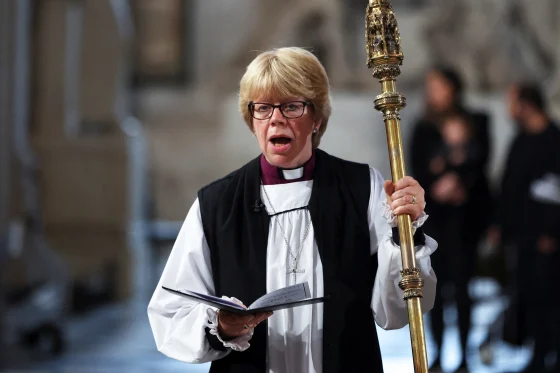
female Archbishop of Canterbury
The Announcement That Changed Everything
On October 3, 2025, Britain did something it had never done in 1,400 years: it appointed a woman to lead the Church of England.
Sarah Mullally, the Bishop of London, was named the 106th Archbishop of Canterbury—the first woman to hold the position in the entire history of English Christianity stretching back to St. Augustine in 597 CE.
Fourteen centuries. One hundred and five predecessors. Every single one male.
Until now.
The announcement reverberated far beyond ecclesiastical circles. This wasn’t just church news—it was cultural earthquake. A fundamental transformation of an institution that has defined itself by tradition, continuity, and resistance to rapid change.
For progressive Christians, it was vindication. Proof that even the most tradition-bound institutions can evolve. Evidence that gender barriers, however ancient and seemingly immovable, can be dismantled.
For conservative Christians, it was devastating. A betrayal of biblical teaching and apostolic tradition. The final confirmation that the Church of England has abandoned its theological foundations for cultural conformity.
For women in ministry worldwide, it was possibility made flesh. If the Archbishop of Canterbury—one of Christianity’s most historic and male-dominated positions—can be held by a woman, then truly no ceiling remains unbreakable.
For secular Britain, it was a good news story about an old institution finally catching up with contemporary values. Though many wondered: what took so long?
And for Sarah Mullally herself? She became the woman who will be defined by her gender for her entire tenure, whether she wants to be or not. Every decision analyzed through that lens. Every challenge interpreted as either validation or refutation of women’s leadership capacity.
The appointment is historic. The implications are enormous. And the work has only just begun.
The Woman Who Made History
Sarah Mullally didn’t come out of nowhere. She’s been preparing for significant church leadership for years—though whether she was preparing specifically for this role is another question entirely.
Her journey to becoming Archbishop of Canterbury followed a path that would have been literally impossible just a few decades ago. Women couldn’t be ordained as priests in the Church of England until 1994. They couldn’t become bishops until 2014.
Mullally’s career bridged this transformation. She entered ordained ministry after women’s ordination was already established but had to navigate a church still deeply ambivalent about female leadership. She rose through the ranks: parish priest, then Bishop of Crediton, then Bishop of London—one of the Church of England’s most senior and visible positions.
As Bishop of London, she demonstrated exactly the qualities you’d want in an Archbishop: theological depth, pastoral sensitivity, political savvy, ability to navigate competing factions without compromising core convictions. She championed social justice while maintaining orthodox Christian teaching. She built bridges across the church’s deep divides without papering over real disagreements.
She was, by traditional metrics for evaluating episcopal leadership, exceptionally qualified for the Archbishop role.
But of course, there was one complication: she’s a woman. And for 1,400 years, that would have been automatically disqualifying regardless of any other qualifications.
The fact that it’s no longer automatically disqualifying is itself revolutionary. The fact that she was actually appointed is historic.
Mullally becomes Archbishop at a pivotal and precarious moment for the Church of England. Attendance is declining. Cultural influence is waning. Internal divisions over sexuality threaten schism. The institution faces existential questions about its future relevance and role.
She inherits all these challenges. Plus the unique challenge of being the first woman to hold the position—which means every move will be scrutinized, every decision questioned, every difficulty potentially attributed to her gender rather than the actual complexities of the role.
No pressure.
The Reactions Nobody Could Have Prevented
The announcement of Mullally’s appointment triggered exactly the responses everyone predicted:
Progressive Anglicans erupted in celebration. Social media flooded with congratulations, expressions of joy, statements about how this validates decades of advocacy for women’s full inclusion in church leadership. Finally! The last barrier broken! This is what equality looks like!
For them, this represents the Church of England finally, finally living up to its stated commitment to gender equality. Women have been priests for 31 years, bishops for 11 years—of course a woman should be able to become Archbishop. The only question was when, not if.
Conservative Anglicans responded with grief and anger. This isn’t progress—it’s apostasy. It violates clear biblical teaching about male headship and the nature of pastoral authority. It prioritizes cultural accommodation over scriptural faithfulness. It’s the culmination of the church’s decades-long capitulation to secular feminism.
Many conservative parishes and clergy had already been on the edge of leaving the Church of England over issues of sexuality and biblical authority. For some, Mullally’s appointment is the final straw. They cannot in good conscience remain in a church led by a woman when they believe Scripture prohibits such leadership.
Global South Anglican provinces reacted with dismay. Many African and Asian Anglican churches don’t ordain women at all, viewing it as deviation from biblical teaching. Having the symbolic head of the Anglican Communion be female creates massive theological and relational problems.
Some provinces have indicated they cannot recognize Mullally’s authority as Archbishop. Some may break communion with the Church of England entirely. The appointment could accelerate the fragmentation of global Anglicanism that’s been underway for years.
Secular media covered it as unambiguously positive. Headlines celebrated the “first female Archbishop” and framed it as overdue progress. Commentary noted it’s remarkable this is happening in 2025 when women have led governments, corporations, and other major institutions for decades.
The subtext: religion is finally catching up with the rest of society. About time.
Other Christian denominations split along predictable lines. Catholics and Orthodox see it as further evidence that Anglicanism has departed from apostolic tradition. Progressive Protestants celebrate it as a model for their own continued inclusion efforts. Everyone uses it to confirm their existing views about women in ministry.
And in the middle, exhausted Anglicans just sighed. More controversy. More division. More fighting about gender and authority and biblical interpretation. Can we please just focus on actual ministry?
The one thing everyone did: have strong opinions. The appointment forced conversations the church has been avoiding about gender, Scripture, tradition, and institutional change.
What the Job Actually Entails (Spoiler: It’s Impossible)
To understand what Sarah Mullally is taking on, you need to understand what the Archbishop of Canterbury actually does.
It’s one of the weirdest jobs in Christianity. You’re:
The spiritual leader of the Church of England—the established state church with the monarch as its Supreme Governor. You crown kings and queens. You sit in the House of Lords. You’re part of Britain’s constitutional structure.
The symbolic head of the worldwide Anglican Communion—85 million members across 165 countries. Though “symbolic” is key because you don’t actually have authority over other provinces. You can convene, you can advise, you can represent—but you can’t command.
A public moral voice—expected to comment on political and social issues from a Christian perspective. Every major national debate, people look to the Archbishop for the “religious viewpoint.”
An institutional manager—overseeing dioceses, clergy, properties, finances, all the bureaucratic machinery that keeps a major religious organization functioning.
A diplomat—navigating between factions within the Church of England, between different provinces in the Anglican Communion, between Christianity and other faiths, between church and state.
The role requires balancing impossible tensions that would challenge anyone:
- Honoring tradition while enabling change
- Maintaining unity despite deep disagreements
- Speaking prophetically without becoming partisan
- Leading with authority while respecting provincial autonomy
- Representing both what Anglicans believe and challenging them to grow
These challenges exist for any Archbishop. But for Mullally, they’re amplified by being the first woman in the role.
Every decision will be analyzed through a gender lens. Every challenge will prompt questions about whether a male Archbishop would have faced it. Every controversy will include debates about whether responses are about the substance or about her being a woman.
She can’t just be Archbishop—she has to be the first female Archbishop, carrying all the symbolic weight and scrutiny that entails.
The Historic Significance Nobody Can Deny
Let’s be clear about what this means: This is genuinely historic.
The Archbishop of Canterbury traces back to 597 CE when Augustine was sent by Pope Gregory to evangelize England. For 1,400 years—through the Middle Ages, the Reformation, the English Civil War, the Empire, two World Wars, and into the 21st century—every single Archbishop has been male.
That’s 105 consecutive men holding one of Christianity’s most significant positions. An unbroken line stretching across centuries, embodying the assumption that church leadership is inherently male.
Sarah Mullally breaks that line. Shatters it, really.
This isn’t just symbolic—it fundamentally transforms what’s possible. Every girl growing up Anglican now knows that no church position is off-limits to her because of gender. Every woman in ministry can point to Canterbury and say: we can lead anywhere.
The appointment also validates decades of struggle by women who fought for ordination, who endured discrimination and dismissal, who persisted despite being told they were violating God’s design. Their work made this moment possible.
And it represents the culmination of the Church of England’s gradual, painful, contested evolution on gender. From rejecting women’s ordination entirely, to ordaining women as deacons, then priests, then bishops, and now Archbishop. Each step was fought. Each took years. Each was declared impossible until it happened.
Mullally’s appointment proves that institutions can change—slowly, imperfectly, amid enormous resistance, but genuinely change nonetheless.
The Challenges That Won’t Go Away
Appointing Sarah Mullally doesn’t solve the Church of England’s problems. In many ways, it creates new ones:
The Unity Crisis: Significant portions of global Anglicanism don’t recognize women’s ordination. Having a female Archbishop accelerates the fragmentation of the Anglican Communion. Some provinces will break communion. Others will maintain formal ties while functionally ignoring Canterbury’s leadership. The coalition is fracturing.
The Authority Question: Every time Mullally makes a controversial decision, critics will question whether people would resist a male Archbishop as strongly. Every time she faces opposition, supporters will wonder if gender bias is driving it. Parsing legitimate disagreement from sexism will be exhausting and probably impossible.
The Representation Burden: Mullally will be expected to champion women’s issues, speak for female clergy, model feminist leadership—on top of all normal Archbishop responsibilities. One person cannot carry all those expectations without being crushed.
The Declining Church Reality: The Church of England is shrinking. Attendance down. Influence fading. Relevance questioned. Mullally inherits an institution in crisis. Can she reverse the decline? Or will she be blamed for continued contraction regardless of whether gender has anything to do with it?
The Impossible Expectations: Progressives expect her to transform the church. Conservatives expect (fear) the same. The exhausted middle just wants stability. She cannot satisfy all these constituencies simultaneously.
These are real challenges that will define her tenure. And they exist alongside the normal difficulties of being Archbishop of Canterbury, which are substantial even without the historic “first female” complications.
What Happens Next (Nobody Really Knows)
So where does the Church of England go from here?
Officially: Sarah Mullally will be enthroned as Archbishop of Canterbury with all the ancient ceremony and tradition the role entails. She’ll assume leadership of the Church of England and symbolic headship of the Anglican Communion. Life continues.
Realistically: Everything just got more complicated.
Some conservative parishes will leave the Church of England, joining alternative Anglican jurisdictions that don’t recognize women’s ordination. The Church of England will shrink, losing members who cannot accept female leadership.
Some Global South provinces will functionally separate from Canterbury, maintaining minimal formal ties while building alternative structures of Anglican authority and fellowship.
Progressive Anglicans will push for continued reform—now that a woman is Archbishop, what about LGBTQ+ inclusion? What about married clergy being able to divorce and remarry? What about doctrinal evolution on sexuality?
Conservative Anglicans will dig in harder, viewing Mullally’s appointment as confirmation that the church has abandoned Scripture. They’ll fight every further progressive move with increased intensity.
The exhausted middle will continue being exhausted, trying to hold together a communion that’s pulling apart with increasing force.
And Mullally herself will navigate all this while trying to actually lead the Church of England through its existential challenges—declining attendance, cultural marginalization, financial pressures, need for evangelism and renewal.
Oh, and she’ll do all this while being constantly reminded that she’s the first female Archbishop, with every sermon analyzed and every decision scrutinized through that lens.
The Future That’s Already Here
Here’s what’s remarkable: This already happened.
Not hypothetically. Not speculatively. Actually happened. Sarah Mullally was actually appointed Archbishop of Canterbury.
The first female Archbishop isn’t a future possibility anymore—she’s a present reality.
This changes everything and nothing simultaneously. Everything because 1,400 years of male-only leadership ended. Nothing because the Church of England still faces all the same challenges it did before the appointment.
But the symbolic significance cannot be overstated. For women in ministry worldwide, this is a watershed moment. The highest position in one of Christianity’s most historic churches is no longer off-limits because of gender.
For institutional Christianity broadly, it’s evidence that even the most tradition-bound organizations can fundamentally transform. If the Archbishop of Canterbury can be female, what other “impossible” changes become possible?
For opponents of women’s ordination, it’s catastrophe—the complete victory of secular feminism over biblical faithfulness, the final proof that mainline Christianity has lost its way.
For supporters, it’s incomplete justice—yes, a woman is Archbishop, but why did it take until 2025? Why were qualified women excluded for centuries? Why is this still controversial?
The Archbishop Who Is
Sarah Mullally is the Archbishop of Canterbury.
Not “might be.” Not “could be.” Not “in a hypothetical future.”
Is. Present tense. Actually happening.
She’ll crown the next monarch (whenever that is). She’ll lead the Church of England through whatever comes next. She’ll navigate the impossible tensions of the role while carrying the additional burden of being “first.”
Her tenure will be defined partly by her own decisions and leadership, and partly by simply being a woman in a role that’s never had one.
She cannot escape the historic nature of her appointment. Every action will be interpreted through that lens. She’ll be compared to her predecessors—all male. She’ll be evaluated as both Archbishop and as female Archbishop.
Whether that’s fair is irrelevant. It’s reality.
What matters now is what she does with the position. How she leads. What she prioritizes. How she navigates the church’s deep divisions while maintaining her own integrity and vision.
The first female Archbishop of Canterbury is no longer hypothetical.
She’s here. She’s real. She’s leading.
And whatever happens next, the Church of England—and global Christianity—will never be quite the same.
The stained glass ceiling shattered.
Now we see what’s built in its place.