When Royalty Met Persecution: The King’s Powerful Stand for Forgotten Christians

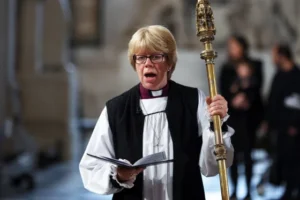
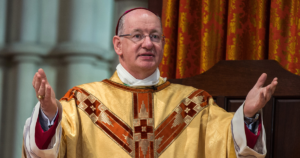
The King stood in Westminster Abbey
The Service Nobody Expected
Westminster Abbey has hosted countless royal events over its thousand-year history. Coronations, weddings, funerals—the grand ceremonies that define British monarchy. Pomp and pageantry in Gothic splendor, with all the tradition and ritual you’d expect.
This Advent service was different.
Yes, there was ceremony. Yes, there was tradition. But there was also something unexpected: the King of England using his platform to draw global attention to one of the most overlooked humanitarian crises of our time—the persecution of Christians worldwide.
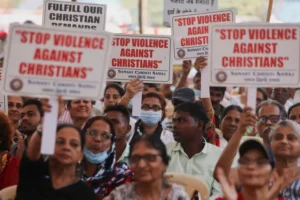
Not abstract persecution. Not historical martyrdom. Present-day Christians being imprisoned, tortured, displaced, and killed for their faith. Right now. In dozens of countries. While most of the world scrolls past without noticing.
The King stood in Westminster Abbey—a building that itself represents centuries of Christian faith enduring through political upheaval—and said: We see you. We remember you. You are not forgotten.
It was a masterclass in using royal privilege for moral witness. A demonstration that ceremonial power, wielded intentionally, can amplify voices the world ignores. A reminder that sometimes the most radical thing tradition can do is refuse to let suffering stay invisible.
And it worked. For a moment, the world paid attention to Christians facing persecution. Not because of shocking headlines or viral videos, but because royalty made it matter.
This is the story of how an Advent service became an act of advocacy—and why it matters more than you might think.
When Ancient Ritual Meets Modern Crisis
Advent is Christianity’s season of waiting. Four weeks before Christmas, marked by lighting candles, reading scripture, and preparing hearts for celebrating Jesus’ birth. It’s supposed to be contemplative, peaceful, anticipatory.
It’s not typically associated with geopolitics or human rights advocacy.
But the themes of Advent—hope in darkness, light overcoming oppression, God’s solidarity with the suffering—aren’t just spiritual abstractions. They’re lived reality for millions of Christians globally who practice their faith at enormous personal cost.
North Korea, where Christianity is effectively illegal and discovery means imprisonment or execution for entire families. Afghanistan, where converting to Christianity is punishable by death. Somalia, Nigeria, Pakistan, China—the list of countries where Christians face systematic persecution is staggering and growing.
Open Doors, an organization tracking religious persecution, estimates over 360 million Christians live in places where they experience high levels of persecution and discrimination. That’s not historical data. That’s now.
These aren’t just statistics—they’re people. Pastors imprisoned for holding worship services. Families displaced because their village was burned for being Christian. Women kidnapped and forced to convert. Children unable to attend school because of their faith. Communities living in constant fear.
And most of the Western world has no idea this is happening. Because it’s not trending. Because the news cycle moves too fast. Because persecution of Christians doesn’t fit convenient political narratives.
The King’s Advent service said: This matters. These people matter. Their suffering deserves attention, even—especially—during a season when we’re otherwise focused on holiday shopping and family gatherings.
By connecting ancient liturgical tradition with contemporary crisis, the service transformed Advent from comfortable nostalgia into uncomfortable witness.
The Weight of the Crown
Let’s be clear about what it means for the King to do this.
British royalty is supposed to be neutral. Stay above politics. Avoid controversial issues. Represent the nation without alienating anyone. The monarch’s power is symbolic, ceremonial, carefully constrained by constitutional limits.
But symbolic power is still power. And how you use it matters.
By hosting and participating in an Advent service explicitly focused on persecuted Christians, the King was making a statement. Not a political one, exactly—religious persecution is a human rights issue that theoretically transcends partisan politics. But a statement nonetheless.
He was saying: This crisis deserves royal attention. It’s important enough to feature prominently during a major liturgical season. It’s worthy of the setting, the ceremony, the publicity that comes with anything involving the monarchy.
That matters enormously. Because in our attention-deficit culture, what gets royal treatment gets noticed. Media covers it. People talk about it. The issue enters public consciousness in ways it wouldn’t otherwise.
The King also was leveraging his unique position. He’s not just a political leader who might face electoral consequences. He’s not just a religious leader whose authority might be questioned. He’s both and neither—a symbolic figure whose moral voice carries weight precisely because it’s not constrained by normal political calculations.
When the King speaks about persecuted Christians, he’s not trying to win votes or advance a partisan agenda. He’s using his platform for witness. For solidarity. For keeping suffering visible when the world would rather look away.
This is monarchy at its potential best—using inherited privilege and ceremonial power to amplify voices that would otherwise go unheard.
The Candle That Spoke Volumes
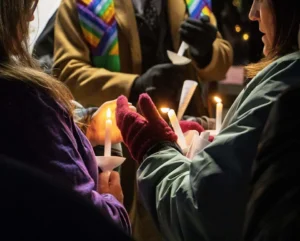
The central symbolic act of the service was deceptively simple: lighting a candle.
Advent candles are traditional—most churches light them weekly through December, marking the progression toward Christmas. It’s familiar ritual, comforting and predictable.
But context transforms meaning.
When the King lit a candle at Westminster Abbey specifically to represent persecuted Christians worldwide, that small flame carried enormous symbolic weight.
Light in darkness. The most basic Christian metaphor, going back to Jesus calling himself “the light of the world.” The promise that darkness doesn’t win. That even the smallest light pushes back against oppression.
For persecuted Christians, this isn’t abstract theology—it’s survival. Maintaining faith in hostile environments requires believing that suffering isn’t meaningless, that their witness matters, that they haven’t been abandoned.
The candle says: You are seen. Your faith is honored. Your light continues to shine even when the world tries to extinguish it.
But it’s also a challenge to those lighting it and watching. Because light requires tending. Candles don’t stay lit by themselves. They need protection from wind and rain. They need someone to care whether they go out.
By lighting a candle for persecuted Christians, the service was asking: What will you do to keep this light burning? How will you protect the vulnerable? What does solidarity look like in practice, not just in symbol?
A single candle can seem inadequate against the enormity of global persecution. But that’s the point—it’s not about the candle being enough. It’s about recognizing that every light matters, that small acts of witness accumulate, that refusing to let suffering disappear into darkness is itself meaningful.
The candle burns. The question is: what happens next?
Stories That Demand Hearing
The service didn’t just speak about persecution in abstract terms. It shared actual stories. Actual people. Actual suffering.
Like the Nigerian pastor whose church has been repeatedly attacked by extremist groups. Who’s watched friends murdered, community members kidnapped, children orphaned. Who keeps preaching anyway because his congregation needs hope more than safety.
He hasn’t fled. Hasn’t recanted. Hasn’t given up. He shows up every Sunday in a building that might be targeted, leads worship for people who are risking their lives by attending, and proclaims that faith is worth the cost.
That’s not theoretical persecution. That’s a man choosing between his safety and his calling, and choosing the calling. Every single week.
Or the stories from North Korea, where Christianity is practiced in absolute secrecy because discovery means three generations of your family disappear into labor camps. Where owning a Bible is grounds for execution. Where faith must be completely hidden or the cost is annihilation.
People there still gather in tiny groups, still pray, still pass down their beliefs to their children through whispers. They maintain faith in conditions designed to make it impossible.
These aren’t exceptional stories—they’re representative. Millions of Christians worldwide face similar circumstances. Some less extreme, some even worse. The details vary, but the pattern holds: practicing Christianity in hostile environments requires courage most of us can’t imagine.
The service brought these stories into Westminster Abbey. Into royal presence. Into public attention. Gave them dignity and witness they’re usually denied.
Because here’s the thing about persecution: it thrives in silence. When nobody’s watching, when nobody cares, when victims are isolated and voiceless, oppression continues unchecked.
Telling the stories—making them visible, making them matter—is itself resistance. It says: These lives count. This suffering is real. Ignoring it is complicity.
Why Westminster Abbey Matters
The location of this service wasn’t incidental—it was essential.
Westminster Abbey isn’t just a big, pretty church. It’s a monument to Christian faith enduring through centuries of political turmoil. It’s where English monarchs have been crowned since 1066. Where British history’s most significant moments have been marked and memorialized.
It’s a building that says: This faith has survived. Through civil wars and religious upheaval, through persecution and reformation, through cultural transformation and political revolution—this faith persists.
Hosting a service for persecuted Christians in Westminster Abbey creates profound resonance. You’re connecting contemporary suffering with historical endurance. You’re saying: Just as Christianity survived in England through its darkest periods, it will survive current persecution globally.
The Gothic architecture itself carries meaning. Those soaring arches, those stained glass windows depicting biblical scenes, those centuries of prayers soaked into stone—all of it creates an environment that transcends the moment.
When you stand in Westminster Abbey and think about Christians being persecuted today, you’re simultaneously aware of all the Christians who were persecuted before and endured. The building itself is testimony that faith can outlast oppression.
It also makes the service unavoidable for media and public attention. A small service in an ordinary church might go unnoticed. But Westminster Abbey? With royal participation? That’s news. That gets coverage. That enters public consciousness.
The venue amplifies the message. It lends gravity and significance. It says this isn’t just another nice church service—this is an event that matters, in a place that matters, about people who matter.
The Community That Showed Up
The service wasn’t just royal theater—it was genuine interfaith, intercommunity gathering.
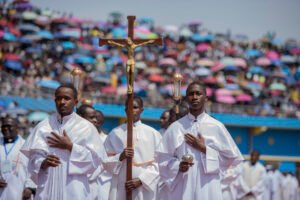
Representatives from different Christian denominations came together. Catholic, Anglican, Orthodox, Evangelical—groups that often don’t collaborate, united in solidarity with persecuted believers. Theological differences became secondary to shared human concern.
But it went beyond Christians. Jewish and Muslim leaders attended, recognizing that religious persecution anywhere threatens religious freedom everywhere. Secular human rights advocates came, understanding that defending Christians’ right to practice their faith is defending universal human rights.
This coalition matters enormously. Because persecution isn’t just a Christian issue—it’s a human issue. When governments or extremist groups target people for their beliefs, everyone’s freedom is threatened.
The service created space for this recognition. Brought together people who might otherwise stay in their separate communities. Fostered relationships that can lead to actual advocacy and support.
It also launched practical initiatives. Fundraising for organizations supporting persecuted Christians. Educational programs about religious persecution. Advocacy networks to pressure governments on human rights.
The candle and prayers matter, but so does concrete action. The service became a catalyst for organizing, for transforming awareness into actual support.
Community forums after the service allowed attendees to strategize. How can we help? What organizations need support? How do we keep this visible beyond one evening’s attention?
These conversations are where liturgy becomes activism, where witness becomes work. The service provided the spark; the community commits to sustaining the flame.
The Global Ripple Effect
Here’s the thing about royal attention: it crosses borders.
When the King of England speaks about persecuted Christians, media worldwide covers it. Not just British outlets—international news picks it up. Suddenly the issue has visibility far beyond what any normal advocacy campaign could achieve.
That visibility matters in multiple ways.
For the persecuted themselves: Knowing the world sees them, that they haven’t been forgotten, that their suffering is being witnessed and honored—this provides profound psychological and spiritual support. It combats the isolation that persecution creates.
For persecutors: When international attention focuses on religious persecution in specific countries, it creates pressure. Governments care about their global reputation. When the King of England highlights your country’s treatment of Christians, that’s not easily ignored.
For potential allies: Many people simply don’t know persecution is happening. Royal attention educates, raises awareness, mobilizes people who would help if they knew there was a problem.
For diplomatic channels: The UK can leverage this attention in bilateral relationships, trade negotiations, international forums. “We’re concerned about religious freedom in your country” carries more weight when the King has publicly highlighted the issue.
The service wasn’t just ceremonial—it was strategic. Using the soft power of monarchy to advance human rights without the constraints of formal diplomacy.
And it invites reciprocal action. When Britain’s King speaks up for persecuted Christians, it encourages other world leaders to do the same. It normalizes treating religious persecution as a serious international issue rather than internal affair.
What Actually Happens Now
The service happened. Candles were lit. Powerful words were spoken. Media coverage happened. People felt moved.
Then what?
Because that’s the test of whether this matters—not the event itself, but what follows.
The hopeful scenario: Sustained attention to religious persecution. Continued advocacy. Concrete support for affected communities. Policy changes that actually protect vulnerable populations.
The cynical scenario: Brief attention spike, then everyone moves on. The service becomes a nice memory rather than a catalyst for change. Persecution continues while we congratulate ourselves on caring for an evening.
The reality is probably between these extremes. Some people will remain engaged. Some organizations will see increased support. Some policy makers will pay more attention. But fundamental transformation? That requires sustained pressure over time.
The service can’t do that alone. What it can do—what it did—is create a moment of visibility and moral clarity. A reference point people can return to. A statement that caring about persecuted Christians is important, legitimate, worthy of attention.
Whether that moment becomes a movement depends on what people do next.
Will churches make this a sustained focus rather than one-off event? Will advocacy organizations leverage the attention to build support? Will governments face pressure to prioritize religious freedom in foreign policy?
Will individuals who felt moved actually do something—donate, advocate, educate themselves and others? Or will the feeling fade with the candles?
The Uncomfortable Challenge
Here’s what the service ultimately asks of everyone who participated or paid attention:
What are you willing to do about this?
Because awareness without action is just emotional tourism. Feeling sad about persecution while doing nothing to address it isn’t solidarity—it’s performance.
The King can host services. Advocacy organizations can document abuses. Media can cover the issue. But ultimately, change requires masses of people deciding this matters enough to actually engage.
That might mean:
- Financial support for organizations helping persecuted Christians
- Political pressure on governments that allow or enable persecution
- Educational efforts to keep the issue visible
- Welcoming refugees who fled religious persecution
- Challenging narratives that dismiss or minimize what’s happening
None of this is easy or convenient. It requires sustained attention to an issue that doesn’t naturally stay on our radar. It requires caring about people we’ll never meet, in places we’ll never visit, facing circumstances we can barely imagine.
It requires choosing solidarity over comfort.
The service made that choice visible—royal privilege leveraged for moral witness, ancient tradition deployed for contemporary crisis, ceremonial power used to amplify the voiceless.
But a service is just a moment. The question is whether that moment inspires a movement.
The Light Still Burns
The candles lit at Westminster Abbey have long since burned out. The service ended. People went home. The news cycle moved on.
But the persecution continues. Every day. In dozens of countries. Against millions of people whose only “crime” is practicing their faith.
They wake up uncertain whether today brings harassment, arrest, violence, or death. They gather for worship knowing it might be discovered and punished. They raise children trying to pass on beliefs that could get those children killed.
They endure what most of us cannot fathom. And they persist.
The King’s Advent service said: We see you. You are not forgotten. Your witness matters.
Those are just words. But sometimes words matter. Sometimes being seen, being remembered, being honored—even from thousands of miles away—provides strength to continue.
The light the King lit was symbolic. But symbols have power. They represent realities larger than themselves. They create meaning in chaos. They remind us that darkness doesn’t win simply because it’s overwhelming.
Every small light pushes back. Every act of witness matters. Every choice to remain visible rather than retreating into silence creates space for hope.
The persecuted Christians whose suffering was honored at Westminster Abbey didn’t need the service to validate their faith—they already know it’s real, already live it daily, already pay costs we can barely comprehend.
But maybe the rest of us needed it. Needed the reminder that our comfortable Christianity exists in a world where faith still demands courage. Needed the challenge to our complacency. Needed the call to solidarity that transcends borders and comfort zones.
The service is over. The candles are out.
But the call remains: What will you do to keep the light burning?
Because persecution thrives in darkness, in isolation, in silence, in being forgotten.
And the most powerful thing we can do—maybe the only thing—is refuse to forget. Refuse to be silent. Refuse to let suffering stay invisible.
The King stood in Westminster Abbey and said: These lives matter. This suffering is real. This witness deserves honor.
Now it’s on the rest of us to decide whether we believe that enough to actually do something about it.
The light still burns. In Nigeria and North Korea, in Pakistan and China, in dozens of countries where Christians practice their faith knowing the cost.
The question is: Will we protect that light? Will we advocate for those who can’t advocate for themselves? Will we use whatever privilege and platform we have to amplify voices the world tries to silence?
Or will we blow out our own candles and retreat into comfort, moved for a moment but unchanged?
The King’s Advent service offered a moment of witness, solidarity, and hope.
What happens next is up to us.
The light still burns. Will we help it keep burning?
That’s the question Advent asks. That’s the challenge the service issued.
And the answer will determine whether this was just a beautiful ceremony or the beginning of something that actually matters.