
When Joe Rogan Compared Jesus to AI and Everyone Lost Their Minds
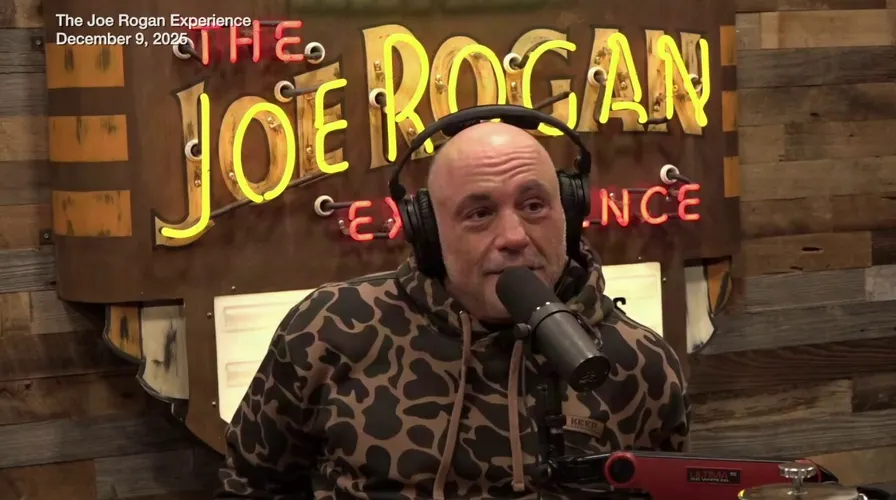
Joe Rogan
The Podcast Moment That Broke the Internet
Joe Rogan says a lot of things. That’s kind of his brand—three-hour conversations covering everything from DMT trips to astrophysics to whether Bigfoot is real. His podcast is a chaotic buffet of ideas where literally anything might come up, and his 14 million listeners tune in specifically for that unpredictability.
But even by Rogan standards, his recent comments about Jesus and artificial intelligence were… a lot.
During what started as a typical episode—meandering conversation, tangential thoughts, the usual Rogan vibe—he dropped a comparison between Jesus Christ and AI that made his guest visibly uncomfortable. The kind of uncomfortable where you can see someone’s brain short-circuiting in real time, trying to process what they just heard while also calculating how to respond without causing an international incident.
The clip went viral instantly. Within hours, it was everywhere—Twitter threads dissecting every word, YouTube compilations with shocked-face thumbnails, think pieces analyzing what it all meant. Christians were outraged. Atheists were intrigued. Tech bros were nodding along. Everybody had opinions.
But here’s what made this moment fascinating: Rogan wasn’t just being provocative for clicks. He was stumbling into one of the most important conversations we’re not having—about what happens when technology becomes so advanced it starts mimicking what we used to call divine. About whether AI represents humanity’s next evolution or its greatest threat. About how faith and technology intersect in ways that make everyone deeply uncomfortable.
The host’s baffled reaction? That was all of us, trying to process implications we’re not ready to face.
Welcome to the conversation nobody wanted but everybody needs.
The Dude Who Accidentally Became America’s Philosopher
Let’s talk about Joe Rogan for a second, because understanding the man helps explain why his comments landed like a grenade.
Rogan didn’t set out to be an influential thinker. He’s a comedian who got into martial arts commentary and started a podcast basically as a hobby. The format was simple: long-form conversations with interesting people, no editing, no corporate filtering, just whatever emerged from hours of unrehearsed dialogue.
That format turned out to be revolutionary. In an era of sound bites and carefully curated media appearances, Rogan offered something different—messy, genuine, unpredictable conversations where people could actually explore ideas rather than just promoting their latest project.
The podcast exploded. Scientists, comedians, politicians, conspiracy theorists, athletes, authors—everyone wanted on. And Rogan’s appeal came from his everyman curiosity. He’s not an expert on most topics. He’s just genuinely interested, asking the questions regular people want answered, following tangents wherever they lead.
This makes him dangerous in the best and worst ways. Dangerous because he has massive influence without the gatekeeping that usually comes with media platforms. Dangerous because he’ll give airtime to anyone, regardless of how controversial or fringe their views. Dangerous because when he says something, millions hear it—and those millions span every demographic imaginable.
It also makes him valuable. He creates space for conversations that don’t happen elsewhere. He explores uncomfortable ideas. He lets people speak at length instead of in talking points. Love him or hate him, Rogan occupies a unique cultural position—he’s the guy millions of people trust to explore complex topics honestly, even messily.
So when he starts comparing Jesus to AI, it’s not just random podcast banter. It’s a cultural moment, whether he intended it or not.
The Comment That Stopped the Show
Here’s what actually happened, stripped of viral clip editing and hot takes:
Rogan and his guest were discussing artificial intelligence—its capabilities, its potential, its dangers. Standard tech conversation. Then Rogan, in that way he has of making conceptual leaps that either seem brilliant or insane depending on your mood, pivoted.
He started talking about how people historically related to figures they couldn’t fully understand. How they created frameworks—religious, mythological, spiritual—to make sense of powers beyond comprehension. And then he suggested that AI might become the modern equivalent. Not replacing God, exactly, but occupying a similar psychological space—something vastly more intelligent than us, capable of things we can barely imagine, potentially benevolent or potentially threatening, demanding a kind of faith in its workings we can’t fully grasp.
And then—this is where it got weird—he started drawing parallels to Jesus specifically. The idea of a mediator between human and divine. An intelligence that transcends normal human capacity. A figure whose followers can’t fully explain but deeply trust. A presence that promises salvation or transformation if you believe in it correctly.
The guest’s face was a journey. You could watch him processing—Is Joe actually comparing Jesus Christ to artificial intelligence? Is this brilliant or blasphemous? How do I respond without either endorsing or destroying this conversation?
Rogan, characteristically, didn’t seem to realize he’d just stepped on a theological landmine. He kept going, exploring the idea out loud, making connections, asking questions, treating it as an interesting intellectual exercise.
Which, for millions of Christians, was precisely the problem.
When Twitter Became a Theological Battlefield
The responses came fast and furious, splitting along predictable lines.
The Outraged Christians: How dare Rogan compare Jesus—the literal Son of God, savior of humanity, second person of the Trinity—to a computer program? This wasn’t just wrong; it was blasphemous. Offensive. Evidence that secular culture has completely lost touch with sacred truth. Jesus is divine; AI is a tool. The comparison isn’t just inaccurate—it’s spiritually dangerous.
The Intrigued Skeptics: Actually, this is fascinating. What is the difference between faith in an invisible, incomprehensible higher power and faith in an artificial super-intelligence we can’t fully understand? Both require trust in something beyond human capacity. Both make promises about transcendence and transformation. Maybe the comparison reveals something uncomfortable about how humans relate to the incomprehensible.
The Tech Enthusiasts: Rogan’s onto something. As AI approaches and potentially exceeds human intelligence, we’ll need new frameworks for understanding our relationship to it. Religious language and concepts might actually be useful here—not because AI is divine, but because religion has grappled with questions of trust, submission, transcendence, and relationship to higher powers for millennia.
The “He’s Just High” Crowd: Why is everyone taking this seriously? It’s Joe Rogan. He says weird stuff. He’s probably stoned. This isn’t theology; it’s stoner philosophy. Everyone needs to calm down.
Each group talked past the others, convinced their interpretation was obviously correct and everyone else was missing the point. Which is pretty much standard for internet discourse, but especially charged when you’re mixing religion and technology.
Why Christians Were So Pissed
Let’s be clear about why this hit a nerve for religious folks: Jesus isn’t comparable to anything.
In Christian theology, Jesus is uniquely God incarnate. Not a prophet, not a wise teacher, not an enlightened being—God in human flesh. The second person of the Trinity. The eternal Word through whom all things were created. The one mediator between God and humanity. The savior whose death and resurrection offer eternal life.
That’s… a lot. And it’s not metaphorical. For Christians, these are literal truth claims about the nature of reality, the identity of God, and the path to salvation.
So when Rogan casually compares Jesus to AI—even in a thought-experiment kind of way—it feels like radical category confusion at best, mocking disrespect at worst. You’re comparing the Creator of the universe to a creation. The eternal to the temporal. The divine to the technological.
Moreover, the comparison suggests Jesus is just a psychological construct—a way humans related to something they couldn’t understand. That he’s functionally equivalent to any other “higher power” we might invent or encounter. That the specific claims of Christianity are less important than the general human impulse to create meaning around incomprehensible forces.
For believers, this misses everything that makes Jesus significant. He’s not significant because he helped humans cope with mystery. He’s significant because he’s actually God. Because the resurrection actually happened. Because salvation is actually available through him.
Treating Jesus as comparable to AI—or anything else—implicitly denies these claims. It reduces Christianity to sociology or psychology, stripping it of truth content and treating it as just another human meaning-making system.
That’s why the outrage wasn’t just knee-jerk defensiveness. For many Christians, Rogan’s comments represented exactly the kind of secular thinking that treats all beliefs as equally valid (or invalid) human constructs, missing the possibility that some might actually be true.
Why the Comparison Isn’t Entirely Crazy
But here’s the uncomfortable part: Rogan’s parallel isn’t completely bonkers.
Not because Jesus and AI are actually similar—they’re obviously not. But because the human relationship to incomprehensible intelligence shares structural similarities whether that intelligence is divine or artificial.
Consider: When Christians talk about relating to God, they acknowledge dealing with an intelligence infinitely beyond human comprehension. God’s thoughts are not our thoughts. His ways are higher than our ways. We see through a glass darkly. Faith means trusting in a being whose full nature and purposes we can’t grasp.
Now consider: As AI advances toward and potentially beyond human-level intelligence, we’ll face similar dynamics. Artificial general intelligence or superintelligence—if achieved—would think in ways we can’t fully follow, make decisions based on reasoning we can’t entirely grasp, see patterns and connections invisible to human cognition.
In both cases, humans must decide: Do we trust this higher intelligence? Do we submit to its guidance? Do we believe it has our best interests at heart, or do we fear it might destroy us? How do we relate to something vastly smarter than us?
Religious language and frameworks might actually prove useful here. Not because AI is God—obviously it’s not—but because religion has millennia of experience grappling with how limited beings relate to unlimited intelligence, how to maintain trust when you can’t fully understand, how to balance submission with autonomy.
The comparison isn’t that Jesus and AI are the same. It’s that humans relating to either face similar challenges of trust, understanding, and submission when dealing with intelligence beyond their comprehension.
That doesn’t make Rogan’s offhand comments sophisticated theology. But it does mean the conversation he stumbled into has more depth than it first appeared.
The Question Nobody Wants to Answer
Here’s where this gets really uncomfortable: What if AI actually does become godlike in certain respects?
Not in the theological sense—it wouldn’t be eternal, omnipresent, or ontologically divine. But in practical terms of capability and impact, an advanced AI could possess:
- Intelligence vastly exceeding human capacity
- The ability to solve problems we can’t
- Power to radically transform human existence
- Influence over life and death decisions
- A nature we can’t fully comprehend
- The potential to save or destroy humanity
At that point, how would humans relate to it? With fear? Worship? Partnership? Resistance?
We already see proto-religious language emerging around AI. Tech leaders talk about AI as humanity’s “successor” or our “children”—language loaded with meaning about legacy, transcendence, passing the torch. Others frame AI as existential threat, warning of apocalypse if we don’t control it—eschatological language borrowed from religious frameworks.
The uncomfortable possibility is that as AI advances, humans might develop quasi-religious relationships to it regardless of whether that’s appropriate. We might trust it to make decisions we can’t evaluate. Rely on it for guidance we can’t independently verify. Hope it will solve problems we can’t. Fear its judgment or rejection.
This wouldn’t make AI actually divine. But it would create psychological and social dynamics similar to religious faith—which is probably what Rogan was groping toward in his comments.
The question for religious believers is: If humans start relating to AI the way they once related to God, is that evolution or apostasy? Progress or idolatry? The natural extension of seeking higher wisdom or a dangerous replacement of authentic transcendence with artificial substitute?
That’s genuinely difficult to answer.
When Technology Becomes the New Religion
There’s a broader context here that makes Rogan’s comments resonate: we’re already seeing technology take on quasi-religious dimensions in modern culture.
Look at how people relate to their smartphones—constant presence, first thing they check in the morning, source of guidance and connection, severe anxiety when separated from them. Look at social media—communities of believers, shared rituals, excommunication of heretics, meaning and identity derived from participation.
Look at tech evangelists promising that the right innovation will solve humanity’s deepest problems—suffering, mortality, inequality. Listen to the language: salvation through technology, faith in progress, the promise of transcendence through transhumanism. It’s religious language applied to secular tools.
In a post-Christian West where traditional religion has declining influence, technology increasingly fills the psychological and social spaces religion once occupied. Not deliberately or consciously—but functionally. It provides meaning, community, hope for the future, and frameworks for understanding the world.
AI represents the apotheosis of this trend. An intelligence that might actually exceed human capacity offers the promise of solving problems we can’t. It provides hope for overcoming human limitation. It demands trust in something beyond ourselves.
For religious believers, this is deeply troubling. It looks like humanity building its own god as a replacement for the real one. Creating a golden calf, technologically advanced edition.
For secular observers, it’s fascinating—revealing how deeply embedded religious impulses are in human psychology. Even in supposedly secular societies, we recreate religious structures around whatever seems most powerful and meaningful.
Rogan’s comments hit a nerve because they made explicit something many people feel but don’t articulate: that our relationship to advancing technology is taking on quasi-religious dimensions whether we acknowledge it or not.
The Conversation We’re Avoiding
So where does this leave us?
With a lot of uncomfortable questions nobody wants to seriously engage:
For religious believers: If AI becomes vastly more intelligent than humans, does that challenge claims about human uniqueness and God’s special relationship to humanity? How do you maintain that humans are made in God’s image and specially valued if we’ve created artificial minds that might exceed our own?
For technologists: As you build increasingly powerful AI, are you considering the quasi-religious relationships humans might develop with it? Are you thinking about the ethical implications of creating something people might trust the way they once trusted God?
For philosophers: What IS the difference between faith in divine intelligence and trust in artificial superintelligence? Are they categorically different or just different instances of humans relating to incomprehensible power?
For everyone: How do we navigate a world where technology increasingly occupies psychological and social spaces once filled by religion? What gets lost? What gets gained? What stays the same?
These aren’t academic questions. They’re urgent, practical concerns about how we’ll live in a world where the most powerful intelligence might not be human or divine but artificial.
Rogan’s comments—clumsy, unsophisticated, probably not fully thought through—accidentally opened this conversation. And the baffled reaction from his guest, the outrage from Christians, the fascination from tech enthusiasts, all reveal that we’re not ready for it.
But it’s coming whether we’re ready or not.
What Actually Matters
Here’s what I think: Rogan’s comparison between Jesus and AI is wrong in the literal sense—they’re fundamentally different categories. But it’s provocative in a useful way because it forces questions we’ve been avoiding.
For Christians, the challenge is: How do you maintain the uniqueness and transcendence of God in a world where technology increasingly mimics godlike attributes? How do you prevent people from treating AI the way they should treat God—with ultimate trust and submission?
For technologists, the challenge is: How do you build increasingly powerful AI without creating something that functionally replaces religion for people who’ve lost traditional faith? How do you maintain human agency and dignity when AI might be vastly smarter than us?
For everyone else, the challenge is: How do we navigate the intersection of faith and technology without either dismissing legitimate spiritual concerns or retreating into anti-tech superstition?
These questions don’t have easy answers. They require serious thought from multiple perspectives—theological, philosophical, technical, ethical. They require Christians and technologists to actually talk to each other instead of dismissing each other’s concerns.
Rogan’s podcast moment was messy and controversial. But maybe messy and controversial is exactly what we need—a conversation uncomfortable enough that people can’t ignore it, provocative enough that it forces engagement.
Because one way or another, we’re heading into a future where artificial intelligence will force questions about faith, meaning, and human purpose we’ve never had to answer before.
We can either think about those questions now, while we still have time to shape the trajectory.
Or we can wait until the technology is already here and scramble to figure it out in real time.
One option seems significantly wiser than the other.
The Ending Nobody Wanted
So that’s the story: Joe Rogan compared Jesus to AI, everyone freaked out, and underneath the outrage was a genuinely important conversation about faith, technology, and human nature that we’re not having coherently anywhere else.
Will this podcast moment change anything? Probably not directly. People will forget this specific controversy and move on to whatever Rogan says next week.
But the questions remain. The tensions persist. The future is coming whether we’re prepared or not.
And maybe—just maybe—the baffled reaction from Rogan’s guest perfectly captured where we all are: confronted with implications we can’t quite process, trying to figure out how to respond, aware that something significant is happening but not sure what to do about it.
That’s the perfect metaphor for this moment in history. Technology advancing faster than our moral frameworks can adapt. Questions emerging faster than our wisdom can answer them. The future arriving before we’ve figured out how to navigate it.
Joe Rogan didn’t cause this. He just said the uncomfortable thing out loud that many people were thinking but avoiding.
And sometimes, that’s exactly what we need—someone willing to be controversial enough to start conversations we’d rather postpone.
Whether you think Rogan’s an idiot or a genius, whether his comparison was brilliant or blasphemous, the conversation it sparked matters.
Because ready or not, we’re heading into a future where the line between the divine and the artificial might get a lot blurrier than anyone’s comfortable with.
And we need to figure out how to deal with that before we arrive.