When Baby Jesus Got Political: The Churches Putting Immigrant Children in Cages at Christmas
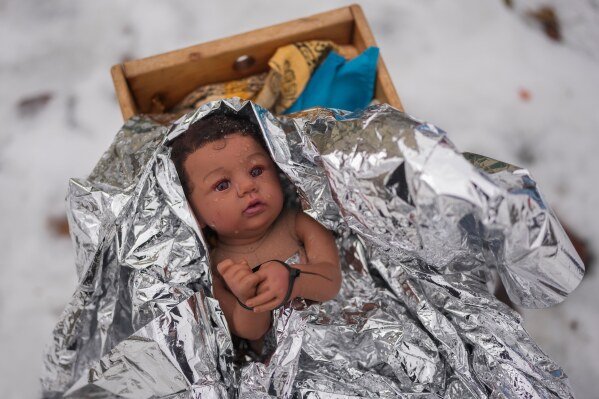
nativity scene ice
The Nativity Scene That Stopped You Scrolling
Picture this: You’re driving past a church during the Christmas season, expecting the usual—Mary and Joseph gazing adoringly at baby Jesus, maybe some shepherds, a few wise men if they’re going all out. Traditional. Comforting. Safe.
Instead, you see the Holy Family separated by chain-link fencing. Baby Jesus in a cage. Mary and Joseph wearing zip ties. A sign reading “NO ROOM AT THE INN – ICE.”
Your brain short-circuits. Is this… allowed? Can churches DO this? Is nothing sacred anymore?
Welcome to the newest front in America’s culture wars: weaponized nativity scenes.
Churches across the country are transforming their Christmas displays from peaceful religious tableaus into confrontational political statements about immigration policy. They’re depicting the Holy Family as refugees detained at the border, as asylum seekers turned away, as victims of the very policies their congregations’ neighbors might support.
The reactions are exactly what you’d expect—which is to say, explosive. Supporters call it prophetic witness, using sacred imagery to challenge unjust systems. Critics call it sacrilege, politicizing the holiest Christian holiday for partisan purposes.
Both sides are kind of right. Which is what makes this so fascinating.
Because underneath the controversy is a genuinely important question: What’s the relationship between faith and political action? When does prophetic witness become partisan hackery? And what happens when the Christmas story itself—sanitized by centuries of cozy tradition—gets reclaimed as the radical, uncomfortable narrative it actually is?
Buckle up. This is Christmas, politicized.
The Crisis That Made This Necessary
Let’s establish context, because these nativity scenes didn’t emerge in a vacuum.
The global migration crisis is staggering. Wars, climate change, economic collapse, and political persecution are displacing unprecedented numbers of people. The UN estimates over 100 million people worldwide are forcibly displaced—fleeing violence, seeking safety, desperately trying to protect their families.
When these desperate people reach borders—particularly the US-Mexico border—they encounter a system that ranges from bureaucratically indifferent to actively hostile. Families separated. Children detained. Asylum seekers turned away. People dying in the desert or drowning in rivers trying to reach safety.
And the response from much of the American public? Largely: “Not our problem. They shouldn’t have come illegally. We can’t help everyone. Secure the border.”
For Christians watching this unfold, the dissonance was unbearable. Because the Christmas story—the actual biblical narrative they celebrate every December—is literally about refugees.
Mary and Joseph traveled to Bethlehem for a census, found no room anywhere, and Jesus was born in the animal shelter equivalent. Shortly after, they fled to Egypt as refugees, escaping Herod’s massacre of infant boys. The Holy Family were migrants, displaced people, vulnerable refugees seeking safety.
The parallel was impossible to ignore: Christians celebrating a refugee family’s story while supporting policies that turn away modern refugees. Singing carols about welcoming the Christ child while voting to build walls against children seeking asylum.
Some churches couldn’t stomach the hypocrisy anymore. So they made it visual.
When Sacred Becomes Subversive
The traditional nativity scene is designed to evoke warmth and peace. Soft lighting on the manger. Gentle faces of Mary and Joseph. Serene animals. Everything calm, beautiful, spiritually uplifting.
It’s comfort food for the soul. And it’s also a sanitized version of a story that was actually traumatic, dangerous, and politically subversive.
The churches creating protest nativity scenes are reclaiming that edge. They’re saying: Remember, this family was desperate. They were vulnerable. They were turned away from shelter. They were refugees fleeing state violence. This wasn’t a peaceful, pretty story—it was survival.
The creative additions make this brutally explicit:
Zip ties on Mary and Joseph’s wrists, representing detained asylum seekers stripped of freedom and dignity.
Chain-link fencing separating the Holy Family, evoking the family separation policies that traumatized thousands of migrant children.
“ICE” signs replacing “no room at the inn,” drawing direct parallels between ancient Bethlehem’s inhospitality and modern immigration enforcement.
Gas masks or protective equipment, symbolizing the tear gas used on migrants at the border.
These aren’t subtle metaphors. They’re blunt, confrontational statements designed to make you uncomfortable. To disrupt your cozy Christmas feelings and force recognition of modern suffering that mirrors the biblical story.
The effect is jarring—which is exactly the point.
When Your Congregation Splits Down the Middle
Unsurprisingly, not everyone appreciated having their Christmas ruined by political commentary.
The reactions within church communities were immediate and polarized:
The Supporters: Finally! A church willing to speak prophetically instead of playing it safe! This is exactly what faith should do—comfort the afflicted and afflict the comfortable. Jesus himself said “I was a stranger and you welcomed me.” This display just makes that concrete. If you’re uncomfortable, maybe examine why.
The Opponents: This is disgusting. You’re politicizing the birth of Christ. Christmas should unite people in celebration, not divide them with partisan statements. Plus, there’s a difference between the Holy Family’s circumstances and people illegally crossing borders today. This comparison is dishonest and manipulative.
The Exhausted Middle: Can we PLEASE just have one holiday that isn’t a political battlefield? I come to church to worship God and find peace, not to be lectured about immigration policy. There are 51 other weeks for activism. Can’t Christmas just be Christmas?
Each group had legitimate points. And each group was utterly convinced the others were missing something crucial.
Progressive members felt their faith demanded engagement with injustice. How could you celebrate Jesus’ birth while ignoring people suffering the same vulnerabilities Jesus’ family faced? Silence felt like betrayal of gospel values.
Conservative members felt their sacred traditions were being hijacked for political purposes. Immigration policy is complex; reducing it to “Jesus was a refugee so open all borders” oversimplifies both theology and policy. Plus, the antagonistic approach alienated people who might otherwise be sympathetic.
The middle just wanted a break from the constant political warfare that had infected every other aspect of American life. Church was supposed to be refuge, not another front in the culture war.
All three perspectives are understandable. Which is why churches found themselves fractured, with members threatening to leave over a Christmas display.
The Media Circus
Of course, once these displays went up, the media pounced.
Mainstream coverage tended toward the sensational: “Church Puts Baby Jesus in Cage!” with photos designed for maximum emotional impact. The stories often focused on controversy and conflict—neighbors outraged, congregants leaving, community divided.
This framing emphasized spectacle over substance. The displays became clickbait, their actual messages buried under hot takes and manufactured outrage. The goal was engagement, not understanding.
Alternative media took different approaches depending on ideology:
Progressive outlets celebrated the displays as prophetic witness, highlighting the theological reasoning and the courage required to make such statements. They interviewed pastors about their motivations, gave context about immigration policy, positioned the churches as moral leaders.
Conservative religious media condemned the displays as sacrilege, arguing they politicized sacred symbols and missed the actual point of Christmas. They interviewed offended congregants, questioned the pastors’ theology, warned about the dangers of social gospel replacing actual gospel.
The result was competing narratives that barely acknowledged each other. Progressive coverage made it seem like everyone with genuine faith supported these displays. Conservative coverage made it seem like they were obvious outrages only heretics would endorse.
The truth, as usual, was messier and more complicated than either narrative allowed.
What the Bible Actually Says
Here’s where it gets theologically interesting: both sides could claim biblical support.
The case for protest nativity scenes:
The Bible is relentlessly focused on justice for the vulnerable. The Hebrew prophets spent more time condemning social injustice than sexual immorality. Jesus’ first sermon declared he came to “bring good news to the poor, proclaim freedom for the prisoners, recover sight for the blind, set the oppressed free.”
The Christmas story specifically emphasizes God’s solidarity with the vulnerable. Jesus wasn’t born to royalty in a palace—he was born to a peasant girl in an animal shelter. His family were refugees. The first to visit him were marginalized shepherds, not respectable religious leaders.
Matthew’s gospel explicitly connects Jesus’ identity with treatment of the vulnerable: “Whatever you did for the least of these, you did for me.” By this logic, turning away refugees is turning away Jesus himself.
The prophetic tradition demands speaking truth to power, even—especially—when it’s uncomfortable. Jeremiah, Amos, Isaiah all confronted their societies’ injustices. These nativity scenes follow that tradition.
The case against:
Jesus said his kingdom is “not of this world.” He explicitly refused to become a political revolutionary, disappointing those who wanted him to overthrow Roman occupation. When asked about taxes, he said “Give to Caesar what is Caesar’s”—acknowledging legitimate governmental authority.
The Christmas story is primarily about Jesus’ divine identity and mission to save humanity from sin, not about immigration policy. Reducing it to political commentary misses the theological point.
Christians are called to personal charity and hospitality—welcoming the stranger, caring for refugees—but that doesn’t necessarily translate to specific government policies. You can support immigration restrictions while still personally helping immigrants.
Plus, politicizing worship alienates people and transforms the church from community of faith to partisan organization. The church’s primary mission is spiritual, not political.
Both arguments have biblical support. Which is why this debate is genuinely difficult rather than having an obvious answer.
The Question of Effectiveness
Setting aside theology, there’s a practical question: Do these protest nativity scenes actually help?
The optimistic view: They force conversations that wouldn’t otherwise happen. They make abstract policy concrete and personal. They challenge comfortable Christians to wrestle with the implications of their faith. Even if they don’t change anyone’s mind immediately, they plant seeds that might grow later.
Plus, they demonstrate that not all Christians support restrictive immigration policies. They provide visible counter-witness to the white evangelical political bloc, showing that Christian faith can lead to different political conclusions.
The pessimistic view: They mostly just piss people off and harden existing positions. People who already agreed feel validated; people who disagreed feel attacked. The confrontational approach creates defensiveness rather than openness.
Worse, they allow churches to engage in performative activism—making a provocative display that feels righteous—without actually doing the hard work of helping immigrants. It’s cheaper and easier to put up a controversial nativity scene than to provide legal aid, housing, or sustained support for refugee families.
The displays might also backfire by making immigration seem like a “liberal issue,” further politicizing something that should unite Christians across political lines.
Both assessments have merit. The actual effectiveness probably varies by context—some displays open genuine dialogue, others just create division.
When Faith Leaders Take a Stand
The pastors who created these displays knew they were risking their positions and their churches’ unity. So why do it?
Most articulated a theology that demands action. For them, faith isn’t private belief—it’s public witness. Following Jesus means standing with the vulnerable, even when it’s costly. Especially when it’s costly.
They pointed to biblical examples: the Hebrew midwives defying Pharaoh’s command to kill babies. The prophet Nathan confronting King David about injustice. Jesus cleansing the temple. Faith sometimes requires confrontation.
These pastors also felt moral urgency. Every day, real people were suffering under immigration policies they believed were unjust and inhumane. Silence felt like complicity. Creating controversial nativity scenes was their way of saying: This matters. We see you. We won’t be silent.
The personal cost was real. Some pastors faced complaints, threats, demands for their resignation. Some churches lost members and donations. Some communities became fractured.
But many pastors felt this was precisely their calling—to speak uncomfortable truth, to challenge their congregations, to embody prophetic witness regardless of consequence.
Whether you agree with their specific statements or not, there’s something admirable about religious leaders willing to risk their positions for moral convictions. That’s increasingly rare.
The Future of Prophetic Protest
So what’s next? Will protest nativity scenes become a regular feature of Christmas, or will they fade as a brief cultural moment?
Probably somewhere in between. As long as immigration remains contentious, some churches will use their Christmas displays to make statements. But the shock value diminishes with repetition—next year’s caged baby Jesus won’t have the same impact as the first one.
The medium might evolve. Churches might find new creative ways to challenge comfortable narratives—interactive displays, virtual reality experiences, community art projects that invite participation rather than just observation.
There’s also potential for expansion beyond immigration. Churches could use nativity scenes to address other justice issues—homelessness, healthcare, climate change, racial justice. The format is flexible enough to carry various messages about vulnerable populations.
But there’s a risk: if every nativity scene becomes a political statement, the format loses power through oversaturation. It becomes expected rather than shocking, performative rather than prophetic.
The challenge is maintaining the edge—the ability to genuinely disrupt comfortable narratives—while avoiding the trap of making everything about politics at the expense of spiritual depth.
What Actually Matters
Here’s my take: These protest nativity scenes succeed or fail based on whether they lead to actual action.
If a church puts up a controversial display, generates buzz, and then does nothing to actually help immigrants—doesn’t provide legal aid, doesn’t offer sanctuary, doesn’t advocate for policy change—then it’s just performance. Activism as branding.
But if the display is part of sustained engagement—if it’s the visible manifestation of a church actually living out their convictions through direct service and advocacy—then it has integrity. It’s prophetic witness backed by action.
The nativity scene shouldn’t be the activism. It should be the invitation to activism, the disruption that opens space for actual work.
Same with the theological debate. If churches get so focused on arguing about whether protest displays are appropriate that they forget to actually welcome the stranger, care for the refugee, love the immigrant—then they’ve missed the point entirely.
The question isn’t just “Should we make this statement?” It’s “What are we willing to do about what we claim to believe?”
Because Jesus didn’t call his followers to make provocative artistic statements. He called them to feed the hungry, welcome the stranger, visit the imprisoned. The displays only matter if they catalyze that work.
The Christmas Story We Forgot
Maybe the most valuable thing these protest nativity scenes do is remind us what the Christmas story actually is.
We’ve domesticated it. Turned it into cozy sentimentality. Made it about family gatherings and gift-giving and general warm feelings. We sing about silent nights and away in a manger and little town of Bethlehem like it was all peaceful and lovely.
It wasn’t. It was a teenage girl pregnant under scandalous circumstances, giving birth in a shelter because society had no room for them. It was refugees fleeing state violence. It was the massacre of innocent children. It was God entering human vulnerability in its rawest form.
That’s the story. Not comfortable. Not safe. Not neutral.
When we sanitize it, we miss its power. We miss the radical claim that God sides with the vulnerable, that holiness shows up in unexpected places, that the kingdom of God disrupts comfortable power structures.
The protest nativity scenes—however controversial, however imperfect—force us to remember that. They make the familiar strange again. They restore the edge that centuries of tradition have dulled.
You don’t have to agree with their specific political messages to appreciate that service. You can think their immigration policy positions are wrong while still valuing the reminder that Jesus’ birth was itself a political event with subversive implications.
The Uncomfortable Invitation
So where does this leave us?
With questions, mostly. Uncomfortable ones:
- Can we celebrate Christmas authentically while ignoring modern refugees who face the same vulnerabilities as the Holy Family?
- Is it possible to separate spiritual celebration from political implication, or does faith inevitably demand political engagement?
- How do we balance prophetic witness with community unity?
- When does creative protest cross the line into manipulation or sacrilege?
- What are we actually willing to do about the issues we claim to care about?
These nativity scenes—caged babies and zip-tied families and ICE signs replacing inn doors—are invitations to wrestle with these questions. Whether you think they’re brilliant or blasphemous, they’re asking you to think.
About what you believe. About what your faith demands. About whose suffering you’re willing to notice and whose you’d rather ignore.
They’re refusing to let Christmas be comfortable. To let sacred tradition provide cover for moral complacency. To let celebration happen without recognition of ongoing suffering.
That’s prophetic work, even when it’s imperfect.
So maybe instead of just having opinions about whether these displays are appropriate, we should engage with what they’re actually asking:
What does it mean to follow a refugee savior in a world full of refugees?
What does welcoming the Christ child require of us when children are being turned away at borders?
How do we live the Christmas story instead of just celebrating it?
Those questions won’t be answered by nativity scenes—protest or traditional. They’ll only be answered by how we actually live.
But at least the scenes are asking.
And in a culture that prefers its Christmas pre-packaged and politically neutral, maybe that’s exactly the disruption we need.
Even if—especially if—it ruins our comfortable celebration.
Because some things matter more than comfort.
Like actually living what we claim to believe.