When a Developer Tried to Build “Christian America” in One Tennessee Town (And Everyone Lost Their Minds)
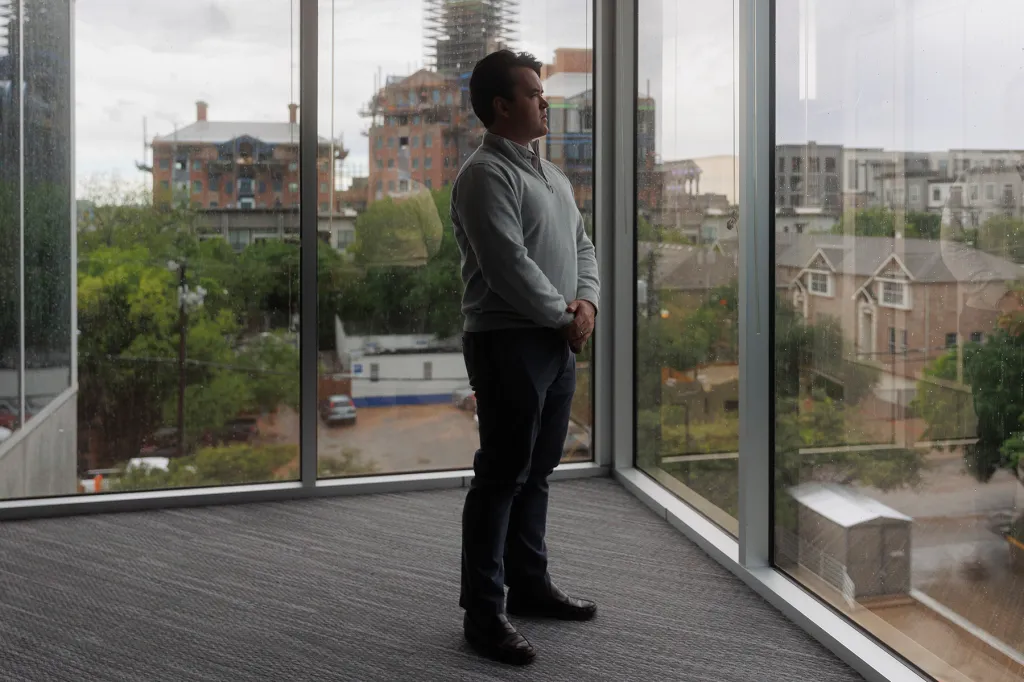
Josh Abbotoy
The Neighborhood That Divided a Community
Josh Abbotoy had a vision: Build a neighborhood in rural Tennessee where Christians could live surrounded by people who share their values. Where faith wouldn’t just be private belief but the organizing principle of community life. Where “faith, family, and freedom” weren’t just slogans but the actual foundation of how people lived together.
A Christian nationalist enclave. Unapologetically religious. Explicitly ideological. Designed from the ground up to be a refuge from what Abbotoy sees as America’s increasing secularization.
He announced his plans. He started securing land. He began promoting the development to like-minded Christians looking for community.
And the small Tennessee town where he planned to build it absolutely exploded.
Supporters said: Finally! A place where we can live according to our values without apologizing! A community that puts God first! This is what America needs!
Critics said: This is exclusionary, divisive, and dangerous! You can’t build a neighborhood that’s only for people who share your religion! This violates everything America stands for!
The fight over Abbotoy’s development became a proxy war for larger national debates: What role should Christianity play in public life? Can religious communities self-segregate? Is Christian nationalism a return to America’s roots or a threat to its pluralistic future? Who gets to define what “American values” means?
This is the story of what happens when someone tries to build “Christian America” in miniature—and discovers that even in rural Tennessee, not everyone agrees on what that should look like.
It’s also a story about affinity-based communities, the tension between religious freedom and inclusivity, and whether you can create a neighborhood based on shared ideology without creating division, exclusion, and conflict.
Welcome to the fight over Christian nationalism playing out in one small town—where the stakes are both a real estate development and the soul of American community.
Who Is Josh Abbotoy (And What Does He Want)?
Let’s start with the developer at the center of this controversy.
Josh Abbotoy is a real estate entrepreneur with strong conservative Christian beliefs. He’s not a pastor or theologian—he’s a businessman who sees opportunity at the intersection of faith and housing.
His pitch is simple: Christians are tired of living in secular communities where their values are marginalized or mocked. They want neighborhoods where everyone shares their beliefs about family, morality, governance, and culture. Where kids can play together knowing all the parents share similar values. Where community events reflect Christian priorities. Where faith isn’t just tolerated but celebrated and central.
Abbotoy’s vision for the Tennessee development includes:
Residential homes designed for traditional families (read: married heterosexual couples with children, the family structure Christian nationalism emphasizes).
Community spaces for worship, Bible study, fellowship—explicitly religious gathering places integrated into neighborhood design.
Shared values covenant where residents agree to uphold Christian principles in their personal conduct and community participation.
Businesses aligned with Christian values—shops, services, possibly schools that reflect the community’s religious commitments.
Governance by shared belief—homeowners’ association rules informed by Christian principles, creating de facto religious governance of the neighborhood.
This isn’t just a neighborhood with a church nearby. This is a neighborhood where Christianity shapes everything—architecture, community rules, who’s welcomed, what activities happen, how disputes get resolved.
Abbotoy frames this as religious freedom: Christians exercising their right to live according to their beliefs, creating community that reflects their values.
Critics frame it as Christian nationalism: using religious identity to create exclusive, ideologically homogeneous enclaves that exclude anyone who doesn’t conform.
Both descriptions are accurate. That’s the problem.
What Even Is Christian Nationalism? (A Primer)
Since this term gets thrown around constantly, let’s define it clearly:
Christian nationalism is the ideology that America is fundamentally a Christian nation, that its laws and governance should reflect Christian values, and that American identity is inseparable from Christian identity.
Key beliefs of Christian nationalism:
America was founded as Christian nation. The founders intended Christianity to be central to American government and culture. Separation of church and state was never meant to exclude Christianity from public life.
American law should reflect Christian morality. Legislation on marriage, sexuality, family, education, and culture should align with Christian (usually conservative Protestant) interpretations of biblical teaching.
Christianity deserves privileged place in public life. Not just equal treatment with other religions, but recognition as the religion that defines American identity and values.
Secular multiculturalism threatens America. Diversity of belief, acceptance of non-Christian religions, separation of religious and civic identity—these undermine what makes America great.
Real Americans are Christians. National belonging and religious identity are linked. To be fully American means embracing (their version of) Christianity.
This is different from just being Christian and politically conservative. Plenty of Christians vote Republican, hold traditional values, and practice their faith without believing America should officially privilege Christianity.
Christian nationalism specifically fuses religious and national identity, arguing that being American and being Christian are inseparable, and that government should reflect this fusion.
Abbotoy’s development embodies this ideology at micro level: creating a small community where Christian identity defines belonging, shapes governance, and determines who’s welcome.
The Affinity Community Concept (And Why It’s Complicated)
Abbotoy’s development is an “affinity-based community”—residential area organized around shared identity or values.
These aren’t new. America has lots of them:
Religious communities: Catholic neighborhoods, Orthodox Jewish enclaves, Muslim communities—people living near others who share their faith.
Lifestyle communities: Retirement communities for seniors, artist colonies, intentional communities organized around sustainability or alternative lifestyles.
Cultural enclaves: Ethnic neighborhoods like Chinatowns, Little Italys, areas where immigrants cluster for cultural continuity and mutual support.
Affinity communities offer real benefits:
Shared values create cohesion. Everyone’s on the same page about what matters, reducing conflict over community priorities.
Cultural continuity. Traditions, practices, beliefs can be maintained and passed to next generation more easily when surrounded by others who share them.
Mutual support. Community members understand each other’s needs, challenges, and perspectives, enabling better support systems.
Safety and belonging. Particularly for marginalized groups, living among people who share your identity can provide refuge from discrimination and misunderstanding.
So why is Abbotoy’s development controversial when other affinity communities aren’t?
Context matters. A minority religious community clustering for mutual support (like Orthodox Jews in certain neighborhoods) is different from majority religion (Christianity) creating exclusive enclave in already-Christian-dominated area.
Power dynamics. When marginalized groups create affinity communities, it’s self-protection. When dominant groups do it, it can be segregation and exclusion.
Ideology matters. Communities organized around ethnicity or faith practice are different from communities organized around political ideology (Christian nationalism) that explicitly seeks to shape governance.
Exclusion concerns. Any affinity community risks excluding outsiders, but when the organizing principle is explicitly ideological, the exclusion becomes political and potentially discriminatory.
Abbotoy’s development isn’t just “Christians living near other Christians.” It’s “Christian nationalists creating ideologically pure enclave governed by their interpretation of Christian values.”
That’s what makes people nervous.
The Supporters: Why This Feels Like Freedom
For people supporting Abbotoy’s development, the opposition seems baffling and hypocritical.
Their argument:
“We’re just exercising religious freedom—the same freedom other groups use to create their own communities. Why is it okay for everyone else but not for Christians?”
They point out: LGBTQ neighborhoods exist. Ethnic enclaves exist. Retirement communities exist. Secular intentional communities exist. Nobody objects to those as discriminatory or divisive.
They argue: Christians are increasingly marginalized in mainstream American culture. Media mocks their beliefs. Schools teach values they disagree with. Workplaces penalize religious expression. Creating their own communities is self-defense, not aggression.
They emphasize: Nobody’s forcing anyone to live there. This is voluntary association. People who don’t like it can live elsewhere. That’s how freedom works.
They insist: They’re not trying to impose Christianity on others—just create space where they can live according to their own beliefs without interference.
From this perspective, Abbotoy’s development is about liberty: Christians claiming their right to self-determination, creating communities that reflect their values, opting out of secular culture they find hostile to their beliefs.
The religious freedom argument resonates particularly in conservative Christian circles that feel increasingly besieged by cultural changes they oppose—LGBTQ rights, declining church attendance, removal of Christian symbols from public spaces, changing attitudes about sexuality and gender.
Creating explicitly Christian communities feels like preserving something precious that’s disappearing from mainstream culture.
The Critics: Why This Feels Like Exclusion
For people opposing Abbotoy’s development, the religious freedom argument misses the point entirely.
Their argument:
“This isn’t about freedom—it’s about creating exclusive enclaves that divide communities and marginalize anyone who doesn’t conform to narrow ideology.”
They point out: Christianity isn’t marginalized in Tennessee. Christians are the overwhelming majority. This isn’t a persecuted minority seeking refuge—it’s the dominant group creating ideological fortress.
They argue: Affinity communities based on ethnicity or faith practice are different from communities based on political ideology. Christian nationalism isn’t just religion—it’s specific political movement with exclusionary agenda.
They emphasize: This will change the town’s character, potentially driving out residents who don’t share these values, making entire area less welcoming to diversity.
They insist: Religious freedom doesn’t mean creating mini-theocracies where one religion’s rules govern everyone in a geographic area.
From this perspective, Abbotoy’s development is about power: using religious freedom language to create spaces where Christian nationalist ideology can be enforced, where people who don’t conform are excluded or pressured to leave, where diversity is eliminated in favor of ideological purity.
The concern isn’t just this one development—it’s the broader trend it represents. If Christian nationalists can create entire communities organized around their ideology, governed by their principles, what happens to people who don’t fit? What happens to pluralism, diversity, and the secular governance that protects everyone’s religious freedom?
Creating explicitly ideological communities feels like fragmenting America into hostile camps that increasingly can’t live together.
The Legal Questions Nobody Wants to Answer
This dispute raises thorny legal questions without clear answers:
Can developers create explicitly religious communities? Generally yes—religious organizations can build housing for their members. But can they exclude non-members? Fair housing laws prohibit discrimination based on religion. How does that apply to affinity-based religious communities?
Can homeowners’ association rules enforce religious standards? HOAs have broad authority to create community rules. But can those rules require religious observance, prohibit behavior permitted by secular law, or enforce theological positions? Where’s the line between community standards and religious coercion?
What about zoning and land use? Local governments have authority over development through zoning laws. Can they reject development specifically because it’s ideologically based? Or would that violate religious freedom? What if the development creates problems for municipal services or existing residents?
Does this violate church-state separation? If the community effectively becomes governed by Christian principles enforced through HOA rules, is that private religious association or unconstitutional establishment of religion in quasi-governmental entity?
What about education? If the community includes schools teaching from Christian nationalist perspective, who oversees curriculum? What standards apply? Can public funding support such schools?
These questions don’t have simple answers. Courts have ruled inconsistently on related cases. Legal precedents pull in different directions. Both sides can cite case law supporting their positions.
The legal ambiguity means this dispute will likely end up in court, creating precedents that will affect similar developments nationwide.
What This Does to the Town (The Real Costs)
Beyond the ideological debates, this controversy is doing actual damage to a real community:
Division: The town is splitting into factions—pro-development versus anti-development, Christian nationalist versus pluralist, traditional values versus inclusivity. Neighbors who used to get along are now in opposed camps.
Economic disruption: Uncertainty about the development affects property values, business investment, and economic planning. Some people are leaving. Some businesses are relocating. Economic stability is suffering.
Political polarization: Local elections become referendums on the development. Candidates must choose sides. Governance becomes paralyzed by ideological conflict rather than focusing on practical municipal needs.
Social fragmentation: Community events, civic organizations, schools—everything becomes tinged with the controversy. The shared civic life that held the town together is fracturing.
National attention: The town becomes symbol in national culture wars, attracting outside activists, media coverage, and ideological warriors who care more about the symbolic battle than the actual community.
Exhaustion: Residents are tired of fighting. Some just want it resolved—they almost don’t care how, they just want the community conflict to end.
This is what happens when ideological movements collide with actual places where actual people live. The abstract debates about Christian nationalism and religious freedom play out as real conflict destroying real relationships in real communities.
The people living there aren’t just debating ideas—they’re watching their community tear itself apart.
The Environmental and Practical Concerns (That Get Overlooked)
Amid the ideological warfare, practical concerns about the actual development get lost:
Land use changes: The development will convert agricultural or undeveloped land to residential use. What’s the environmental impact? What about water resources, wildlife habitat, local ecosystems?
Infrastructure strain: Can local roads, utilities, schools, emergency services handle additional population? Who pays for necessary infrastructure upgrades?
Agricultural impacts: If the development displaces farmland, what happens to local agriculture? To farmers whose land becomes surrounded by suburban development?
Economic sustainability: Is this development economically viable? What if it fails? What happens to partially built community? Who’s financially responsible?
Integration challenges: How will this development connect (or not) with existing town? Will it be isolated enclave or integrated neighborhood? What are implications for town’s future development?
These practical questions matter regardless of ideology. Even supporters should want assurance that the development is well-planned, environmentally sound, financially viable, and won’t create problems for existing residents.
But practical concerns get overwhelmed by ideological debates. Everyone’s arguing about Christian nationalism while ignoring whether this is actually good urban planning.
The National Implications (Why Everyone’s Watching)
This isn’t just about one Tennessee town. It’s a test case for broader questions about American community:
Can ideologically homogeneous communities coexist with pluralistic democracy? If people increasingly sort themselves into ideological enclaves, what happens to shared civic life, compromise, and governance across difference?
Is this religious freedom or exclusionary tribalism? Where’s the line between people with shared values creating community and creating spaces that exclude and divide?
What’s the future of American Christianity? Is it integrating with diverse society or retreating into protected enclaves? Both? Does it matter?
How do we balance rights? Religious freedom to create faith-based communities versus fair housing protections versus church-state separation versus community cohesion. When these values conflict, which takes priority?
What’s the endgame? If Christian nationalists create separate communities, do progressives do the same? Does America fragment into hostile ideological territories? Is that sustainable?
The Abbotoy development is microcosm of these national tensions. Whatever happens in this Tennessee town will influence similar disputes elsewhere. The precedents set—legal, social, political—will reverberate beyond this specific case.
That’s why national organizations are involved, why media is covering it, why people across the country are watching.
It’s not just about whether one development gets built. It’s about what kind of America we’re becoming.
The Future: What Happens Next?
Several scenarios are possible:
Scenario 1: Development proceeds. Legal challenges fail, local opposition softens or gets outmaneuvered, Abbotoy builds his Christian nationalist community. It becomes model for similar developments elsewhere. America sees more explicitly ideological affinity communities.
Scenario 2: Development gets blocked. Legal obstacles, zoning denials, or political opposition prevent construction. Becomes precedent for limiting ideologically based residential developments. Affinity community movement faces more restrictions.
Scenario 3: Compromise and modification. Development proceeds but with changes addressing some concerns—more inclusive rhetoric, fewer explicitly ideological restrictions, better integration with existing town. Becomes hybrid model.
Scenario 4: Economic failure. Development can’t attract enough buyers, faces financial problems, gets partially built then abandoned. Becomes cautionary tale about viability of such communities.
Scenario 5: Ongoing conflict without resolution. Legal battles continue for years. Development proceeds in fits and starts. Community remains divided indefinitely. Becomes symbol of irreconcilable cultural conflict.
Most likely: Some messy combination of these scenarios. Nothing clean or definitive, just ongoing tension as various actors pursue competing visions for the community’s future.
The Uncomfortable Questions We’re Avoiding
This controversy forces questions both sides would rather not answer:
For supporters:
If religious freedom justifies Christians creating exclusive communities, does it also justify Muslims, atheists, or LGBTQ people doing the same? If you’d oppose those communities, aren’t you being hypocritical?
If you’re retreating into ideological enclaves, how does that spread your faith? Isn’t Christianity supposed to be missionary, engaging with non-believers rather than segregating from them?
If you succeed in creating Christian nationalist communities, what about Christians who disagree with Christian nationalism? Are they welcome? Or are you creating not just Christian community but ideologically pure one?
For critics:
If you oppose this development, do you also oppose other affinity-based communities? If not, what’s the principle distinguishing acceptable from unacceptable segregation by choice?
If Christians genuinely feel marginalized by cultural changes, don’t they have right to create spaces where their values are upheld? What alternative are you offering them?
If you insist on pluralism and diversity everywhere, are you imposing your values just as much as Christian nationalists impose theirs? Where’s the space for people who don’t want diversity and pluralism?
Both sides have legitimate concerns. Both sides also have blind spots and double standards.
The Conclusion Nobody Wants
The fight over Josh Abbotoy’s Christian nationalist development in Tennessee doesn’t have a satisfying resolution.
It’s not going to end with one side clearly right and the other clearly wrong. With a compromise that makes everyone happy. With a solution that resolves the underlying tensions.
Because this isn’t really about one development in one town.
It’s about irreconcilable visions for American community:
One vision: America as collection of ideologically distinct communities where like-minded people can live according to their shared values without interference. Religious freedom means the right to create spaces governed by your beliefs.
Another vision: America as pluralistic society where diverse people live together, governed by secular principles that protect everyone’s rights. Religious freedom means protection from having others’ religion imposed on you.
Both visions have merit. Both have precedent in American history. Both can cite constitutional support.
And they’re fundamentally incompatible.
You can’t have both thoroughly integrated, pluralistic communities AND ideologically homogeneous enclaves. You can’t both protect freedom to create affinity communities AND prevent segregation and exclusion.
The Abbotoy development forces this tension into the open. Makes it concrete. Puts it in one specific town where real people have to decide which vision they want.
Whatever happens in this Tennessee town won’t settle the larger debate. It’ll just be one more data point in America’s ongoing argument with itself about identity, belonging, community, and freedom.
The fight continues. The community divides. The questions remain unanswered.
Welcome to America in 2025, where we can’t even agree on whether we should live together or apart.
The small Tennessee town divided by Josh Abbotoy’s development is all of us—struggling with the same questions, facing the same tensions, unable to find resolution.
The only certainty: This fight isn’t ending anytime soon.
Key Takeaways:
- Christian nationalist developer proposes ideologically based community in Tennessee
- Supporters see religious freedom; critics see exclusionary tribalism
- Legal questions about religious communities and discrimination remain unresolved
- Local conflict reflects national tensions about pluralism and segregation
- No clear resolution satisfies both visions for American community
- Similar disputes will continue as ideological sorting intensifies
The battle for one small town’s future is really the battle for America’s soul. And nobody’s winning.