Was the Star of Bethlehem Real? When Astronomy Meets the Christmas Story

star of bethlehem
The Christmas Question Nobody Can Answer
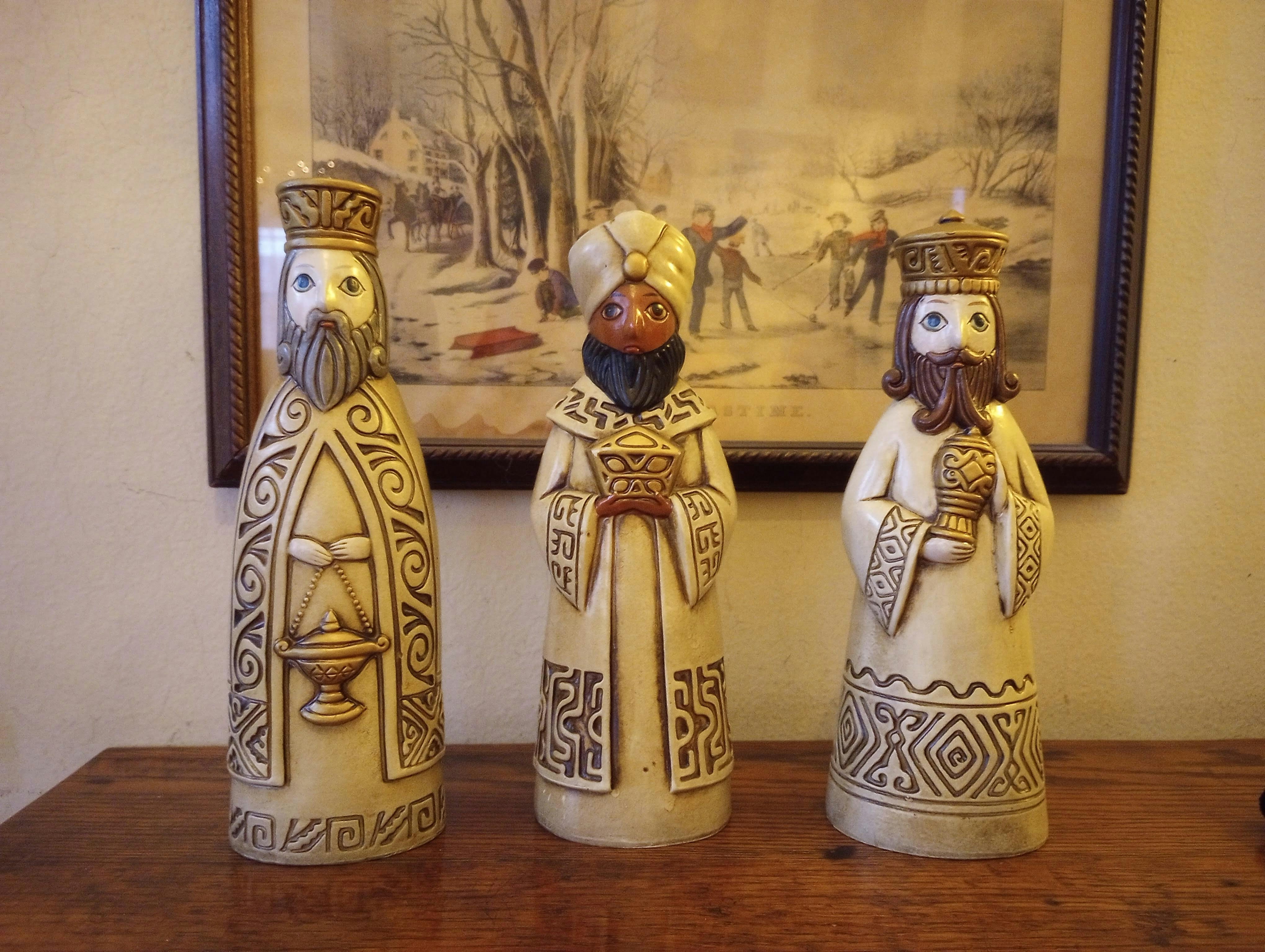
Every December, nativity scenes appear featuring three wise men (we’ll get to that number later—spoiler: it’s wrong) following a bright star to a stable in Bethlehem. Children’s Christmas pageants recreate the scene. Carols sing about it. The “Christmas star” tops countless trees and decorations.
It’s one of the most iconic elements of the Christmas story. And it raises a question that’s been debated for two thousand years: Was the Star of Bethlehem real?
Not “real” as in spiritually meaningful or symbolically significant—obviously it’s important to billions of Christians. But historically real. Astronomically real. Did something actually appear in the sky that ancient observers could see and follow?
The answer is: maybe? It depends on who you ask, what evidence you prioritize, and how you define “real.”
Astronomers have proposed everything from planetary conjunctions to supernovae to comets. Historians have hunted through ancient records for mentions of unusual celestial events around the time of Jesus’ birth. Theologians have debated whether the star was natural phenomenon or supernatural miracle.
And after two millennia of investigation, we still don’t have a definitive answer.
What we do have is a fascinating intersection of faith and science, where biblical narrative meets astronomical records, where ancient astrology collides with modern astrophysics, where the question “what happened?” becomes impossibly tangled with “what does it mean?”
Welcome to the mystery of the Star of Bethlehem—where everyone has theories and nobody has proof.
What the Bible Actually Says (It’s Less Than You Think)
Let’s start with the source material, because a lot of people’s mental image of the Star of Bethlehem includes details that aren’t actually in the Bible.
The star appears in exactly one Gospel: Matthew. Not Mark. Not Luke (who has a completely different nativity narrative involving censuses and angels and shepherds but no star). Not John. Just Matthew.
Here’s what Matthew 2:1-12 actually tells us:
Wise men (not “three,” not explicitly “kings,” just “magi” from “the East”) arrive in Jerusalem asking where the newborn “King of the Jews” is. They saw “his star” and have come to worship him.
King Herod gets worried about this potential rival, asks his advisors where the Messiah is supposed to be born, they say Bethlehem based on prophecy. Herod tells the wise men to go find the child and report back.
The wise men leave Jerusalem and—here’s the key passage—”the star they had seen when it rose went ahead of them until it stopped over the place where the child was.”
They find Jesus (in a house, not a stable—that’s Luke’s version), present gifts (gold, frankincense, myrrh), then leave without reporting back to Herod because they’re warned in a dream.
That’s it. That’s the entire biblical account of the star.
Notice what’s NOT there:
- No description of what the star looked like
- No explanation of how it “went ahead” of them or “stopped”
- No indication of how long they followed it
- No mention of exactly when Jesus was born relative to when they saw the star
- Nothing about how many wise men there were (tradition says three because there were three gifts, but the text doesn’t specify)
The account is maddeningly vague if you’re trying to identify an actual astronomical event. Which is probably because Matthew wasn’t writing astronomy—he was writing theology.
The Astronomy Detective Work
Despite the sparse biblical details, astronomers love this mystery. Because if something appeared in the sky unusual enough that ancient astrologers traveled hundreds of miles following it, there should be some trace in astronomical records or something we can retroactively identify.
So what are the candidates?
Planetary Conjunction: This is probably the most popular theory among astronomers. Planets don’t actually move relative to stars (from our perspective), but their orbits create periods where they appear very close together in the sky—sometimes so close they look like one unusually bright “star.”
The most famous candidate: a triple conjunction of Jupiter and Saturn in 7 BC. These two planets appeared close together three times over several months—unusual enough to catch attention, potentially meaningful to ancient astrologers who assigned significance to planetary positions.
Jupiter was associated with kingship. Saturn was associated with the Jews. A conjunction of “the king planet” in “the Jewish planet” might have been interpreted as “a king is born to the Jews.”
The timing roughly works if Jesus was born around 6-4 BC (yes, Jesus was probably born Before Christ—the calendar calculations were off). The astronomical event is verified—we can calculate exactly when these conjunctions occurred.
Problems: Would a planetary conjunction really guide travelers to a specific location? Would it “stop” over a particular house? Planetary conjunctions are slow-moving phenomena visible across huge areas. They don’t point to specific spots.
Supernova: Maybe the star was actually a star—specifically, a star exploding. Supernovae can appear suddenly in the sky, be visible for weeks or months, then fade. They’re bright enough to be seen during the day. Ancient astronomers definitely noticed and recorded them.
Did one occur around the time of Jesus’ birth? Possibly. Chinese and Korean astronomical records mention unusual celestial phenomena during this period, though the dating and descriptions don’t perfectly align with the biblical timeline.
Problems: Supernovae don’t move. They appear in one spot and stay there. How does a supernova “go ahead” of travelers or “stop” over a location? Also, if a supernova bright enough to see during the day appeared, you’d expect more historical records of it. The evidence is thin.
Comet: Comets appear, move across the sky, then disappear—which matches the biblical description better than stationary phenomena. Ancient peoples often interpreted comets as significant omens. Halley’s Comet appeared in 12 BC, which is too early, but other comets might have appeared around the right time.
Problems: Comets were generally considered bad omens—harbingers of disaster, not the birth of a king. Would the magi follow something they interpreted as ominous? Also, comets don’t really “stop” over specific locations any more than planets do.
Something Else Entirely: Maybe it was a meteor, an aurora, a rare atmospheric phenomenon, or some combination of events that together created the impression of a miraculous sign.
Or maybe—and this is what many theologians argue—it was a genuine miracle, a supernatural event that can’t be explained by natural astronomy. God put something in the sky specifically to guide the magi, and we shouldn’t expect to find natural explanations for supernatural events.
The Historical Record Hunt
If an unusual celestial event occurred around Jesus’ birth, we should find mentions in historical records from various cultures, right?
The problem: we’re looking for something that happened roughly 2,000 years ago, with significant uncertainty about the exact year. Ancient astronomical records exist, but they’re fragmentary, sometimes poorly dated, and not always clear about what they’re describing.
Chinese astronomers kept detailed records of unusual celestial events. Korean records exist too. Babylonian astronomical texts documented eclipses, planetary positions, and unusual phenomena.
Researchers have combed through these looking for anything that might match the Star of Bethlehem. And they’ve found… possibilities. Mentions of unusual stars or comets during roughly the right period. But nothing that definitively matches the biblical description or timing.
Part of the problem is we don’t know exactly when Jesus was born. The traditional date of 1 AD is almost certainly wrong. Most scholars place Jesus’ birth somewhere between 6 BC and 4 BC, based on historical references to King Herod (who died in 4 BC).
But “somewhere between 6 and 4 BC” is a huge window when you’re trying to match specific astronomical events. Was it the planetary conjunction in 7 BC? A possible comet in 5 BC? Some other event we haven’t identified?
The historical records are suggestive but not conclusive. There were unusual celestial events during this general period. Whether any of them was the Star of Bethlehem remains speculation.
What the Magi Actually Were
Understanding the Star of Bethlehem requires understanding who was supposedly following it: the magi.
“Magi” (singular: magus) were a class of priests in ancient Persia, associated with Zoroastrianism. They were scholars, astrologers, and advisors to rulers. Think ancient scientists/philosophers who studied the stars and interpreted their meanings.
This matters because the magi weren’t just looking at the sky randomly. They were professional astrologers who watched for celestial signs and interpreted them according to complex systems of meaning.
To them, planetary positions, conjunctions, and unusual phenomena weren’t just pretty lights—they were messages. Specific planets in specific positions meant specific things. A conjunction of Jupiter and Saturn in Pisces (which is what the 7 BC triple conjunction was) would have had particular significance according to their astrological framework.
So the question isn’t just “was there an unusual star?” It’s “was there a celestial event that astrologers of that era would have interpreted as indicating the birth of a king in Judea?”
That’s a much more specific and answerable question. And the answer is: probably yes. There were several astronomical events during the likely period of Jesus’ birth that ancient astrologers would have found significant.
Whether any of them was actually what Matthew’s Gospel describes is another question entirely.
The Theological Complications
Here’s where this gets tricky for believers: Does it matter whether the star was “real” in an astronomical sense?
For some Christians, yes absolutely. If the Bible describes a historical event, that event should be historically verifiable. Finding astronomical evidence for the Star of Bethlehem strengthens faith by demonstrating biblical accuracy.
For other Christians, not really. The point of the star in Matthew’s Gospel is theological, not astronomical. It’s about God guiding gentiles (the magi) to recognize Jesus as king. Whether that guidance came through natural astronomical events or supernatural intervention doesn’t change the spiritual meaning.
Some go further: insisting on natural explanations might actually diminish the miracle. If the star was just a planetary conjunction, it’s less special. The supernatural interpretation—that God created a unique celestial phenomenon specifically to announce Jesus’ birth—preserves the extraordinary nature of the event.
This creates an interesting divide in how people approach the question:
Scientific approach: Look for natural astronomical explanations. If we find one, great—it validates the historical core of the biblical account. If we don’t, the story might be legendary or symbolic rather than historical.
Faith-based approach: The star was miraculous whether or not natural explanations exist. Finding astronomical candidates is interesting but not necessary. God can work through natural phenomena or override them entirely.
Synthesis approach: God used natural astronomical events in providential timing to accomplish his purposes. The conjunction or comet or whatever was both natural (scientifically explainable) and miraculous (divinely timed and directed for a specific purpose).
None of these approaches is objectively right or wrong—they represent different ways of relating faith and science, different priorities in how we understand biblical narratives.
Why This Fascinates Us
The Star of Bethlehem occupies a unique cultural space where multiple human interests converge:
Astronomy/Science: It’s a detective story. Can we use modern astronomical knowledge and historical records to solve a 2,000-year-old mystery? Can we identify exactly what appeared in the sky? Scientists love this kind of challenge.
History: It’s a question about ancient events, ancient peoples, and how they understood the world. Historians want to know what actually happened, to separate legend from fact, to understand the historical Jesus and the world he was born into.
Theology/Faith: It’s central to one of Christianity’s most important stories. Understanding the star potentially deepens understanding of the nativity, of how God reveals himself, of the significance of Jesus’ birth.
Culture: It’s part of Christmas, one of the most widely celebrated holidays globally. Even non-religious people engage with nativity imagery. The star is iconic—understanding its origins enriches cultural appreciation.
The mystery also has perfect ingredients for sustained fascination: just enough evidence to seem solvable, just enough ambiguity to prevent definitive answers. Every few years, a new theory emerges, new astronomical data gets analyzed, new historical documents surface.
Planetarium shows recreate the night sky of 2,000 years ago. Astronomers publish papers proposing new candidates. Documentaries investigate the latest theories. The conversation never ends because the evidence never quite clinches it.
The Modern Meaning
Regardless of astronomical reality, the Star of Bethlehem retains powerful symbolic significance.
For believers, it represents divine guidance—God directing people to Jesus, making his presence known, revealing truth to those who seek it. The star is a metaphor for faith itself: following where God leads even when you don’t understand the destination.
For broader culture, the star symbolizes hope, wonder, and the magic of Christmas. It’s a beautiful image—a bright light in the darkness, guiding travelers to something precious. That resonates whether you believe in its literal historicity or not.
The star also represents the universal nature of Jesus’ significance in Christian theology. The magi were gentiles, foreigners, not part of God’s chosen people Israel. Yet they were the first to worship the infant Jesus. The star guided outsiders to the Messiah, symbolizing that Jesus came for all humanity, not just one nation.
This openness, this inclusivity, this breaking down of barriers—that’s what the star means in Christian tradition. And that meaning persists regardless of whether it was a conjunction of Jupiter and Saturn or a supernatural light or symbolic narrative.
Where We Stand Now
So after all this—the astronomical theories, the historical investigation, the theological reflection—where are we?
We don’t know what the Star of Bethlehem was. We probably never will with certainty.
We have plausible natural explanations—planetary conjunctions, possible comets, other astronomical events that occurred during the likely period of Jesus’ birth. Any of these could have been what the magi saw and interpreted as significant.
We have fragmentary historical records that might reference unusual celestial phenomena during this period, though nothing that definitively matches the biblical description.
We have a biblical account that’s theologically rich but astronomically vague, written to convey spiritual meaning rather than scientific detail.
And we have two thousand years of people being fascinated by this question, approaching it from different angles, finding different answers based on different priorities.
For some, the planetary conjunction theory is satisfying—a natural explanation that doesn’t require rejecting science while still honoring the biblical narrative. God used natural celestial mechanics in perfect timing to guide the magi.
For others, natural explanations miss the point. The star was miraculous precisely because it can’t be reduced to normal astronomy. It “went ahead” of the magi and “stopped” over a specific location—things natural celestial objects don’t do.
For still others, the historical reality doesn’t matter as much as the symbolic truth. Whether the star was literal or literary, it teaches us about seeking Jesus, about God’s guidance, about the universal significance of Christ’s birth.
The Ending Without Answers
The Star of Bethlehem remains mysterious. Which might be exactly as it should be.
Because the mystery invites engagement. It prompts questions. It creates space for both scientific inquiry and spiritual reflection. It allows multiple interpretations without requiring everyone to agree on one “correct” answer.
The astronomer can investigate planetary conjunctions. The historian can hunt through ancient records. The theologian can explore symbolic meanings. The believer can contemplate divine guidance. The skeptic can question historical accuracy.
All of these approaches have value. All contribute something to our understanding—even if that understanding remains incomplete.
Maybe we’ll never know exactly what appeared in the sky 2,000 years ago. Maybe the evidence is too fragmentary, too uncertain, too lost to time. Maybe natural explanations will always be possibilities rather than certainties. Maybe supernatural explanations will always require faith rather than proof.
But the conversation continues. Every December, the star appears atop Christmas trees and nativity scenes. Every year, new theories emerge, new evidence gets analyzed, new interpretations offered.
And every generation inherits the same mystery: something guided ancient astrologers to a baby in Bethlehem. Something unusual enough, significant enough, meaningful enough to inspire a journey.
Whether that something was Jupiter and Saturn in conjunction, a supernova, a comet, a miracle, or something else entirely, it’s become one of the most enduring mysteries in human history.
The Star of Bethlehem shines on, as mysterious and captivating as ever—pointing not just toward Bethlehem, but toward the endless human desire to understand where faith and fact meet, where science and spirituality intersect, where the sky tells stories that transcend mere astronomy.
And maybe that’s the real legacy of the star: not an answer, but a question that keeps us looking up, keeps us searching, keeps us wondering what mysteries the heavens might reveal.
Merry Christmas. The star still shines. We just don’t know exactly what it is.
And perhaps that’s perfect.