
The Tradwife Wars: When Picture-Perfect Becomes a Prison
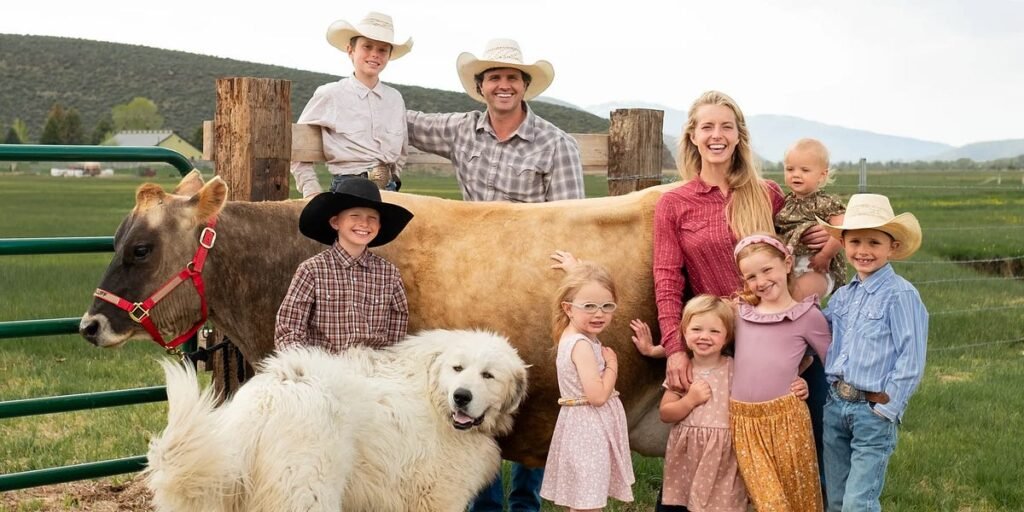
Ballerina Farm
The Cottage-Core Trap
Scroll through Instagram long enough and you’ll find them: women in flowing dresses kneading sourdough at marble countertops. Children playing quietly in sunlit rooms that look like they’ve never seen a tantrum. Husbands arriving home to elaborately plated dinners and adoring smiles. Everything is soft-focus, sepia-toned, impossibly perfect.
Welcome to Tradwife TikTok, where modern women cosplay as 1950s housewives and call it empowerment.
The tradwife movement—short for “traditional wife”—emerged in the early 2010s as a pushback against what its followers saw as the relentless demands of modern womanhood. Exhausted by the pressure to “have it all,” some women began retreating into domesticity, not as defeat but as deliberate choice. They’d reclaim the kitchen, the nursery, the home—spaces feminism supposedly told them to abandon.
On the surface, it’s appealing. Who wouldn’t want to escape the corporate grind for fresh-baked bread and quality time with kids? The problem isn’t the lifestyle—it’s the lie. Because what’s being sold online isn’t traditional homemaking. It’s performance art. And the gap between the Instagram feed and the actual reality is destroying women who can’t tell the difference.
When Aesthetics Become Identity
The tradwife movement didn’t invent itself—it was manufactured for maximum virality.
Early iterations focused on personal blogs and modest followings. Women shared recipes, homeschooling tips, and genuine reflections on choosing domestic life over corporate careers. It was niche, often quietly religious, and largely unmonetized.
Then social media discovered it could sell nostalgia.
Suddenly, being a tradwife wasn’t just a lifestyle—it was a brand. Influencers emerged who’d perfected the aesthetic: vintage aprons, farmhouse sinks, children who apparently never needed their noses wiped. These women didn’t just share their lives; they curated them with the precision of magazine editors, then presented the highlight reel as achievable reality.
The shift was subtle but devastating. What had been “here’s my imperfect journey” became “here’s the standard you’re failing to meet.” The emphasis moved from personal fulfillment to visual perfection, from authentic choice to aspirational performance.
And their followers? They’re drowning trying to keep up.
Hannah Neeleman, one of the movement’s most prominent faces, epitomizes this evolution. With millions of followers watching her choreographed farm life, she’s become both inspiration and impossible standard. Her content suggests that with enough dedication, anyone can have the spotless home, well-behaved children, and enviable marriage—all while looking camera-ready.
What’s left out? The privilege, the support systems, the fact that her life is literally her job. Details that matter enormously but ruin the fantasy.
The Reality Nobody Photographs
Let’s talk about what stay-at-home motherhood actually looks like when the ring light turns off.
It’s 6 AM and the toddler is screaming because you gave him the blue cup when he wanted the red cup, except yesterday he screamed because you gave him the red cup. The baby has blown through her third diaper of the morning. There’s oatmeal in your hair—again. And you haven’t showered in three days because every time you try, someone needs something immediately.
The laundry pile has achieved sentience. The dishes from yesterday’s dinner are still in the sink because you were too exhausted to deal with them. You’re trying to make a meal plan for the week but can’t remember if you already have pasta or if you just hallucinated buying it during your last grocery trip where two kids had meltdowns in separate aisles.
Your partner comes home and asks, “So what did you do today?” and you want to scream because you’ve been in constant motion for twelve hours but have nothing tangible to show for it except three still-alive children.
This is normal. This is what full-time parenting looks like for most people. It’s exhausting, messy, deeply unglamorous work that nobody prepares you for because the Instagram version convinced you it would be flour-dusted cheeks and matching outfits.
The tradwife aesthetic erases all of this. It suggests that if you’re struggling, you’re doing it wrong. That “real” traditional wives manage effortlessly while you’re falling apart. That your exhaustion is personal failure rather than the natural consequence of an impossible job.

The Perfectionism Poison
Here’s where the tradwife ideal becomes actively harmful: it turns motherhood into a competition you can’t win.
The pressure starts subtly. You see those immaculate homes and think, “I should be able to keep my house that clean.” You see the elaborate meals and think, “I should be cooking from scratch.” You see the patient, gentle parenting and think, “I should never lose my temper.”
Should. Should. Should.
Each “should” becomes a weight. And when you inevitably can’t meet these standards—because they’re literally impossible without a support staff and photo editing—you don’t blame the standard. You blame yourself.
This is how perfectionism metastasizes. You start believing that good mothers don’t struggle. That good wives always have dinner ready. That good homemakers maintain Pinterest-worthy spaces while also being emotionally available, physically fit, intellectually engaged, and sexually vibrant.
It’s not just unrealistic—it’s designed to be unrealistic. Because if you could actually achieve it, there’d be nothing left to sell you.
The psychological toll is staggering. Depression rates among stay-at-home mothers are already elevated due to isolation and loss of identity. Add the shame of failing to measure up to impossible standards, and you have a mental health crisis disguised as lifestyle content.
Women stop asking for help because admitting struggle feels like admitting failure. They stop connecting with other mothers because comparison breeds competition. They stop trusting their instincts because the influencers surely know better.
And their families suffer. Because a mother strung out trying to maintain an impossible facade can’t be present for the messy, beautiful reality of family life.
The Whispered Rebellion
But something’s shifting. And it’s coming from inside the house.
Christian mothers—women who should theoretically be the core tradwife demographic—are starting to push back. Not against traditional values or domestic life, but against the performance of it. Against the suggestion that godly womanhood looks like a lifestyle blog.
These critics aren’t rejecting homemaking. They’re rejecting the lie that it should look effortless. They’re calling out influencers who profit from other women’s insecurity. They’re saying the quiet part loud: this is fake, and it’s hurting us.
One vocal critic described watching Hannah Neeleman’s content and feeling “spiritually suffocated by the pressure to measure up.” Another noted that “traditional values have been replaced by traditional aesthetics—and they’re not the same thing.”
This internal critique is crucial because it can’t be dismissed as jealousy or feminist agenda. These are women who chose domestic life, who value traditional gender roles, who are living the lifestyle being promoted. And they’re saying: this isn’t what we signed up for. This isn’t real. This isn’t sustainable.
They’re advocating for honesty over highlight reels. For showing the messy house alongside the clean one. For admitting when parenting is hard, when marriage takes work, when you’re touched out and exhausted and questioning everything.
This is what authentic traditional values might actually look like: community, honesty, mutual support. Not competition, performance, and shame.
How Algorithms Amplified the Illusion
Social media didn’t just give tradwives a platform—it warped the entire movement.
Instagram and TikTok operate on engagement. Posts that get likes, shares, and comments get promoted. Posts that don’t, disappear. This creates a brutal selection pressure: only the most aesthetically perfect, emotionally resonant, or controversy-sparking content survives.
Guess what doesn’t perform well? Honest posts about struggling with tantrums, feeling touched out, or having a sink full of dishes. Real life is boring. Real life doesn’t sell.
So the algorithm rewards the fantasy. The beautiful kitchen. The obedient children. The caption about finding joy in simple domestic tasks. Every like reinforces the illusion. Every share spreads the impossible standard further.
For followers, this creates a feedback loop of inadequacy. They see only the highlight reels—not because individual tradwife influencers are necessarily deceptive, but because the algorithm suppresses everything that doesn’t fit the aesthetic. The result is a completely skewed perception of what domestic life actually entails.
Worse, the algorithm creates echo chambers. Once you’ve engaged with tradwife content, you’ll see more of it. And more. And more. Until it feels like everyone except you has figured out how to make motherhood look easy.
The comparison becomes inescapable. You’re not just measuring yourself against one person’s curated feed—you’re drowning in thousands of perfect moments from thousands of women, all suggesting that this is normal, achievable, expected.
It’s gaslighting by algorithm. And it’s devastatingly effective.

The Authenticity Uprising
Enter the rebels.
A new generation of online personalities is emerging—women who’ve seen the tradwife aesthetic and said, “Yeah, no.” They’re not rejecting domesticity or traditional values. They’re rejecting the performance of perfection.
These women post the messy houses. The unwashed hair. The moment they lost their patience and yelled at their kids, then felt terrible about it. The dinner that was cereal because nobody had the energy for anything else.
They talk about postpartum depression without filtering it through pastel overlays. They discuss the identity loss that comes with full-time motherhood. They admit that sometimes they fantasize about running away, not because they don’t love their families, but because they’re drowning.
This is revolutionary precisely because it’s ordinary.
By normalizing struggle, these women are offering something the traditional tradwife influencers never could: permission to be human. Permission to fail. Permission to have a hard day without it meaning you’re a bad mother.
They’re also practical. Instead of showing you the perfect homemade meal, they’re sharing strategies for when you’re too exhausted to cook. Instead of the organized playroom, they’re discussing how to manage toy chaos without losing your mind. Instead of picture-perfect parenting, they’re offering grace.
The response has been overwhelming. Women are flooding their comment sections with gratitude, relief, and recognition. “I thought it was just me” appears again and again—evidence of how isolating the perfection standard had become.
This movement isn’t about lowering standards or abandoning traditional values. It’s about being honest about what those values actually require. About building communities based on support rather than comparison. About redefining success as showing up, not as being flawless.
Finding Your People
The antidote to impossible standards isn’t isolation—it’s community. Real community, not the performative kind that exists for content creation.
Women are creating spaces—online and offline—where honesty is valued over aesthetics. Where you can admit you’re struggling without someone commenting that you just need to try harder or pray more. Where different approaches to motherhood and domesticity are celebrated rather than ranked.
These communities recognize that there’s no single right way to be a stay-at-home mother. Some women thrive on structure and routine. Others need flexibility and spontaneity. Some love cooking elaborate meals. Others survive on rotisserie chicken and frozen vegetables. All of these are valid.
Peer support in these spaces looks different. It’s not advice from someone who’s figured it all out—it’s solidarity from someone in the trenches with you. It’s “me too” instead of “you should.” It’s practical help rather than platitudes.
The impact is profound. Women who’d been drowning in comparison suddenly feel seen. Mothers who’d been questioning their adequacy realize they’re not failing—the standard was rigged. Families benefit because Mom isn’t wasting energy on performance and has more to give to actual relationships.
These communities also provide something crucial: diversity of experience. When you only see one version of domestic life, it’s easy to think that’s the only legitimate version. But when you’re surrounded by women making different choices—some homeschooling, some not; some staying home permanently, some returning to work; some embracing traditional gender roles, some renegotiating them—you realize the goal isn’t conformity. It’s fulfillment.
Reclaiming Tradition from Trending
So where does this leave the tradwife movement?
At a crossroads. One path leads deeper into performance, aesthetics, and impossible standards. The other leads toward honesty, diversity, and sustainable real-world application of traditional values.
The future of tradwifehood—if it has one worth pursuing—must be inclusive. It must make space for women who work outside the home and those who don’t. For women who embrace traditional gender roles and those who modify them. For picture-perfect kitchens and chaotic ones. For easy days and impossible ones.
Being a traditional wife or mother can’t be defined by how your life photographs. It has to be about values: commitment, service, nurturing, stewardship. Those values can manifest in infinite ways, none of which require matching linen napkins.
Personal choice must be central. Not the fake “choice feminism” that suggests any choice is equally valid regardless of coercion or circumstances, but genuine choice—made with full awareness of trade-offs, supported by community, and honored even when it looks different from someone else’s.
Most importantly, fulfillment can’t be standardized. What makes one woman feel purposeful might make another feel trapped. What one family needs might be completely wrong for another. The goal isn’t for everyone to live the same way—it’s for each person to discover what actually works for them, then build that life without shame.
This means the tradwife movement needs to grow up. Stop selling fantasy. Stop profiting from inadequacy. Stop pretending that a lifestyle choice is a moral imperative or that aesthetic perfection equals spiritual virtue.
If traditional values are worth preserving, they can handle honesty. They can survive messy houses and hard days. They don’t need ring lights and filters to be meaningful.
Real tradition isn’t about looking like the past—it’s about carrying forward values that matter. Community. Commitment. Care. None of which have ever required a perfect Instagram feed.


The Revolution Is Getting Real
The most subversive thing tradwives could do right now? Post the truth.
Show the tantrums and the tears. The mismatched pajamas and the cereal dinners. The moments of doubt and the days you’re just surviving, not thriving.
Because that’s what traditional motherhood has always actually been. It’s only recently that we’ve tried to make it look easy.
Our grandmothers didn’t have Instagram, but they had community. They borrowed eggs and watched each other’s kids and admitted when things were hard. They supported each other through the difficult seasons without pretending those seasons didn’t exist.
That’s the tradition worth reclaiming. Not the aesthetic. Not the performance. The honesty. The solidarity. The recognition that this work is valuable precisely because it’s hard.
So maybe the real tradwife revolution isn’t about returning to some imagined perfect past. It’s about taking the valuable parts—commitment to family, investment in home, valuing of domestic labor—and stripping away the toxic parts: the perfectionism, the competition, the shame.
It’s about building communities where women support rather than judge each other. Where different choices are honored. Where struggle is normalized. Where motherhood is valued not because it looks good on camera, but because it’s genuinely important work.
That’s a movement worth joining. Not the filtered version. The real one.
The one where you’re allowed to be human while being a mother. Where traditional values don’t require traditional aesthetics. Where your worth isn’t determined by how well your life photographs.
Where being a tradwife—or not being one—is actually your choice, made freely, without the weight of impossible standards or the pressure of performance.
That’s the future of domestic life worth fighting for. Not picture-perfect. Just real.