Africa’s Christian Bloodshed: The Crisis Everyone Ignored Until Trump Made It Impossible to Look Away
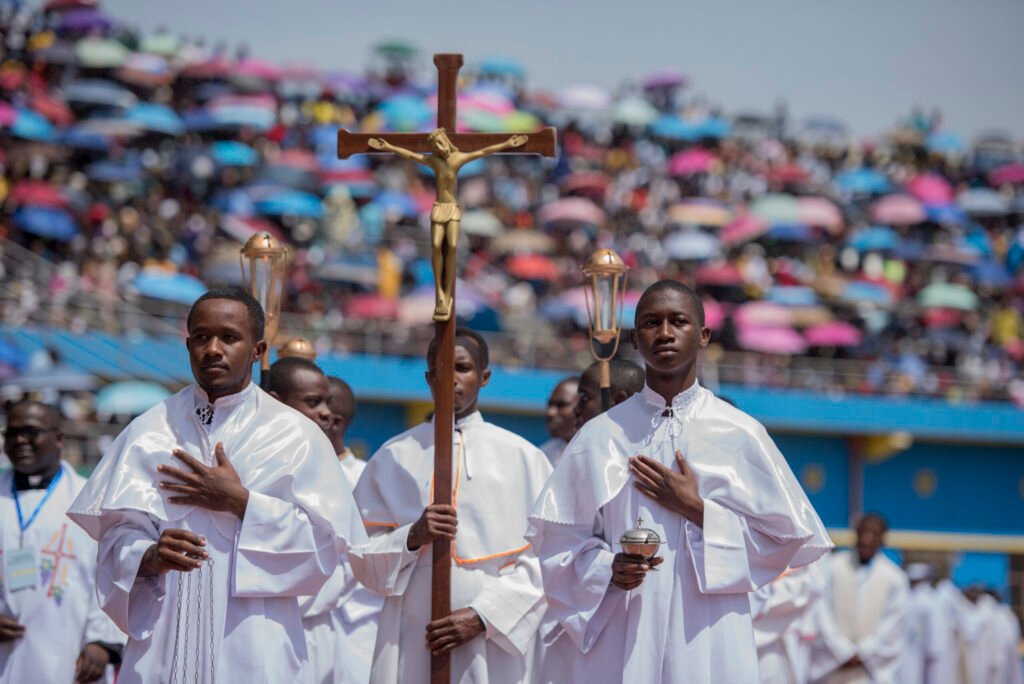
Africa Christians
The Massacre That Finally Mattered
March 15, 2025. A small town in Nigeria. Sunday morning.
Fifty-three people murdered while attending church. Men, women, children—slaughtered during worship. The church burned. Survivors traumatized. Families destroyed.
It wasn’t the first attack. It wasn’t even the worst attack. For years, Christian communities across Africa had been targeted, terrorized, killed in systematic campaigns of violence that left tens of thousands dead and millions displaced.
But this attack was different. Not because it was more brutal—though it was brutal. Not because more people died—though the body count was horrific.
It was different because this time, the world actually paid attention.
Why? Because three days after the massacre, Donald Trump issued a statement calling it “genocide against Christians” and demanding immediate international intervention. Because he used his massive platform to make ignoring the crisis politically impossible. Because he forced the issue onto the global stage in ways that years of advocacy from human rights organizations and faith leaders hadn’t accomplished.
Suddenly, world leaders who’d been silent for years were issuing condemnations. Media outlets that had barely covered African Christian persecution were running features. Diplomatic channels activated. Humanitarian aid mobilized. International pressure mounted.
The cynical read: It took a former U.S. president to make African Christian lives matter to the global community. Advocacy groups had been screaming about this crisis for years, but their voices didn’t carry the weight necessary to break through international indifference.
The pragmatic read: Sometimes it takes political celebrity to force attention on humanitarian crises. Trump’s intervention—whatever his motivations—achieved what years of grassroots activism couldn’t: making the world care.
The complicated truth: Both things can be true simultaneously. We can be grateful that attention finally arrived while also being furious that it required a political lightning rod to make African Christian deaths visible to Western audiences.
This is the story of a crisis that was always catastrophic but only became “real” when the right person decided to talk about it. Of violence that killed thousands before anyone with power decided it mattered. Of communities that suffered in obscurity until geopolitics made their pain strategically relevant.
It’s also the story of what happened next—and whether the attention will last longer than the news cycle.
The Crisis That’s Been Happening All Along
Let’s be brutally clear: The 2025 attacks weren’t new. They were just the ones that finally got noticed.
For years—decades, really—Christians across Africa have faced systematic persecution, violence, and displacement:
Nigeria: Boko Haram and Fulani militants have killed tens of thousands of Christians, destroyed countless churches, displaced millions. Entire villages wiped out. Women kidnapped. Children forced to convert or die. This has been ongoing since the early 2000s.
Eritrea: Government repression targeting Christians, particularly non-Orthodox denominations. Arbitrary detention, torture, forced labor camps for practicing your faith. Happening for twenty years.
Somalia: Al-Shabaab executing anyone suspected of being Christian. Churches operating completely underground because public worship means death. Decades of this.
Sudan: Before partition, Christians faced systematic oppression. After partition, South Sudan descended into civil war where Christian communities became targets. Ongoing crisis.
Central African Republic: Sectarian violence between Christian and Muslim militias, with Christian communities often bearing the brunt of retaliation attacks. Years of instability.
Democratic Republic of Congo: Allied Democratic Forces (ADF) targeting Christian villages, massacring civilians, destroying churches. Constant, grinding violence.
Ethiopia: Escalating religious tensions, attacks on churches, persecution of Christian minorities in certain regions. Growing problem.
The pattern is consistent: Christian communities facing violence from militant groups, government repression, or both. Churches burned. Pastors killed. Families displaced. Faith practiced in fear.
And for years, the international response was… crickets. Occasional human rights reports. Statements from advocacy organizations. Earnest pleas from faith leaders. But no sustained global attention. No meaningful diplomatic pressure. No significant intervention.
Why?
Africa fatigue: Western audiences are numb to African crises. Wars, famines, epidemics—they blur together into vague awareness that “Africa has problems.”
Religious persecution doesn’t sell: Media covers dramatic events—coups, natural disasters, celebrity scandals. Ongoing religious persecution is too slow-burning, too complex, too uncomfortable.
Political calculations: African Christian persecution doesn’t fit neat political narratives. It’s not colonialism (the perpetrators are African). It’s not entirely poverty (though poverty is a factor). It’s not simple enough for soundbites.
Islamophobia concerns: Reporting honestly on Islamist militant groups targeting Christians risks accusations of Islamophobia, so media outlets tread carefully or avoid the topic.
Lack of strategic interest: Unlike Middle East conflicts involving oil and geopolitics, much of African Christian persecution happens in regions without obvious Western strategic interests.
So the violence continued. The deaths mounted. And the world mostly looked away.
Until March 2025.
The Attack That Changed Everything (Or Did It?)
What made the March 15, 2025 massacre in Nigeria different from the hundreds of previous attacks?
Honestly? Timing and politics.
The attack happened at a moment when:
Trump was positioning for political influence and needed an issue that demonstrated moral leadership while appealing to his evangelical base.
Media was hungry for stories that weren’t the usual political drama, and a clear-cut humanitarian crisis fit that need.
Geopolitical dynamics made African stability more strategically relevant due to Chinese expansion and great power competition.
Social media amplified the story in ways that hadn’t happened with previous attacks, creating pressure on politicians to respond.
Advocacy organizations had built sufficient infrastructure to capitalize on any moment of attention, ready to mobilize when opportunity arose.
Trump’s statement three days after the attack was calculated. He called it genocide—an explosive term that demands international response. He invoked religious freedom—core to his base. He demanded action—positioning himself as decisive leader on global stage.
And it worked.
Within days, the crisis dominated news cycles. World leaders issued statements. The UN called emergency sessions. Humanitarian organizations received funding. Diplomatic pressure on African governments intensified.
The attack itself was horrific but not unprecedented. The response was unprecedented.
Which raises uncomfortable questions: If Trump hadn’t intervened, would we still be ignoring this? Do African Christian lives only matter when politically useful to powerful Western figures? Is this advocacy or exploitation?
Trump’s Intervention: Cynical or Necessary? (Yes.)
Let’s talk about Trump’s role honestly, because the reaction has been predictably polarized.
His supporters say: Finally! Someone with courage to call out Christian persecution! Trump has always defended religious freedom! This proves his moral leadership and concern for the vulnerable!
His critics say: Cynical political move. He’s exploiting African suffering to appeal to American evangelicals. Where was this concern during his presidency? This is performative, not genuine.
The complicated reality: Both narratives contain truth.
Trump’s intervention was absolutely political. He saw an opportunity to:
- Strengthen support among evangelical Christians
- Demonstrate international leadership
- Differentiate himself from current administration
- Claim moral high ground on human rights
But his intervention also achieved real results:
- Global attention on the crisis
- Diplomatic pressure on governments
- Increased humanitarian aid
- Greater protection for vulnerable communities
Can something be both cynically motivated and genuinely helpful? Yes. Welcome to complicated reality.
Trump gave a speech at Liberty University in July 2019 condemning attacks on Christians in Africa. His administration supported the “Ministerial to Advance Religious Freedom” initiative. He made religious freedom a talking point.
But his administration also:
- Implemented travel bans affecting Muslim-majority countries
- Reduced refugee admissions, including Christian refugees fleeing persecution
- Prioritized strategic interests over human rights in foreign policy
So his concern for persecuted Christians was selective, politically convenient, and instrumentalized for domestic politics.
And yet—his 2025 intervention genuinely helped African Christian communities by forcing global attention on their plight.
The lesson: We can criticize motivations while acknowledging outcomes. We can be grateful for help while recognizing it’s incomplete and self-serving. We can demand more while appreciating what actually happened.
Moral purity isn’t a prerequisite for positive impact. Sometimes cynical actors do helpful things for selfish reasons. We can accept that help while pushing for more.
The Activists Who Did the Actual Work
Here’s what gets lost in the “Trump saved African Christians” narrative: He didn’t.
Faith leaders, activists, and humanitarian organizations had been doing the grinding, unglamorous work of advocacy for years. They documented atrocities. They raised awareness. They pressured governments. They provided aid to affected communities.
Organizations like:
- Open Doors: Tracking Christian persecution globally, publishing reports, advocating for intervention
- International Justice Mission: Providing legal support, advocating for victims, pressuring governments
- World Vision: Delivering humanitarian aid, supporting displaced communities, documenting violence
- Various denominational groups: Catholic Relief Services, Anglican missions, evangelical networks
These organizations built the infrastructure that made the 2025 response possible. They had:
- Networks on the ground in affected areas
- Relationships with local communities
- Documentation of violence and persecution
- Established channels for delivering aid
- Expertise in navigating complex political situations
When Trump’s statement created sudden global attention, these organizations were ready. They could provide detailed information. They could direct resources. They could coordinate responses.
Without their years of groundwork, Trump’s intervention would have been empty rhetoric. With it, his spotlight created opportunity for meaningful action.
Faith leaders had been pleading for attention:
- African bishops calling for international support
- American evangelical leaders advocating for persecuted Christians
- Interfaith coalitions demanding religious freedom protections
Their voices didn’t carry the weight necessary to break through global indifference. But their work created the foundation for response when attention finally arrived.
This is how advocacy actually works: Years of unglamorous preparation creating capacity for action when political moment arrives. The celebrities get credit. The activists do the work.
The Media’s Complicity in Silence
We need to talk about how media coverage—or lack thereof—enabled years of violence through indifference.
Western media outlets barely covered African Christian persecution. When they did, it was:
- Brief, buried in international news sections
- Lacking context about systematic nature of violence
- Framed as “tribal conflict” or “regional instability” rather than religious persecution
- Quickly forgotten as news cycle moved on
Why the silence?
Editorial choices: African stories don’t generate clicks. Readers don’t engage. So editors don’t prioritize coverage.
Complexity aversion: Religious persecution in Africa involves complicated dynamics—colonialism’s legacy, ethnic tensions, resource competition, governance failures, militant ideologies. Easier to ignore than explain.
Narrative fatigue: “Christians being persecuted” feels like old news, not compelling story. Media wants fresh angles, dramatic revelations.
Political sensitivity: Honestly reporting Islamist violence against Christians risks accusations of Islamophobia or bias. Safer to avoid.
Lack of visual drama: Unlike sudden disasters or coups, ongoing persecution doesn’t provide compelling imagery. Churches burning makes one news cycle; years of grinding oppression doesn’t.
So the violence continued in media darkness. Thousands died. Millions displaced. And most Western audiences had no idea it was happening.
Then Trump spoke up, and suddenly it was news. Media outlets scrambled to cover what they’d ignored for years. Reporters dispatched to regions they’d never bothered visiting. “Experts” interviewed who’d been trying to get media attention unsuccessfully for decades.
The message this sends: African lives only matter when politically useful to Western figures. Their suffering is only newsworthy when it serves narratives Western audiences care about.
That’s not journalism. That’s complicity through negligence.
What Actually Changed (And What Didn’t)
So Trump intervened. Media covered it. Global attention focused on African Christian persecution.
What actually improved?
Increased humanitarian aid: Organizations received funding to expand operations, deliver more supplies, support more communities.
Diplomatic pressure: African governments faced international scrutiny, pressure to protect Christian communities, consequences for enabling violence.
Public awareness: Western audiences learned about crisis they’d been ignorant of, creating constituency for continued engagement.
Policy changes: Some governments implemented better protections, though enforcement remains inconsistent.
International monitoring: More observers, more documentation, harder for violence to continue in complete obscurity.
These improvements are real and significant. Lives were saved. Communities received support. Pressure created some accountability.
But what didn’t change:
The underlying violence: Attacks continue. Persecution persists. The fundamental drivers of conflict remain unaddressed.
Displacement: Millions still living as refugees, unable to return home, facing ongoing insecurity.
Socioeconomic devastation: Communities destroyed economically, lacking livelihoods, dependent on aid.
Psychological trauma: Entire generations traumatized by violence, with inadequate mental health support.
Structural problems: Governance failures, corruption, weak institutions—all the systemic issues enabling persecution.
The 2025 response addressed symptoms without curing disease. It provided relief without resolution. It created attention without transformation.
Which is better than nothing. Relief matters. Lives saved matter. But it’s not enough.
The Attention Span Problem
Here’s the brutal truth about international attention on humanitarian crises: It’s fleeting.
The news cycle moves on. Public interest fades. Politicians find new issues. Donors’ attention shifts. The infrastructure of concern that mobilized around African Christian persecution starts focusing elsewhere.
We’ve seen this pattern repeatedly:
- Kony 2012 viral campaign → brief attention → forgotten
- Boko Haram kidnapping → #BringBackOurGirls → moved on
- Syrian refugee crisis → intense focus → faded from headlines
- Rohingya persecution → temporary outrage → old news
Each crisis gets its moment in the spotlight. Media covers it intensely. Politicians make statements. Aid flows. Then something else becomes urgent, and the original crisis continues in obscurity.
African Christian persecution is following this pattern. The 2025 attacks created spike in attention. But already, coverage is declining. Other issues are competing for focus. The sustained engagement necessary for meaningful change is evaporating.
This is why activist organizations emphasize sustained pressure over viral moments. Viral attention is helpful but insufficient. Real change requires:
- Ongoing diplomatic engagement
- Consistent funding for humanitarian operations
- Persistent media coverage keeping issue visible
- Long-term policy commitments beyond immediate crisis response
- Building local capacity for communities to protect themselves
None of that is sexy. None generates headlines. But it’s what actually works.
The challenge now: converting the spike in attention from 2025 into sustained engagement. Not letting the world forget again just because the news cycle moved on.
The Uncomfortable Questions We’re Avoiding
Let’s address what nobody wants to say out loud:
Why do Western audiences care more about some persecuted Christians than others?
Christians persecuted in China or North Korea get more attention than Christians persecuted in Africa. Why? Is it racism? Is it that persecuting governments we oppose (communist regimes) make better villains than failed states and non-state actors? Is it that we care more about persecution we can use for geopolitical purposes?
Why does it take a controversial political figure to force attention on humanitarian crises?
Years of advocacy from experts and humanitarian organizations accomplished less than one Trump statement. What does this say about our information ecosystem? About who has power to shape narratives? About the relationship between celebrity and justice?
Are we actually committed to religious freedom, or just when it’s politically convenient?
Western governments champion religious freedom selectively. We care about Christians in Africa (sometimes). We care less about Uighur Muslims in China (until we can use it against China). We barely care about Rohingya Muslims in Myanmar. What pattern emerges?
What responsibility do we bear for conflicts partly rooted in colonial legacy?
Many African conflicts have roots in colonial-era boundaries, resource extraction, and governance structures. Can we address Christian persecution without acknowledging Western complicity in creating conditions that enable it?
How do we balance honest reporting about Islamist violence with avoiding anti-Muslim bigotry?
Much African Christian persecution comes from Islamist militant groups. How do we discuss this honestly without feeding Islamophobia? How do we critique specific violent ideologies without condemning entire religious traditions?
What happens when the political winds shift?
If Trump’s influence wanes, does African Christian persecution lose its champion? If it becomes politically inconvenient, do we stop caring again?
These questions don’t have easy answers. But avoiding them ensures we never address root causes, never develop sustainable solutions, never move beyond reactive crisis response.
What Needs to Happen Next
Moving forward requires actions beyond temporary attention:
Sustained diplomatic pressure: African governments must face consistent consequences for failing to protect Christian communities. Not just statements but actual policy consequences.
Long-term funding commitments: Humanitarian organizations need reliable, ongoing support, not just crisis spikes. Communities need help rebuilding, not just surviving.
Media consistency: Outlets must cover African Christian persecution as ongoing story, not just during dramatic attacks. Context, follow-up, continued visibility.
Addressing root causes: Governance failures, economic instability, resource competition, militant ideologies—these require long-term, complex interventions beyond emergency response.
Empowering local leadership: Solutions must come from African Christians themselves, not be imposed from outside. Support their leadership, amplify their voices, resource their solutions.
International cooperation: This isn’t just American issue or Christian issue. Requires global commitment to religious freedom, human rights, protection of vulnerable populations.
Accountability mechanisms: Perpetrators must face justice. International criminal court involvement, sanctions, targeted consequences for those committing atrocities.
Prevention focus: Not just responding after attacks but preventing violence through early warning systems, conflict mediation, addressing tensions before they explode.
None of this is dramatic. None generates headlines. But it’s what actually works for reducing violence and protecting communities long-term.
The question is whether the global community has attention span and political will for this kind of sustained engagement.
The Activists’ Perspective
Let me share what faith leaders and activists on the ground actually say about all this:
“We’re grateful for attention but frustrated it required Trump.” The validation is welcome. The help is needed. But why did African Christian voices matter less than one American politician’s statement?
“This can’t be a one-time thing.” The 2025 response helped. But violence continues. If attention fades, communities are left vulnerable again.
“We need agency, not just aid.” International support is important, but treating African Christians as helpless victims needing Western rescue perpetuates harmful dynamics. Support local leadership.
“The situation is more complex than headlines suggest.” It’s not just religious persecution. It’s also resource competition, governance failure, climate change, economic instability. Addressing it requires understanding these intersections.
“We’ve been here before.” Previous moments of attention led to temporary help then abandonment. Skepticism about whether this time is different.
“Focus on prevention, not just response.” By the time attacks happen, damage is done. Need investment in conflict prevention, community resilience, early intervention.
These voices—from bishops, pastors, humanitarian workers, community leaders actually living this reality—offer wisdom the international community needs to hear.
But will we listen? Or will we impose our solutions, celebrate our generosity, and move on feeling accomplished while communities continue suffering?
The Path Forward (If We’re Serious)
If we’re actually serious about addressing African Christian persecution—not just feeling good about temporary attention—here’s what’s required:
Commitment beyond news cycles. This is decades-long problem requiring decades-long engagement. Are we willing?
Listening to African Christian leadership. They understand context, know what’s needed, have solutions. Support them rather than imposing Western approaches.
Addressing systemic issues. Governance, economics, climate, resource competition—these drive conflict. Band-aids don’t solve structural problems.
Honest accounting of our own complicity. Colonial legacy, Western foreign policy, arms sales, resource extraction—we’re not innocent bystanders.
Consistent application of religious freedom principles. Not just when politically convenient. For all persecuted religious minorities everywhere.
Building local capacity. Communities protecting themselves sustainably, not dependent on international intervention.
Accountability for perpetrators. Justice matters. Impunity enables continued violence.
This is hard, unglamorous work. It doesn’t generate viral moments or political wins. It requires patience, humility, sustained investment.
Are we capable of it? Or will we celebrate the 2025 response, feel satisfied we “helped,” and move on while violence continues?
The Brutal Truth
Here’s what we’re left with:
Thousands of African Christians were murdered, millions displaced, entire communities destroyed—and the world mostly didn’t care until a controversial American politician decided to make it an issue.
The attention helped. Aid flowed. Pressure mounted. Lives were saved.
But the attention is already fading. And the underlying crisis continues.
We learned that African Christian lives apparently need Western political champions to matter globally. That years of advocacy from people actually affected counts less than one statement from someone with platform. That humanitarian crises only become “real” when politically useful.
We also learned that when attention does arrive, good things can happen. Resources mobilize. Policies change. Communities get support they desperately need.
The question is whether 2025 represents turning point or just another spike in attention that fades as the news cycle moves on.
African Christians are still being persecuted. Still being killed. Still being displaced. Still needing protection and support.
The world briefly noticed.
Will we keep noticing? Or will we congratulate ourselves on caring for a moment and move on?
That’s the test.
Not whether we responded to a dramatic attack. But whether we stay engaged through the grinding, unglamorous, long-term work of actually addressing the crisis.
Trump’s intervention helped. But it’s not enough. It can’t be enough.
The question is: What happens next?
Do we sustain this attention? Build on this momentum? Turn temporary concern into permanent commitment?
Or do we let Africa’s Christian crisis fade back into obscurity until the next massacre forces us to pay attention again?
The communities suffering persecution are watching. Waiting to see if this time is different.
Waiting to see if their lives matter beyond a news cycle.
Waiting to see if anyone actually cares.
The world had a moment of attention in 2025.
What we do with that moment will determine whether African Christians receive the sustained support they need or just another round of temporary concern.
The crisis isn’t over. The violence continues. The need persists.
The only question is whether we’ll still be paying attention next year.
Or whether African Christian lives will fade back into the darkness of international indifference.
Waiting for the next massacre to briefly matter again.
That’s the reality. Uncomfortable, damning, and true.
Africa’s Christian crisis finally drew global attention in 2025.
Now we find out if that attention means anything.
Or if it was just another moment of caring before moving on.
The clock is ticking.