The Synagogue Arsonist Ran a Christian Fitness Website (And That’s More Disturbing Than You Think)

The Synagogue Arsonist Ran a Christian Fitness Website
When Faith, Fitness, and Hate Collide
A synagogue in Mississippi burned. Arson. Deliberate. Hateful.
The suspect: A man who ran a Christian fitness website promoting “biblical wellness” and “strength through faith.”
On one side of his life: Workout plans, nutritional advice, motivational posts about honoring God with your body, Scripture-based fitness challenges.
On the other side: Burning a Jewish house of worship to the ground.
The cognitive dissonance is staggering. How does someone go from posting “your body is a temple” Bible verses to committing violent hate crimes against another religious community?
The easy answer: He’s a hypocrite. His faith was shallow performance masking deep-seated hatred. The fitness stuff was just cover for extremism.
The harder, more disturbing answer: His Christian fitness platform and his antisemitism weren’t contradictory. They were integrated. The same belief system that drove him to promote “biblical masculinity” and “Christian strength” also drove him to see Jews as enemies deserving attack.
This is the story of how Christian nationalism, toxic masculinity, fitness culture, and religious extremism can fuse into something dangerous—and why we need to pay attention when they do.
It’s also a story about how seemingly innocuous spaces—fitness websites, health forums, wellness communities—can become radicalization pipelines when they’re built on exclusionary ideologies.
Welcome to the uncomfortable intersection of faith, fitness, and hate—where “honoring God with your body” somehow leads to burning synagogues.
The Crime That Shocked (But Shouldn’t Have Surprised)
Let’s start with what actually happened:
The target: A synagogue in Mississippi. A small Jewish community’s sacred space. A building representing centuries of Jewish presence in America and millennia of Jewish faith and culture.
The act: Arson. Deliberate. The building suffered significant damage. The community was traumatized. The message was clear: Jews aren’t safe here.
The suspect: A man in his 30s with no obvious prior criminal record. Active in local fitness communities. Ran a Christian fitness website promoting faith-based wellness.
The shock: How could someone promoting Christian values and physical health commit such a hateful, violent act?
The reality: This combination of Christian nationalism, masculinity performance, and antisemitism is disturbingly common. The fitness angle just makes it more visible.
This wasn’t random vandalism. This wasn’t property crime for profit. This was targeted religious hate—someone deciding that a Jewish house of worship deserved to burn and acting on that conviction.
And he did it while simultaneously promoting a lifestyle allegedly centered on biblical principles, love, and honoring God.
The Christian Fitness Website (A Window Into His Worldview)
Let’s examine what the suspect’s fitness platform actually promoted, because the details matter:
Biblical masculinity: Emphasis on men being “warriors for Christ,” physically strong and spiritually disciplined. Masculinity defined through dominance, strength, and traditional gender roles.
Purity culture: Focus on bodily discipline as spiritual discipline. Exercise as way to control sinful desires. Fitness as moral imperative, not just health practice.
Christian nationalism: Subtle (and sometimes not subtle) messaging about America as Christian nation, Christians as under attack, need to “defend” Christian culture and values.
In-group/out-group dynamics: Clear distinction between “biblical” living and secular/worldly corruption. Us versus them mentality extended to fitness—you’re either honoring God with your body or succumbing to secular degradation.
Warrior language: Military and combat metaphors throughout. Spiritual warfare. Fighting for faith. Defending territory. Conquering sin and enemies.
Homophobia and transphobia: “Biblical” gender roles. Condemnation of LGBTQ identities. Fitness as way to embody “proper” masculinity/femininity.
Conspiracy thinking: Sometimes subtle, sometimes explicit references to cultural Marxism, globalism, threats to traditional values—dog whistles for antisemitic and white supremacist ideology.
On the surface: health and wellness.
Underneath: ideology that creates enemies, demands purity, promotes dominance, and uses faith to justify exclusion and violence.
How Fitness Culture Became Radicalization Pipeline
Here’s what’s disturbing: Fitness communities shouldn’t be radicalization spaces. Exercise is healthy. Community around wellness is good.
But certain strains of fitness culture—particularly those mixing extreme ideologies with physical training—create perfect conditions for radicalization:
The masculinity crisis narrative: Men are told modern society has made them weak, feminized, purposeless. Fitness becomes way to reclaim “true” masculinity. This narrative is core to both alt-right recruitment and toxic Christian masculinity movements.
The discipline-to-dominance pipeline: Emphasis on self-discipline through fitness can slide into emphasis on controlling others. “I control my body” becomes “I should control society.”
The purity obsession: Whether religious purity or physical purity, obsession with cleanliness, strength, and perfection creates anxiety about contamination—literal or metaphorical. Outsiders become contaminants.
The warrior fantasy: Combat sports, “tactical” training, “warrior” language—these attract men seeking purpose and power. Without proper context, this creates mindset that life is battle and others are enemies.
The community reinforcement: Online fitness communities can become echo chambers. If everyone in your workout forum shares extremist views, those views get normalized and amplified.
The algorithm effect: Social media algorithms push people from mainstream fitness content toward increasingly extreme content. You go from workout videos to “biblical masculinity” to Christian nationalism to white supremacy.
The suspect’s Christian fitness website hit all these points: masculinity crisis, discipline-as-dominance, purity culture, warrior language, tight-knit community, extremist ideology.
It wasn’t fitness site that happened to have some problematic views. It was radicalization platform using fitness as vehicle.
The Christian Nationalism Connection
Let’s talk explicitly about Christian nationalism, because it’s central to understanding this case:
Christian nationalism is ideology that:
- America is fundamentally Christian nation
- Christianity (specific conservative interpretation) should shape law and culture
- Non-Christians (especially Muslims and Jews) are threats to Christian America
- “Real Americans” are white Christians
- Defending Christian dominance is patriotic and godly duty
This ideology is explicitly antisemitic. It views Jews as:
- Religious others who reject Christ
- Cultural threats to Christian society
- Conspirators against Christian values
- Enemy requiring confrontation
When you combine Christian nationalism with:
- Masculinity crisis narratives
- Purity obsessions
- Warrior mentalities
- Online radicalization
- Physical fitness as moral imperative
You get: Men who believe they’re holy warriors defending Christian America from Jewish threats, and that violence in service of this mission is righteous.
The suspect’s fitness website wasn’t separate from his antisemitism. It was expression of the same ideology—Christian nationalist belief that being strong, pure, biblically masculine Christian man means opposing (violently, if necessary) threats to Christian dominance.
Including synagogues.
The Psychology: How Beliefs Become Violence
How does someone go from Bible verses about temples to burning actual temples?
The psychological progression:
Step 1: In-group identity formation “I’m a Christian. Christians have specific values and enemies.”
Step 2: Out-group dehumanization “Jews/Muslims/secularists aren’t just different—they’re threats, enemies, evil.”
Step 3: Worldview reinforcement Surrounding yourself with community (online/offline) that reinforces these beliefs, making them seem normal and true.
Step 4: Apocalyptic framing “We’re in spiritual warfare. The enemy is winning. Drastic action is necessary.”
Step 5: Moral permission “Violence against God’s enemies isn’t just acceptable—it’s righteous. I’m serving God.”
Step 6: Opportunity and action “I can do this. I will do this. God wants me to do this.”
This isn’t sudden radicalization. It’s gradual process where each step makes the next step easier, normalizing extreme beliefs and actions.
The fitness website was part of this process—creating community, reinforcing worldview, promoting warrior mentality, providing sense of purpose and power.
The Community Response (Solidarity and Scrutiny)
When the synagogue burned, the community’s response was swift:
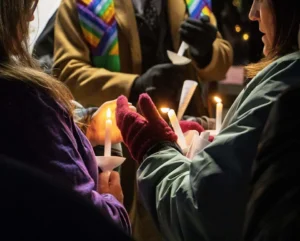
Immediate solidarity: Interfaith vigils. Christians, Muslims, and secular community members standing with Jewish neighbors. Clear condemnation of antisemitism.
Fundraising for repairs: Community raised money to rebuild. Made clear the synagogue would be restored, the Jewish community supported.
Increased security: Jewish institutions heightened security. Sad necessity, but practical response to real threat.
Investigation of the website: Once suspect’s fitness platform was discovered, community members started examining it, documenting extremist content, raising awareness.
Broader conversation about radicalization: Local leaders began discussing how to identify and counter extremist ideology before it leads to violence.
But also:
Defensiveness from some Christians: “Not all Christians!” “This doesn’t represent us!” “Don’t blame Christianity!”
Scrutiny of fitness communities: Uncomfortable questions about how wellness spaces can harbor extremism.
Tension about prevention vs. rights: How do you monitor potentially radicalizing content without infringing on free speech and religious freedom?
The community response showed both the best (solidarity, support, quick action) and the challenges (defensiveness, difficulty addressing root causes).
The Media Framing Problem
Media coverage of this case revealed how poorly we discuss the intersection of faith and violence:
Framing 1: “Lone wolf” narrative Portraying suspect as isolated extremist, mental health issue, not representative of anything broader.
Problem: Ignores the ideology, community, and belief system that enabled the violence.
Framing 2: “Christian terrorism” Emphasizing suspect’s Christian identity, drawing parallels to Islamic terrorism.
Problem: Creates false equivalence, ignores specifics of Christian nationalism, generates defensive backlash.
Framing 3: “Fitness community radicalization” Focusing on fitness website as unusual detail, treating it as curiosity rather than key to understanding case.
Problem: Misses how fitness culture can be vehicle for extremism, treats symptom as separate from disease.
Framing 4: “Antisemitism in America” Contextualizing within broader rise of antisemitic hate crimes.
Problem: Sometimes loses individual specifics in broader trend, making it harder to understand particular case.
Better framing would:
- Take ideology seriously without sensationalizing
- Explain connections between Christian nationalism, masculinity culture, and antisemitism
- Examine how radicalization happens in seemingly mainstream spaces
- Hold community and platforms accountable without demonizing all members
- Center Jewish community’s experience and needs
Most coverage didn’t achieve this. It either minimized ideology (“disturbed individual”) or overgeneralized (“Christians are violent”).
What This Reveals About American Extremism
This case is window into bigger problems:
Christian nationalism is mainstream. It’s not fringe. Millions of Americans hold some version of these beliefs. Most won’t commit violence, but the ideology creates permission structure for those who do.
Masculinity crisis narratives are radicalizing men. Telling men they’ve been weakened/feminized and need to reclaim dominance attracts men to extremist movements offering purpose and power.
Wellness spaces can be radicalization pipelines. Any community built on purity, discipline, and in-group/out-group dynamics risks becoming extremist if not carefully managed.
Antisemitism persists and evolves. It’s not just historical problem. It’s current threat, often cloaked in language about “defending Christian values” or “fighting globalism.”
Online communities accelerate radicalization. Algorithms, echo chambers, and anonymous communities allow extremist beliefs to seem normal and spread rapidly.
We’re bad at prevention. We lack effective early intervention for people moving toward extremism. By the time someone burns a synagogue, radicalization is complete.
The “good person” myth prevents action. We think extremists must be obviously evil. When they look normal—fitness enthusiast, Christian, community member—we don’t recognize danger until violence occurs.
The suspect wasn’t monster. He was regular guy whose ideology led him to monstrous act. That’s more terrifying because it’s more common.
Preventing Future Violence (The Hard Questions)
How do we prevent this from happening again?
At community level:
Monitor extremist content in faith communities. Not censorship, but awareness. When pastors promote Christian nationalism, when men’s groups push toxic masculinity, when online forums spread conspiracy theories—call it out.
Create alternative masculine narratives. Men need purpose, community, discipline. Provide healthy alternatives to warrior-dominance models.
Build interfaith relationships. Make it harder to dehumanize Jews, Muslims, others when you actually know them as neighbors and friends.
At platform level:
Audit fitness/wellness platforms for extremism. Just like monitoring for eating disorder content, monitor for radicalization content.
Interrupt algorithmic radicalization. Don’t let people go from workout videos to neo-Nazi content in 10 clicks.
Enforce terms of service against hate. De-platform extremism even when it’s wrapped in wellness language.
At societal level:
Teach media literacy. Help people recognize radicalization content, propaganda techniques, extremist recruitment.
Address economic and social alienation. Men vulnerable to radicalization often feel purposeless, left behind. Address those real problems.
Counter Christian nationalism theologically. Christians who reject this ideology need to be louder, clearer, more visible.
At individual level:
Notice warning signs. When someone’s politics/religion become all-consuming, when they dehumanize others, when they express apocalyptic worldviews, when they glorify violence—intervene.
Don’t dismiss “weird” combinations. Fitness + extremism, wellness + conspiracy theories, faith + violence—these aren’t contradictions, they’re warning signs.
Support targets of hate. Show up for synagogues, mosques, immigrant communities. Make hate costly socially.
None of this is simple. None prevents all violence. But doing nothing guarantees more burning synagogues.
The Uncomfortable Conclusion
A man who promoted Christian fitness burned a synagogue.
This wasn’t contradiction. It was coherent expression of ideology that:
- Centers Christian (white, male, conservative) dominance
- Views others as threats requiring confrontation
- Uses fitness/masculinity as vehicles for power
- Wraps extremism in language of faith and wellness
The Christian fitness website wasn’t innocent health platform corrupted by one bad actor. It was space where extremist ideology could flourish, disguised as biblical living.
The arson wasn’t isolated hate crime by disturbed individual. It was predictable outcome of belief system that dehumanizes Jews and sanctifies violence in defense of Christian America.
And this will happen again unless we:
- Take Christian nationalism seriously as threat
- Recognize how wellness spaces can radicalize
- Interrupt pathways from ideology to violence
- Support communities targeted by hate
- Build alternatives to extremist narratives
The hardest truth:
The suspect probably believed he was serving God. That honoring his body through fitness and defending Christian America through violence were both righteous acts.
That’s not excuse. That’s explanation. And explanation is necessary for prevention.
We can’t stop extremism by pretending it doesn’t make sense to the people committing it. We have to understand the logic—however twisted—that turns Bible verses about temples into burning actual temples.
And we have to dismantle that logic before more people follow it to violence.
A synagogue burned in Mississippi.
The arsonist ran a Christian fitness website.
These facts are connected.
Understanding how is necessary for preventing the next fire.
Key Takeaways:
- Mississippi synagogue arsonist operated Christian fitness website promoting biblical masculinity and nationalist ideology
- Fitness/wellness spaces can become radicalization pipelines when built on extremist beliefs
- Christian nationalism, toxic masculinity, and antisemitism often intersect and reinforce each other
- “Normal” appearance of extremists (fitness enthusiast, Christian, community member) makes radicalization hard to detect
- Prevention requires monitoring extremist content, providing healthy alternatives, building interfaith solidarity
- Understanding ideology is necessary for prevention—can’t counter what we don’t comprehend
- Community response showed both solidarity and struggle with addressing root causes
The intersection of faith, fitness, and hate is real, dangerous, and growing.
We ignore it at our peril.