Texas Mayor Sparks Controversy Over Sharia Law That Wasn’t A Threat
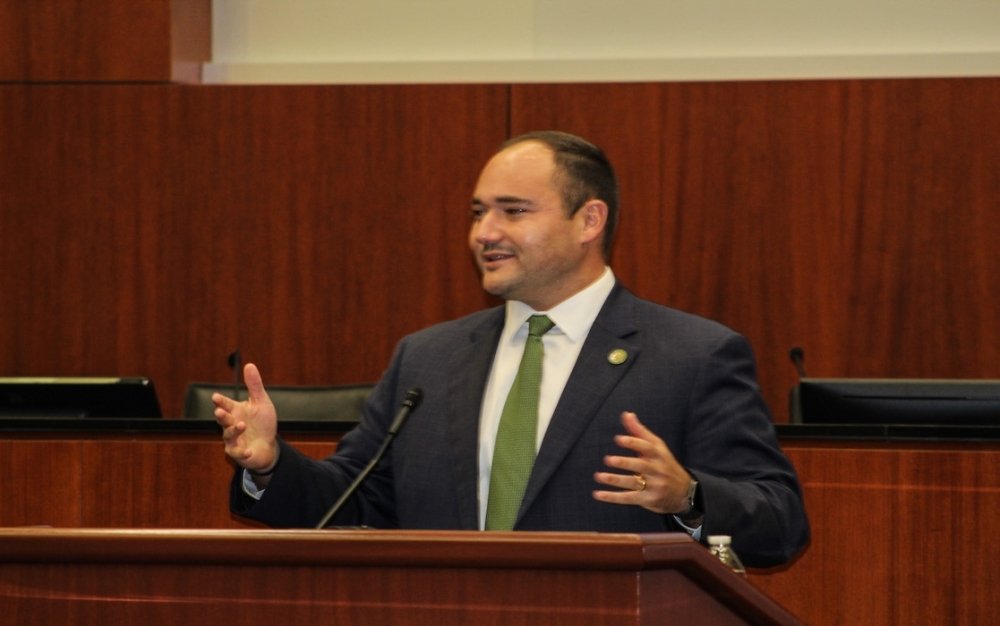
Keller Mayor Armin Mizani
The Texas mayor Sharia law controversy highlights how political rhetoric can escalate public fear, even when the perceived threat has little basis in reality.
The Resolution Nobody Needed
Keller, Texas. Suburban city in Tarrant County. Population around 50,000. Nice parks. Good schools. Low crime.
And according to Mayor Armin Mizani, under imminent threat from Sharia law.
In 2025, Mizani proposed a resolution explicitly rejecting the application of Sharia law and other foreign legal systems within his jurisdiction. A formal, official declaration that Keller, Texas would be governed by—wait for it—the U.S. Constitution and American laws.
You know, the legal framework that already governs every inch of American territory and has since 1789.
The resolution was presented as protecting constitutional principles, safeguarding American legal sovereignty, and defending residents’ rights against foreign legal encroachment.
It was also solving a problem that didn’t exist.
There was no movement to implement Sharia law in Keller. No Muslim community demanding religious courts. No foreign legal system threatening to supersede American law. No actual issue whatsoever.
But there was political opportunity. And in 2025 America, where Islamophobia remains politically useful and culture war posturing wins elections, Mizani saw his chance.
The resolution sparked exactly the division it was designed to create: Supporters praised him for “defending American values.” Opponents condemned it as discriminatory fear-mongering. The community fractured along predictable lines.
And Keller, Texas became another data point in America’s ongoing project of manufacturing threats to justify prejudice.
This is the story of a mayor who declared war on a legal system that posed zero threat to his city. Of a resolution that accomplished nothing legally but everything politically. Of how Islamophobia gets dressed up as constitutional patriotism.
It’s also the story of what happens when local politicians discover that scaring people about Muslims is easier than actually governing.
Welcome to Keller, Texas—where the biggest threat to constitutional values might be the people claiming to defend them.
The Mayor Who Saw a Threat That Wasn’t There
Let’s start with Armin Mizani, because understanding his background matters for understanding this resolution.
Mizani has a legal background. He understands how American law works. He knows that the U.S. Constitution is already the supreme law of the land, that state and federal law already govern Texas, that no foreign legal system can supersede American law without constitutional amendment.
He also knows that Sharia law—Islamic religious law—operates in Muslim-majority countries, not in the United States. That American Muslims, like American Christians and Jews, may follow religious guidance in their personal lives while remaining subject to American civil and criminal law.
He knows that there’s no mechanism by which Sharia law could be “implemented” in Keller, Texas. That the scenario his resolution addresses is legally impossible under existing constitutional frameworks.
So when he proposed this resolution, he wasn’t responding to an actual threat. He was responding to a perceived political opportunity.
The national conversation around Islam in America has been toxic for decades, accelerating after 9/11 and never really improving. Fear of Muslims, suspicion of Islamic practices, conspiracy theories about “creeping Sharia”—all politically useful for certain politicians appealing to certain constituencies.
Mizani tapped into this. By proposing a resolution against Sharia law, he positioned himself as:
- Defender of American values
- Protector against foreign influence
- Patriotic leader willing to take stands
- Tough on issues other politicians avoid
Never mind that the “issue” was imaginary. Never mind that the resolution accomplished nothing legally that wasn’t already accomplished by the Constitution. Never mind that it alienated Muslim residents and created division where none existed.
It played well politically. And in contemporary American politics, that’s often all that matters.
Understanding Sharia Law (Since Apparently We Need To)
Let’s talk about what Sharia law actually is, because most Americans—including many making pronouncements about it—have no idea.
Sharia is Islamic religious law derived from the Quran and Hadith (sayings and actions of Prophet Muhammad). It’s a comprehensive ethical and legal framework guiding Muslim life—covering everything from prayer and fasting to business transactions and family relationships.
Here’s what’s crucial: Sharia is not a unified legal code. It’s a body of religious principles interpreted differently across cultures, countries, and Islamic schools of thought. Saudi Arabian interpretation of Sharia looks nothing like Indonesian interpretation. Iranian Sharia differs from Turkish Sharia.
In Muslim-majority countries where Sharia has legal force, it typically coexists with secular legal systems. Criminal law might be based on Sharia while commercial law follows Western models. Family law might allow Sharia courts while constitutional law operates separately.
But in the United States, Sharia has zero legal authority. None. American Muslims can consult religious scholars about Islamic law for guidance on personal religious questions—just like American Catholics might consult priests about Catholic teaching or American Jews might consult rabbis about Halakha (Jewish law).
But those religious consultations have no legal force. If religious guidance conflicts with American law, American law wins. Period.
American Muslims cannot establish parallel legal systems. Cannot enforce religious penalties. Cannot create courts with binding legal authority. All of this is already prohibited by American constitutional law.
So when Mizani proposed a resolution rejecting Sharia law in Keller, he was rejecting something that was never a possibility in the first place.
The Resolution That Changed Nothing
Let’s look at what Mizani’s resolution actually proposed:
It declared Keller would be governed by the U.S. Constitution and American laws. Which was already the case. This is like passing a resolution declaring that gravity will continue operating within city limits.
It rejected the application of Sharia law and other foreign legal systems. Which are already inapplicable. Foreign legal systems have no authority in American jurisdictions. This is foundational constitutional law.
It aimed to “safeguard the community against encroachment by laws that may not align with American legal standards.” Safeguarding against a threat that doesn’t exist. There is no mechanism for foreign legal encroachment. The Constitution already prevents it.
It emphasized that residents’ rights and liberties are paramount. Great! Those rights are already protected by… the Constitution. Which already applies. Without needing this resolution.
Legally, this resolution accomplished absolutely nothing. It didn’t create new protections. It didn’t prevent anything that could actually happen. It didn’t change Keller’s legal status in any way.
What it did accomplish:
Political positioning: Mizani gets to claim he’s defending American values and standing up to threats.
Signal to constituents: Tells certain voters that he shares their concerns about Islam and foreign influence.
Media attention: Generates coverage and raises Mizani’s profile beyond Keller.
Community division: Forces residents to take sides on an issue that didn’t need to exist.
Alienation of Muslim residents: Sends clear message that their religion is viewed as threatening and incompatible with American values.
So legally useless, politically strategic, socially damaging. That’s the actual impact.
The Community’s Predictable Split
When Mizani proposed this resolution, reactions split exactly as you’d expect:
Supporters said:
- “Finally, someone willing to defend our Constitution!”
- “We can’t let foreign laws undermine American sovereignty!”
- “This is about protecting our values and way of life!”
- “Better to be proactive than wait until it’s too late!”
- “If you oppose this, you must not care about America!”
Opponents said:
- “This is discriminatory fear-mongering targeting Muslims!”
- “It solves a problem that doesn’t exist!”
- “It creates division and makes our Muslim neighbors feel unwelcome!”
- “It’s unconstitutional government hostility toward a religion!”
- “This is political theater, not actual governance!”
Both sides dug in. Both accused the other of bad faith. Neither changed any minds.
The supporters weren’t actually worried about Sharia law being implemented in Keller—that’s absurd. They were worried about Muslims. About cultural change. About feeling like their America was slipping away. The resolution gave them a way to express those anxieties in constitutionally acceptable language.
The opponents weren’t defending Sharia law or wanting foreign legal systems—that’s a strawman. They were opposing the scapegoating of Muslim residents, the manufacture of fake threats, and the use of government power to single out one religious community as dangerous.
But nuance gets lost in these fights. It becomes: Are you for American values or against them? Do you support the Constitution or Sharia law?
False binary. Designed to be false. Forcing people into camps where reasonable middle ground becomes impossible.
The Legal Problems Nobody’s Mentioning
Let’s talk about why this resolution is legally problematic beyond just being pointless:
First Amendment concerns: The Establishment Clause prohibits government hostility toward religion. A resolution specifically targeting Islamic law while not addressing Catholic canon law, Jewish Halakha, or other religious legal systems arguably violates this.
Equal Protection issues: Singling out one religion’s legal traditions for special condemnation while ignoring others could constitute discriminatory treatment under the 14th Amendment.
Supremacy Clause: The Constitution already establishes that federal law supersedes state and local law, which supersedes any other legal system. This resolution is legally redundant and potentially misleading about how American law works.
Free Exercise implications: While the resolution doesn’t prohibit religious practice directly, declaring one religion’s legal framework uniquely threatening creates government hostility that could chill free exercise.
Symbolic establishment of religion: By declaring Christianity-friendly legal traditions acceptable while Islamic traditions threatening, the resolution arguably privileges Christian religious expression over Islamic.
Constitutional scholars looking at similar resolutions in other states have raised these concerns repeatedly. Courts have struck down some anti-Sharia laws as unconstitutional.
But Mizani’s resolution is carefully worded to avoid the most obvious constitutional problems. It rejects all “foreign legal systems,” not just Sharia. It frames itself as defending the Constitution, not attacking Islam.
The discrimination is implicit rather than explicit. Which makes it harder to challenge legally but doesn’t make it less problematic.
The National Pattern of Manufactured Panic
Keller isn’t unique. This same playbook has been used across the country:
Oklahoma (2010): Voters approved a constitutional amendment banning Sharia law. Federal courts immediately blocked it as unconstitutional. The amendment solved zero problems and created a legal mess.
Tennessee, Louisiana, Arizona: Passed laws prohibiting courts from using foreign law in ways that violate constitutional rights. Which courts already couldn’t do. Laws were legally redundant, politically useful.
Dozens of other states: Proposed or debated similar measures. Some passed, some failed, all generated media attention and political points for sponsors.
The pattern is consistent:
- Politician proposes anti-Sharia law/resolution
- Claims to be protecting American values/Constitution
- No actual threat exists or is documented
- Muslim communities object to being scapegoated
- Supporters accuse opponents of not caring about America
- Media covers the controversy
- Measure passes or fails depending on local politics
- Nothing changes legally because nothing needed to change
- Politician gets political credit with base
- Muslim residents feel more alienated and unwelcome
It’s a well-worn playbook because it works politically. Fear of Muslims, especially post-9/11, remains a powerful motivator for certain voters. Politicians willing to exploit that fear benefit electorally.
The cost is borne by Muslim communities who face ongoing suspicion, have their religion treated as inherently threatening, and must constantly defend their patriotism and commitment to American values.
What This Is Really About (Hint: Not Sharia Law)
Let’s be honest about what’s actually driving these resolutions:
Islamophobia. Fear of Muslims, suspicion of Islam, belief that Muslim presence threatens American culture and values. This is the core driver.
Cultural anxiety. Feeling that America is changing in ways that threaten traditional (white, Christian) American identity. Muslims become a symbol of that change.
Political opportunism. Exploiting fear and anxiety for electoral gain. Positioning yourself as defender against manufactured threats.
Tribalism. Creating us-versus-them dynamics where supporting the resolution proves you’re a “real American” and opposing it proves you’re not.
Ignorance. Genuine misunderstanding of how American law works, how Sharia functions, and what Muslim Americans actually believe and practice.
None of this has anything to do with actual legal threats. Because there are no actual legal threats.
American constitutional law already prevents foreign legal systems from superseding American law. The scenario these resolutions address cannot happen without constitutional amendment, which requires overwhelming national consensus.
But admitting that would require admitting the resolution is pointless. So instead, we get vague references to “creeping Sharia” and “protecting our values” and “being proactive.”
It’s security theater. Performative patriotism. Solving imaginary problems to avoid addressing real ones.
The Muslim Residents Who Bear the Cost
Let’s talk about what this actually does to Muslim residents of Keller:
You’re an American citizen. Born here, or immigrated legally and naturalized. You pay taxes, follow laws, contribute to your community. You’re a doctor, teacher, engineer, small business owner.
You’re also Muslim. You pray five times a day. You fast during Ramadan. You read the Quran. You try to live according to your faith’s ethical teachings.
Then your mayor proposes a resolution declaring that your religion’s legal framework is such a threat to American values that it must be explicitly rejected.
What message does that send?
That your religion is viewed as inherently incompatible with American citizenship. Not Buddhism, Hinduism, Judaism—just Islam. Your faith is the one that’s threatening.
That you’re under suspicion. Despite doing nothing wrong, despite being law-abiding, your religious identity makes you suspect.
That you don’t fully belong. Other residents don’t have to prove their loyalty or have their religious traditions singled out as dangerous.
That political leaders will scapegoat you for electoral gain. Your mayor doesn’t care if this harms you—it helps him politically.
That you’re not safe from prejudice. Even in your own community, even when you’ve built a life there, you can be targeted.
This is the actual cost of these resolutions. Not legal changes—there aren’t any. The cost is psychological, social, spiritual. Making American Muslims feel unwelcome in their own country.
And for what? To score political points on an issue that isn’t real.
The Constitutional Irony
Here’s the delicious irony: These resolutions claim to defend the Constitution while arguably violating it.
The Constitution protects religious freedom. The First Amendment explicitly prohibits government establishment of religion and protects free exercise.
Singling out one religion’s legal traditions as uniquely threatening arguably violates both clauses. It establishes government hostility toward Islam and potentially chills Muslims’ free exercise of their faith.
The Constitution also guarantees equal protection under law. Treating one religious community differently from others violates this principle.
So these “constitutional defense” resolutions may actually be unconstitutional. They claim to uphold American values while undermining them.
The Constitution doesn’t need defending from Sharia law. It needs defending from politicians who exploit fear and prejudice for political gain while wrapping themselves in constitutional rhetoric.
What Actual Governance Would Look Like
Instead of this performative resolution, what could Mizani have done?
Address actual issues: Infrastructure, education, economic development, public safety—you know, the things local government actually handles.
Build community cohesion: Create opportunities for diverse residents to interact, understand each other, build relationships across difference.
Protect all residents’ rights: Ensure equal treatment, prevent discrimination, make all residents feel welcome and valued.
Educate about American law: If people are confused about how constitutional law works, offer education. Explain why foreign legal systems can’t supersede American law.
Promote civic engagement: Encourage all residents, including Muslim residents, to participate in local governance and community life.
None of this is dramatic. None generates headlines. None positions you as a warrior defending America against foreign threats.
But it’s actual governance. It makes communities better. It solves real problems rather than manufacturing fake ones.
The issue is that actual governance doesn’t win culture wars. It doesn’t energize base voters. It doesn’t get you national media attention.
So politicians like Mizani choose performative culture war over substantive governance. And communities like Keller pay the price.
Moving Forward (Or Not)
So what happens next in Keller?
The resolution probably passes. Mizani gets his political win. Supporters feel validated. Opponents remain angry.
Muslim residents continue living there, but feel less welcome, less safe, more aware that their neighbors view their religion as threatening.
Nothing changes legally. The Constitution still applies. Foreign legal systems still have no authority. Sharia law still isn’t being implemented.
But the social damage persists. The division remains. The message has been sent: Muslims are different, suspect, potentially threatening.
And Mizani moves on to his next political move, having successfully used Islamophobia to boost his profile.
Meanwhile, the actual work of governing—addressing real issues, serving all residents, building community—gets neglected in favor of culture war theater.
The Uncomfortable Questions
Let’s sit with some hard questions:
Why do we tolerate politicians manufacturing threats for political gain? This isn’t governance. It’s manipulation. Why do we reward it?
Why is Islamophobia still politically acceptable? We wouldn’t tolerate a resolution rejecting Jewish or Catholic law. Why is targeting Islam different?
What does it say about us that fear-mongering works? That politicians can win by scaring people about threats that don’t exist?
How do we build pluralistic democracy when religious minorities are scapegoated? You can’t have genuine civic equality while treating some religions as inherently threatening.
Who benefits from keeping Americans divided and fearful? Not communities. Not democracy. Not governance. Who actually wins?
These questions don’t have easy answers. But avoiding them ensures we keep repeating the same patterns.
The Reality We’re Avoiding
Here’s the truth about Sharia law in America:
It’s not coming. It’s not a threat. It can’t supersede American law. This is manufactured panic.
American Muslims are Americans. They follow American law. They’re your neighbors, coworkers, fellow citizens. They’re not trying to implement foreign legal systems.
The real threat isn’t Sharia law. It’s politicians willing to exploit prejudice for power. It’s communities willing to scapegoat minorities. It’s democracy being undermined by fear-mongering.
Mayor Mizani’s resolution doesn’t protect the Constitution. It violates its spirit by targeting one religious community as uniquely dangerous.
It doesn’t uphold American values. It betrays them by treating equal citizens unequally based on religion.
It doesn’t solve problems. It creates them—division where there was unity, fear where there was peace, prejudice where there was acceptance.
The Ending That’s Not an Ending
Keller, Texas passed a resolution against Sharia law that was never threatening it.
Muslim residents were told their religion is incompatible with American values.
The Constitution was invoked to justify discrimination it prohibits.
And a mayor got political points for solving a problem that didn’t exist.
This is America in 2025. Where fear-mongering passes for governance. Where scapegoating minorities wins elections. Where performative patriotism matters more than actual constitutional principles.
Keller’s resolution will change nothing legally. But it changes everything socially—making Muslim residents feel less welcome, less valued, less American.
That’s the actual impact. Not legal protection. Social division.
And somewhere, another politician is watching Mizani’s success and thinking: “I should try that in my city.”
The playbook works. The fear is real (even if the threat isn’t). The political benefits are substantial.
So it will happen again. And again. And again.
Until we collectively decide that scapegoating religious minorities isn’t acceptable governance.
Until we demand that politicians solve actual problems instead of manufacturing fake ones.
Until we recognize that defending the Constitution means protecting everyone’s rights, especially when it’s politically inconvenient.
But we’re not there yet.
So Keller joins the list of communities where Islamophobia got dressed up as constitutional patriotism and sold as protecting American values.
Where a mayor declared war on a threat that didn’t exist and called it leadership.
Where Muslims learned, once again, that their citizenship is conditional and their religion is suspect.
Welcome to Keller, Texas. Where the Constitution is defended by violating its principles, and American values are upheld by undermining them.
The resolution passed. The threat remains imaginary. The damage is real.
And nobody learned anything because nobody wanted to.