
When Christmas Came Back to Bethlehem: Hope Rising From the Rubble
When Christmas Came Back to Bethlehem
The City That Invented Christmas
Bethlehem is a small city with an impossibly large legacy.
This is where it all started. Not Christianity exactly—that came later—but the story Christianity is built on. The manger. The shepherds. The star. The baby who would change everything.
For two thousand years, Bethlehem has been the physical anchor of the Christmas story. The place where myth meets geography, where faith becomes tangible, where pilgrims from every corner of the world come to stand where Mary gave birth in a cave that’s now enshrined in an ancient church.
But Bethlehem is also a Palestinian city in the West Bank. Which means for years—decades, really—Christmas here has been complicated by checkpoints, walls, conflict, occupation, and the grinding reality of life in a disputed territory.
The irony is brutal: The city that gave the world the Prince of Peace has known precious little peace itself.
And then, in December 2025, something shifted.
A ceasefire took hold in Gaza. Not a permanent peace—nobody’s naive enough to call it that—but a pause. A break in the violence. Enough breathing room for something resembling normalcy to tentatively emerge.
And in Bethlehem, after years of muted, anxious, half-hearted holiday seasons shadowed by conflict—Christmas came roaring back.
The lights went up. The tourists returned. The Church of the Nativity filled to overflowing for midnight Mass. Families gathered without the constant dread of sirens and violence. Joy—actual, uncomplicated joy—filled the streets.
For a moment, Bethlehem became what it’s supposed to be: the birthplace of hope, the symbol of peace on earth, the place where heaven touched down and everything changed.
This is the story of Christmas returning to Bethlehem. Of a city reclaiming its heritage. Of people choosing celebration over despair, community over division, hope over resignation.
It’s a story about what Christmas can mean when you’ve been denied it. About resilience. About the stubborn human refusal to let conflict destroy beauty.
And it’s a story that asks uncomfortable questions: Why did it take a ceasefire for Bethlehem to celebrate Christmas properly? What does it mean that the birthplace of the Prince of Peace needs violence to stop before it can mark his birth? And what happens when the ceasefire ends?
The Church Where It All Began
Let’s talk about the Church of the Nativity, because you can’t understand Christmas in Bethlehem without understanding this building.
It’s old. Like, genuinely ancient. The original church was built in 326 CE by Emperor Constantine’s mother, Helena, who traveled to Bethlehem and identified what she believed was the exact spot where Jesus was born.
The church has been rebuilt, renovated, damaged, restored countless times over seventeen centuries. It’s survived empires, invasions, earthquakes, fires, and the endless churn of history in one of the world’s most contested regions.
Today, it’s one of the oldest continuously operating churches in the world. And it’s not just symbolically important—it’s physically built over what Christians believe is the actual birthplace of Jesus.
In the church, there’s a grotto—a cave—and in that grotto, there’s a silver star set into the marble floor marking the precise spot where tradition says Mary gave birth. Pilgrims line up for hours to touch it, to pray there, to connect physically with the story that defines their faith.
For Christians worldwide, this isn’t just a historic site. It’s holy ground. The place where God became human. Where divinity entered history. Where everything changed.
And for Bethlehem, it’s both blessing and burden.
The Blessing: The church makes Bethlehem spiritually significant to billions of people. It brings tourists, pilgrims, international attention, economic benefit, global connection.
The Burden: The church makes Bethlehem a permanent target of political contestation. Everyone wants to control the birthplace of Jesus. The symbolism is too powerful to ignore. So the church becomes a pawn in larger conflicts about land, identity, sovereignty, and power.
For years, as regional conflict intensified, the Church of the Nativity sat at the center of a city caught between its sacred history and its political reality.
Tourism dried up. Pilgrims stayed away. Christmas celebrations became subdued, tentative, overshadowed by violence and fear.
The church remained—it’s survived worse—but the joy it was supposed to represent felt distant, theoretical, more about the past than the present.
Until the ceasefire.
When Violence Paused, Joy Rushed In
The announcement came in early December: a ceasefire in Gaza. Brokered through international pressure, exhaustion, and the desperate hope that maybe, this time, it might hold.
In Bethlehem, the response was immediate and visceral.
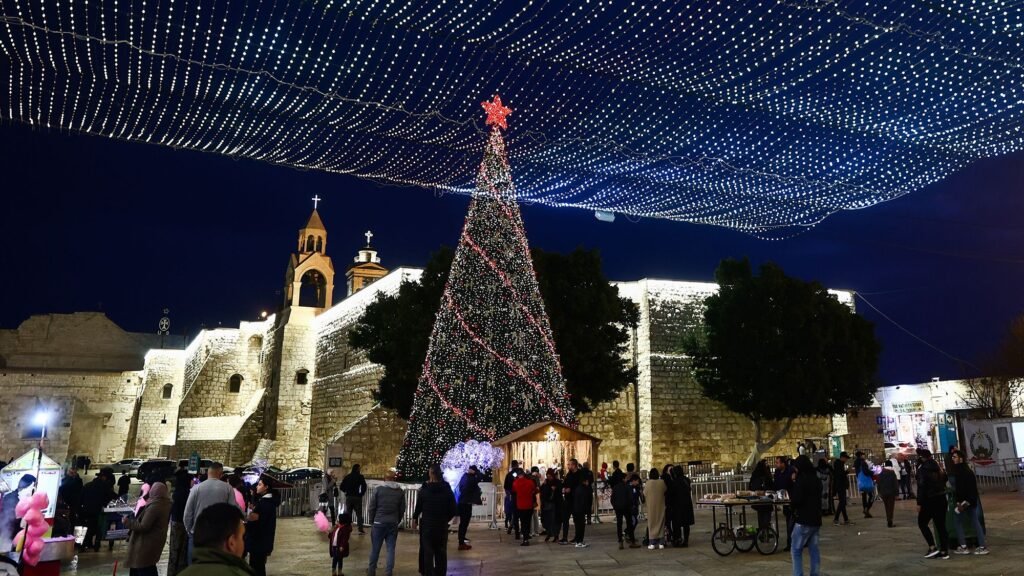
Shops that had been closed or barely functioning reopened. Christmas decorations that had been stored away—why decorate when nobody’s celebrating?—came out of storage. Lights strung across streets. Nativity scenes assembled in Manger Square. The massive Christmas tree erected outside the Church of the Nativity.
Families who had been living under constant stress, never sure when violence might erupt, exhaled. Not completely—you don’t forget years of conflict in a moment—but enough to allow themselves to hope, to plan, to celebrate.
International visitors started booking flights. Pilgrims who’d postponed trips indefinitely suddenly had reason to come. Hotels that had been empty filled up. Tour guides found work again. The economic pulse of the city, which depends heavily on religious tourism, started beating stronger.
And the emotional atmosphere transformed.
People described it as awakening from a nightmare. As being allowed to remember what joy feels like. As reclaiming something that had been stolen by conflict.
Christmas isn’t just a holiday in Bethlehem—it’s the city’s identity, its reason for global significance, its gift to the world. Being unable to celebrate it properly, to share it fully, to embody the hope it represents—that’s a profound loss.
The ceasefire gave that back. Temporarily, fragilely, but genuinely.
But the Scars Remain
Let’s not romanticize this. The ceasefire didn’t erase the damage. It just paused the infliction of new wounds.
Families still grieved loved ones lost to violence. Economic hardship from years of disrupted tourism didn’t disappear overnight. The political realities that fuel conflict—occupation, disputed sovereignty, competing claims, systemic injustices—all remained firmly in place.
The wall that separates Bethlehem from Jerusalem, covered in graffiti and protest art, still looms. Checkpoints still control movement. The underlying tensions that periodically explode into violence still simmer.
People celebrating Christmas in Bethlehem weren’t naive. They knew the ceasefire was fragile. They knew violence could resume. They knew the structural problems causing conflict weren’t resolved.
But they celebrated anyway.
Because hope isn’t the same as naivety. Hope is choosing joy despite knowing its fragility. Hope is celebrating when you have the chance because you don’t know how long the chance will last.
Hope is lighting candles in the darkness even when you know darkness might return.
The Christmas celebrations in Bethlehem weren’t denial of reality—they were defiance of despair. A refusal to let conflict steal everything. A choice to claim joy whenever possible, to create beauty amid brokenness, to affirm that life is worth celebrating even when life is hard.
That’s not romanticization. That’s resilience.
Christmas Eve: When the World Came Home
Christmas Eve in Bethlehem is always special. But this year, after the ceasefire, it was extraordinary.
The narrow streets of the old city filled with people. Locals and tourists, pilgrims from every continent, clergy in traditional robes, families with children, elderly couples fulfilling lifelong dreams of visiting Bethlehem for Christmas.
Manger Square—the plaza in front of the Church of the Nativity—was packed. The massive Christmas tree glowed. Carols in multiple languages filled the air. Street vendors sold everything from religious icons to roasted chestnuts. The smell of coffee and sweets wafted from cafes.
Inside homes throughout the city, families gathered for traditional meals. Dishes passed down through generations: stuffed grape leaves, roasted lamb, rice with nuts and spices, honey-soaked pastries. Stories shared. Memories honored. The continuity of tradition connecting past to present.
And as midnight approached, the pilgrimage began.
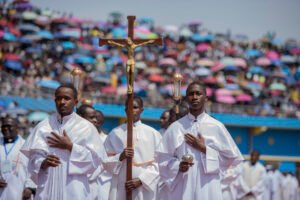
Thousands converged on the Church of the Nativity for midnight Mass. The church, which can hold maybe a thousand people uncomfortably, overflowed. Screens broadcast the service to crowds outside. Candles flickered. Prayers rose in multiple languages. Hymns echoed off ancient stone walls.
The service focused on the traditional Christmas narrative—Mary and Joseph, the census, no room at the inn, birth in a manger, angels and shepherds and the proclamation of peace on earth.
But it carried additional weight this year. Because peace on earth felt less abstract when you’d just lived through its absence. When the ceasefire made the angel’s proclamation seem less like pious sentiment and more like desperate necessity.
When the liturgy spoke of light shining in darkness, people knew exactly what darkness meant. When it spoke of hope born into a troubled world, the trouble wasn’t theoretical—it was the checkpoints you passed through, the walls you lived behind, the sirens you’d heard too often.
The Christmas story became personal in ways it never could for people celebrating in comfortable, safe places.
The Hymn That Captures Everything
There’s a hymn sung every Christmas Eve in the Church of the Nativity: “The Night of Christmas.”
It’s not particularly famous internationally. You won’t hear it in American megachurches or European cathedrals. But in Bethlehem, it’s central to the celebration.
The melody is haunting—rooted in Middle Eastern musical traditions, with minor keys that carry both sorrow and hope. The lyrics tell the Christmas story but with particular emphasis on themes of peace, hope rising from despair, light overcoming darkness.
For the congregation, singing this hymn isn’t just religious observance—it’s cultural identity, connection to ancestors who sang the same words in this same place, affirmation of belonging.
This year, when the hymn swelled through the Church of the Nativity, people wept.
Because the words about peace felt possible again, at least momentarily. Because the themes of hope overcoming despair mapped perfectly onto their recent experience. Because singing together in this space, in this moment, after everything—it meant something profound.
Music does this. It carries emotion that words alone can’t hold. It creates communal experience that transcends individual stories. It connects present moment to timeless tradition.
“The Night of Christmas,” sung by thousands in the Church of the Nativity on Christmas Eve after a ceasefire finally allowed proper celebration—that’s not just a hymn. It’s a declaration. An act of resistance. A refusal to let conflict steal beauty.
It’s Bethlehem reclaiming its identity as birthplace of hope.
The Stories People Tell
The best way to understand what Christmas means in Bethlehem is to hear from people who lived it:
Miriam, local resident: “We always celebrate Christmas, even during hard times. But this year felt different. My children—they’re young, they don’t fully understand the politics—they just knew something had changed. They felt safe enough to be excited. We decorated our home properly for the first time in years. When we set up our nativity scene, my daughter asked if this meant the angels were right about peace on earth. I didn’t know what to tell her. So I said: ‘Tonight, yes. Tonight there’s peace.’ She smiled. That’s all we can ask for.”
Father Elias, local priest: “The church’s role during conflict is complicated. We provide spiritual comfort, yes. But we also hold the space for hope when hope seems impossible. This Christmas, I didn’t have to work as hard to convince people hope was real—they could feel it. The church was full. People sang loudly. They stayed for hours after Mass, not wanting the night to end. Because they knew this might be temporary. So they savored it completely.”
John, American tourist: “I came to Bethlehem expecting… I don’t know, a historic site, maybe slightly sad given the regional situation. What I found was overwhelming joy. The locals welcomed us like family. They wanted to share their traditions, their food, their stories. One man told me: ‘You came all this way to see where Jesus was born. We live here. We keep this story alive.’ The responsibility they feel—it’s beautiful and heavy at the same time.”
Layla, shop owner: “Tourism is our livelihood. When people stop coming, we suffer economically but also spiritually. Bethlehem without pilgrims feels empty, like we’re failing our purpose. This Christmas, my shop was full again. I sold nativity sets carved from olive wood, candles, rosaries. But more than the sales, it was the conversations. Hearing why people traveled so far. Seeing their faces when they realize they’re actually here, in Bethlehem. It reminds me why this matters.”
Bishop Theophilos, church leader: “Christmas in Bethlehem should be the easiest thing in the world. We’re literally at the birthplace. But politics makes it complicated. This year, the ceasefire gave us permission to celebrate fully. My hope is that people remember this feeling—the joy of peace—and work to make it permanent. One Christmas of proper celebration shouldn’t be remarkable. It should be normal.”
These voices reveal something crucial: Christmas in Bethlehem isn’t just about religious observance. It’s about identity, livelihood, connection to place, responsibility to history, hope for the future.
It’s personal in ways that transcend theology.
When the World Shows Up
The international visitors flooding Bethlehem for Christmas weren’t just tourists—they were participants in something larger.
Their presence said: This place matters. This story matters. You matter.
For a city that often feels forgotten by the world except when conflict makes headlines, having thousands of people choose to come—not because they had to, but because they wanted to share in Bethlehem’s Christmas—that’s profound.
The economic impact is real. Hotels filled. Restaurants bustled. Tour guides worked. Artisans sold their crafts. Money flowed through a local economy that had been struggling.
But the symbolic impact matters just as much.
When people from America, Europe, Asia, Africa, Latin America converge on Bethlehem for Christmas, they’re affirming that this city isn’t just a political problem to be solved or a conflict zone to avoid. It’s a sacred space, a shared heritage, a source of meaning for billions.
The international visitors also brought their own Christmas traditions, creating this fascinating blend:
Filipino pilgrims singing carols in Tagalog. German tourists marveling at the ancient architecture. African Christians worshiping in languages their colonizers brought. American evangelicals experiencing liturgy utterly unlike their home churches. Orthodox believers observing different Christmas dates but joining the celebration anyway.
This diversity embodied something essential about Christmas: it’s simultaneously universal and particular. Rooted in one specific place and time, yet claimed and celebrated by people everywhere in their own ways.
Bethlehem at Christmas becomes a living demonstration that sacred stories transcend their origins without losing connection to them.
The Uncomfortable Questions
But let’s sit with the discomfort for a moment.
Why did Bethlehem need a ceasefire to celebrate Christmas properly?
Why should the birthplace of the Prince of Peace be so defined by violence that a temporary pause in conflict feels like miraculous restoration?
What does it say about the world that we’ve normalized this situation—where Bethlehem’s ability to mark the birth of Jesus depends on whether regional violence happens to be in remission?
These questions indict all of us.
The international community that allows ongoing conflict. The political leaders who prioritize power over peace. The religious authorities who weaponize faith for political purposes. The media that pays attention only when violence spikes. The rest of us who’ve learned to tune out ongoing suffering as background noise.
Bethlehem’s Christmas joy is beautiful. It’s also an indictment.
Because it shouldn’t be remarkable. It shouldn’t require a ceasefire. It shouldn’t depend on temporary political circumstances.
Bethlehem should be able to celebrate Christmas—its Christmas, the story it gave the world—every year with full joy, full participation, full hope.
That it can’t, that 2025’s celebration felt extraordinary because conflict had temporarily paused—that’s failure. Collective, systemic, ongoing failure.
The joy is real. The resilience is admirable. The hope is necessary.
But we shouldn’t mistake any of that for justice.
What Bethlehem Teaches the World
If we’re willing to learn, Bethlehem’s Christmas offers profound lessons:
Hope isn’t the same as optimism. Optimism assumes things will work out. Hope chooses joy and meaning even when outcomes are uncertain. Bethlehem celebrates Christmas knowing the ceasefire might end, but celebrating anyway—that’s hope.
Peace is a practice, not just a state. You don’t wait for perfect conditions to practice peace. You create moments of peace, spaces of peace, even amid conflict. Bethlehem gathering for Christmas during a ceasefire practices peace, which makes future peace more possible.
Sacred stories belong to everyone and to specific places simultaneously. Christmas is universal and Bethlehemite. The tension between those truths is creative, not contradictory.
Resilience doesn’t mean pretending damage doesn’t exist. The people celebrating in Bethlehem aren’t denying their trauma or ignoring injustice. They’re refusing to let those things steal everything. That’s different.
Community survives through shared ritual. The traditions—the meals, the hymns, the midnight Mass, the gathering in specific spaces—these aren’t just nice customs. They’re how communities maintain identity and connection through hardship.
Small joys matter enormously. Being able to put up Christmas lights, to gather without fear, to welcome visitors, to celebrate openly—these “small” things are actually massive when you’ve been denied them.
Forgiveness and justice aren’t opposites. The Christmas message includes both. Bethlehem celebrating doesn’t mean forgiving or forgetting injustice. It means asserting that joy and hope matter even while demanding justice.
These aren’t abstract lessons. They’re lived reality in Bethlehem, and they apply far beyond it.
When the Ceasefire Ends
Here’s the hard truth: ceasefires don’t last forever. This one won’t either.
Eventually—maybe weeks, maybe months, hopefully longer but realistically not forever—violence will resume. Conflict will reignite. The fragile peace will shatter.
And Bethlehem will once again find itself caught between its sacred identity and its political reality.
The Christmas lights will come down. The tourists will leave. The daily grind of checkpoints and walls and occupation will continue. The joy of December 2025 will become memory, maybe tinged with bitterness that it couldn’t last.
But here’s what won’t end:
The resilience. The commitment to celebration despite hardship. The refusal to let conflict steal everything. The practice of hope even when hope seems foolish.
The people of Bethlehem have been doing this for generations. Maintaining their identity as birthplace of the Prince of Peace while living through endless conflict. Keeping the Christmas story alive while experiencing precious little peace on earth.
They’ll keep doing it. Because this is their home, their heritage, their responsibility.
And every year, when Christmas comes, they’ll celebrate as fully as circumstances allow. They’ll light candles in the Church of the Nativity. They’ll sing “The Night of Christmas.” They’ll gather with family. They’ll welcome pilgrims.
Because that’s what hope looks like in practice. Not naive belief that everything will be fine. But stubborn insistence on creating beauty, meaning, and joy even when the world conspires against it.
The Light Still Shines
Christmas 2025 in Bethlehem was extraordinary. The ceasefire gave the city space to celebrate fully, joyfully, without the shadow of imminent violence.
The Church of the Nativity overflowed. The streets filled with light and laughter. Families gathered in peace. Pilgrims came from everywhere. Hope felt tangible.
It was beautiful. Necessary. Profoundly meaningful.
And it shouldn’t have been remarkable.
Bethlehem should be able to celebrate Christmas every year like this. The birthplace of Jesus should be a place of peace, not just symbolically but actually. The city that gave the world the story of hope should live in conditions that allow hope to flourish.
That it doesn’t is damning. That the people of Bethlehem celebrate anyway is inspiring.
As we move forward, carrying whatever meaning Christmas holds for us—whether religious or cultural or purely commercial—Bethlehem’s example challenges us:
What would it mean to practice hope like they do? To celebrate beauty amid brokenness? To refuse to let conflict steal everything? To maintain joy and identity and community despite systemic injustice?
What would it mean to actually work for peace on earth, goodwill toward all—not just as sentimental Christmas card wish but as political and moral imperative?
What would it mean to remember that the Christmas story is about God entering into human suffering, not escaping from it? About hope born in difficult circumstances, not despite them but through them?
Bethlehem at Christmas teaches all of this, if we’re willing to learn.
The light shines in the darkness. That’s the Christmas promise.
In Bethlehem, they know the darkness intimately. They also know the light keeps shining anyway.
Stubborn. Resilient. Refusing to be extinguished.
Just like hope. Just like the people who carry it forward, year after year, Christmas after Christmas, regardless of circumstance.
The light shines in the darkness.
And the darkness has not overcome it.
Not in Bethlehem. Not anywhere. Not ever.
Merry Christmas from the birthplace of hope.
May the light keep shining. May the peace hold. May the joy endure.
And may we all learn what Bethlehem already knows: that hope is a practice, peace is a choice, and celebrating life amid hardship is the most faithful thing we can do.
The Christmas spirit returned to Bethlehem in 2025.
It never really left. It just had to fight harder to shine.
And shine it did. Bright and beautiful and necessary.
A beacon of hope rising from the rubble. Just like it always has. Just like it always will.

1 thought on “When Christmas Came Back to Bethlehem: Hope Rising From the Rubble”